عربى

Content
- 1 Product Overview
- 2 Advantages of the GC-320 Aftermarket Solution
- 3 Manufacturing Strengths Behind the Product
- 4 How a High-Quality Cylinder Head Is Produced
- 5 Inspection and Quality Assurance
- 6 Installation and Maintenance Considerations
- 7 Applications and Customer Value
- 8 Comparison with Other Replacement Options
- 9 Supplier Strength and Service Philosophy
- 10 Ordering Information
- 11 Frequently Asked Questions
- 11.1 What is the GC-320 cylinder head used for?
- 11.2 Is GC-320 an original equipment part?
- 11.3 Why should customers choose a specialist aftermarket supplier?
- 11.4 What information is needed to confirm compatibility?
- 11.5 Does the cylinder head include valves and other components?
- 11.6 What are the most important quality factors for a cylinder head?
- 11.7 Can the existing cylinder head be repaired instead of replaced?
- 11.8 How should a replacement cylinder head be stored?
- 11.9 What related parts may need inspection during installation?
- 11.10 How can customers reduce installation problems?
- 11.11 What makes the manufacturer suitable for international supply?
- 12 Conclusion
- 13 References
- 14 Product: GC-320
The cylinder head is one of the most important structural and functional components in a marine diesel engine. It closes the upper part of the combustion chamber, supports the intake and exhaust valve system, guides the flow of cooling water, and helps maintain the compression required for efficient ignition. Because it operates under high thermal loads, combustion pressure, vibration, and continuous mechanical stress, the condition and quality of the cylinder head directly influence engine reliability, fuel efficiency, emissions, and maintenance costs.
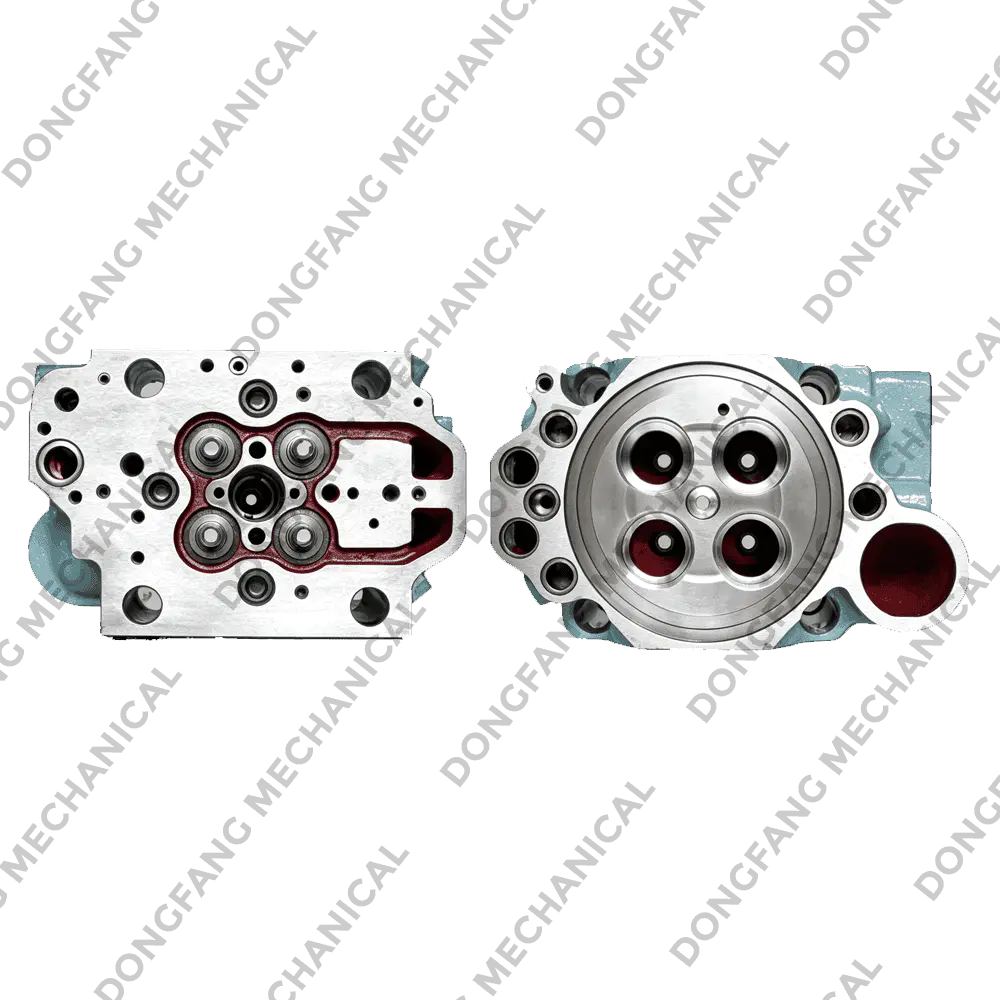
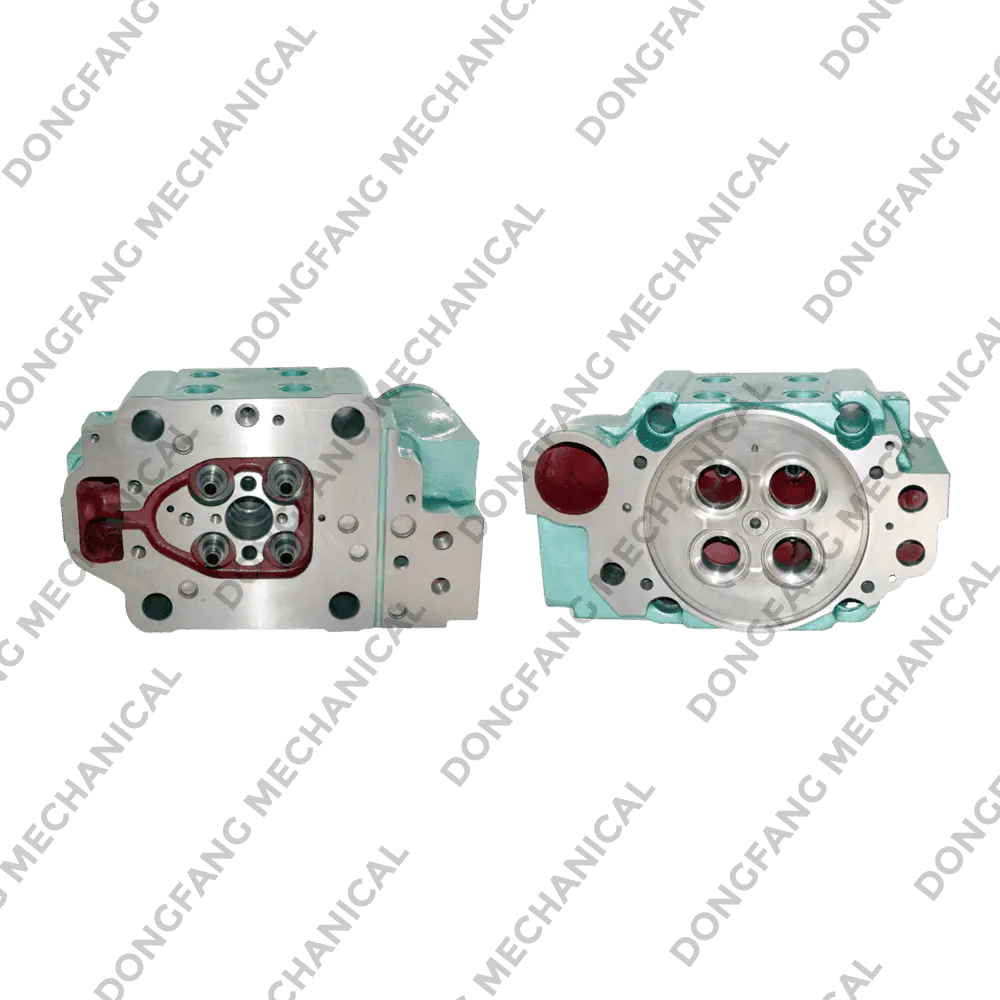
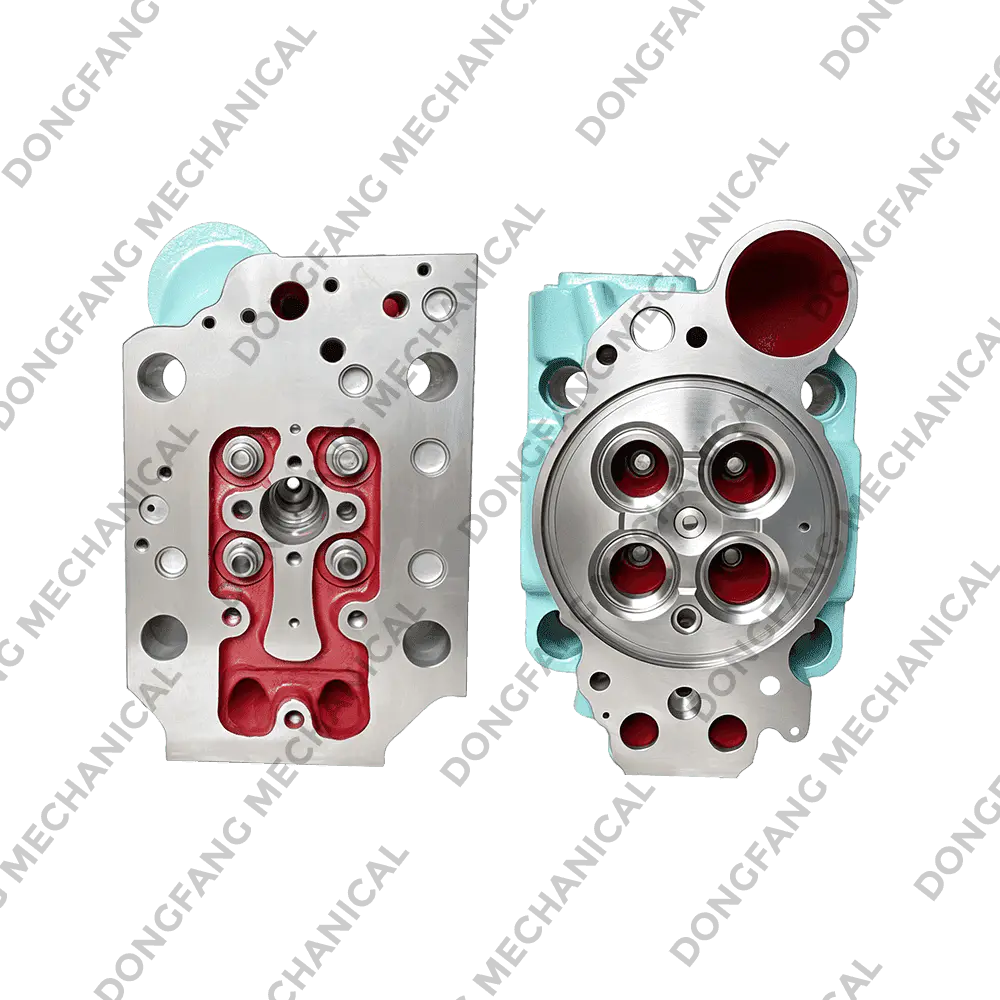
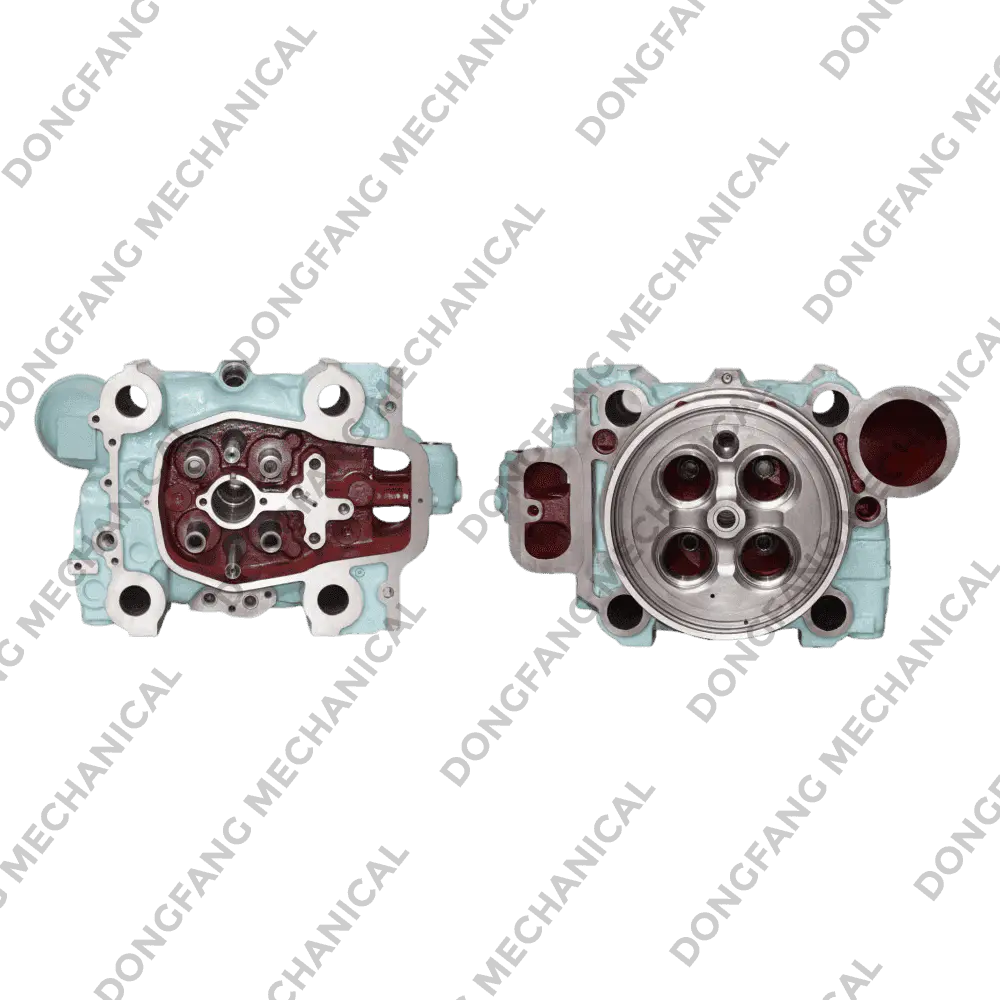
The GC-320 cylinder head is a replacement spare part developed for diesel engine maintenance applications. It is positioned as a high-quality aftermarket solution for domestic diesel engines and is manufactured by a specialist supplier with extensive experience in marine diesel engine components. The product is intended to help shipowners, marine repair companies, engine service providers, distributors, and equipment operators restore engine performance without depending exclusively on high-cost original replacement channels.
A replacement cylinder head must do more than simply fit the engine block. It must provide dependable sealing, accurate valve alignment, appropriate cooling performance, sufficient resistance to thermal fatigue, and stable operation during extended engine service. The GC-320 product is therefore best evaluated as part of a complete engineering and manufacturing system that includes material control, casting or forming quality, machining accuracy, inspection, assembly compatibility, and technical service.
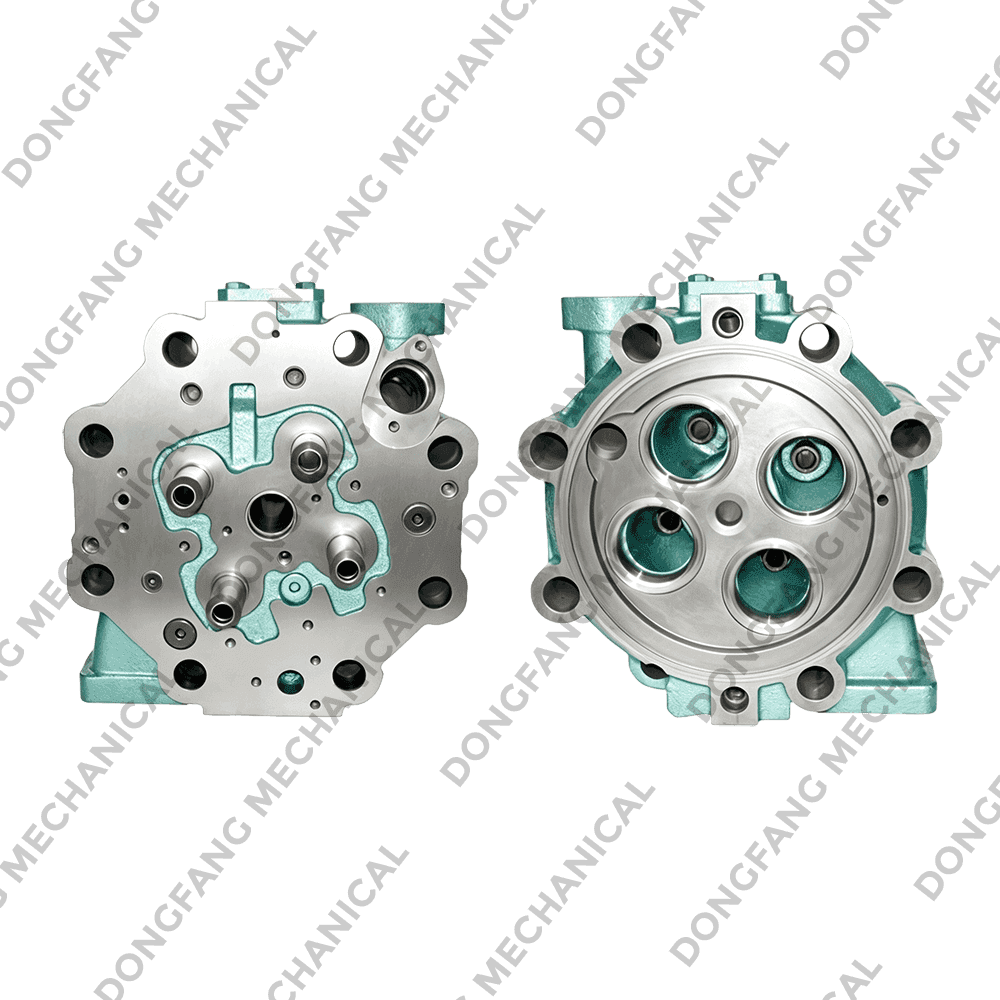
GC-320
Product Overview
The GC-320 cylinder head is categorized as a replacement spare part for domestic diesel engines. Its design purpose is to provide a practical alternative for replacing a worn, cracked, deformed, corroded, or otherwise damaged cylinder head during an engine overhaul or repair program. In a marine environment, replacement parts must support predictable operation under fluctuating loads and long running hours. A correctly manufactured cylinder head can help reduce the risk of unplanned downtime and extend the useful service life of the engine assembly.
The cylinder head normally contains or supports several critical elements, including the combustion chamber roof, valve seats, valve guides, injector installation area, cooling passages, fastening points, and sealing surfaces. The exact internal configuration depends on the engine model and technical drawing. For that reason, identification by product code, dimensions, engine application, and technical documentation is essential before purchase or installation.
GC-320 is suitable for customers seeking an aftermarket cylinder head supplied through an experienced marine diesel component manufacturer. The product can be considered for scheduled maintenance, emergency repair preparation, shipyard overhaul work, stock replenishment, and replacement of components that have exceeded their recommended service condition.
Primary Product Functions
The first function of a cylinder head is to form a secure upper boundary for the combustion chamber. During operation, the head is exposed to high combustion pressure and repeated thermal cycles. Its sealing surfaces must remain stable so that combustion gases do not escape and cooling water or lubricating oil does not enter the combustion space.
The second function is to support gas exchange. Intake air must enter the cylinder efficiently, while exhaust gases must leave with minimum restriction. The geometry of the valve ports, valve seats, and surrounding surfaces affects the flow characteristics of the engine. A properly manufactured replacement head helps preserve the intended relationship between the intake and exhaust systems.
The third function is thermal management. Cooling passages inside or around the cylinder head carry heat away from the combustion chamber, valve areas, and injector zone. If cooling is uneven or restricted, localized hot spots can develop. These hot spots may contribute to cracking, distortion, valve damage, or premature gasket failure. Accurate passage formation and proper cleaning are therefore important elements of cylinder head quality.
The fourth function is mechanical support. The head must accept clamping force from the fastening system and maintain alignment for the valves, guides, injector, and related components. Dimensional accuracy is especially important because small deviations can affect valve seating, compression, fuel injection, and contact between moving parts.
Advantages of the GC-320 Aftermarket Solution
The main advantage of a purpose-built aftermarket cylinder head is that it offers an alternative supply route for engine owners and maintenance organizations. Original replacement parts can be difficult to obtain, especially for older engines, engines operating in remote ports, or equipment supported by long international delivery chains. An established aftermarket supplier can provide a more flexible source while maintaining attention to application compatibility and manufacturing quality.
Cost-Efficient Maintenance
One of the most important benefits of an aftermarket cylinder head is the potential to reduce total maintenance expenditure. The purchase price is only one part of the economic calculation. Customers must also consider delivery time, stock availability, repair labor, vessel downtime, and the consequences of postponing an overhaul. A competitively priced replacement head can help operators plan maintenance more effectively and avoid replacing an entire engine or delaying repairs because of excessive component cost.
The economic value of GC-320 is strengthened when it is supplied with appropriate technical information and application support. A component that fits correctly and performs reliably can reduce rework, machining correction, repeated disassembly, and additional freight. This makes quality aftermarket sourcing an important part of lifecycle cost management rather than merely a way to obtain a lower initial purchase price.
Practical Availability for Marine Repair
Marine operators often need replacement parts under demanding time conditions. A vessel may have a planned port call, a scheduled dry-docking period, or an urgent repair requirement. The ability to obtain a cylinder head from a specialist supplier can improve maintenance planning and provide greater flexibility than relying on a single original equipment channel.
The supplier’s specialization in imported and domestic marine diesel engine components supports a broad understanding of the requirements faced by shipowners and repair companies. This experience is valuable when a customer must identify a replacement for an older engine, coordinate several related spare parts, or compare an aftermarket component with an existing damaged part.
Support for Engine Overhaul Programs
A cylinder head is commonly replaced or rebuilt as part of a larger overhaul. During this work, technicians may inspect the cylinder liner, piston, piston pin, connecting rod, valves, valve guides, valve seats, fuel injector, gaskets, and fastening system. A replacement head supplied by a component specialist can be integrated into a broader maintenance program and ordered together with other engine parts.
The manufacturer’s product range includes cylinder heads, cylinder liners, valves, valve seats, valve cages and guides, connecting rods, piston pins, and piston heads. This wider product capability can simplify sourcing for customers who prefer to coordinate multiple components through one experienced supplier. It may also help improve communication about dimensional relationships between associated parts.
Compatibility-Oriented Manufacturing
Aftermarket manufacturing requires careful attention to the original application. A replacement component must be developed with reference to relevant dimensions, interfaces, material requirements, and operating conditions. The GC-320 product should be ordered using the correct product code and supported by application information such as engine type, serial number, drawing number, sample measurements, or photographs where necessary.
Compatibility is not limited to the outer shape of the part. It includes bolt-hole position, sealing face geometry, valve arrangement, injector location, cooling passage layout, gasket interface, and the dimensional relationship between the head and the cylinder liner. A specialist supplier is better positioned to recognize these details than a general-purpose metalworking company with no dedicated marine diesel experience.
Value Compared with General-Purpose Alternatives
General-purpose foundries and machine shops may be able to produce metal components, but marine diesel cylinder heads require application-specific knowledge. The product must withstand a combination of combustion pressure, thermal cycling, vibration, corrosion exposure, and continuous operation. A supplier that focuses on marine diesel components can build its quality procedures, staff experience, inspection routines, and production planning around these requirements.
Compared with unverified low-cost alternatives, a professionally manufactured GC-320 replacement offers a clearer basis for evaluating quality. Customers can review the manufacturer’s experience, certification background, product scope, technical communication, and inspection approach. This does not eliminate the need for application verification, but it provides a more dependable purchasing framework.
Manufacturing Strengths Behind the Product
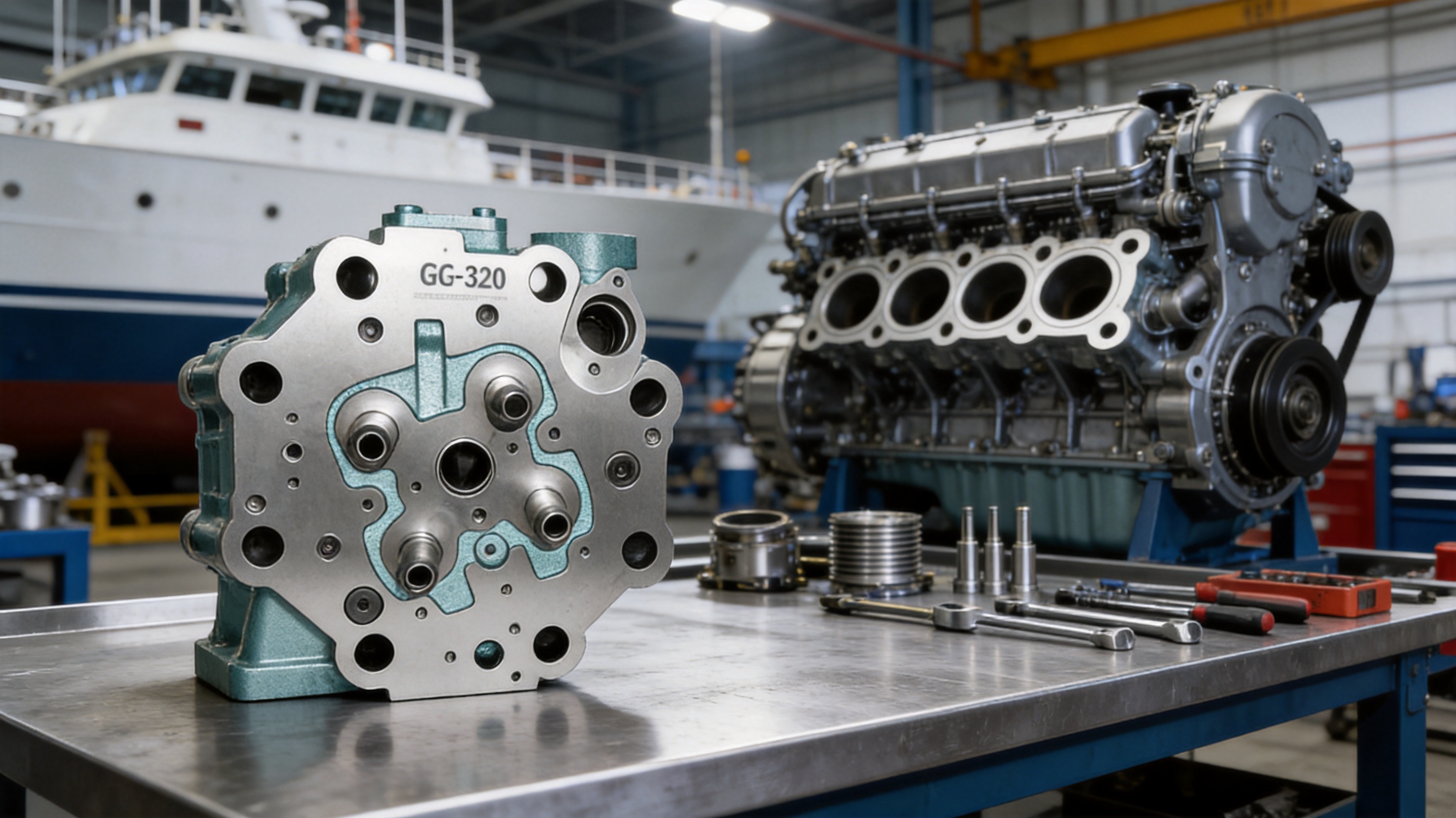
The quality of a cylinder head is determined by the complete production chain. Raw material selection, pattern or mold preparation, casting control, heat treatment where applicable, rough machining, precision machining, cleaning, inspection, and final preparation all influence the finished component. A defect in any stage may later appear as leakage, distortion, cracking, poor valve seating, or accelerated wear.
The manufacturer of GC-320 has specialized in marine diesel engine components since 1996. More than two decades of sector experience provide an important foundation for product development and production management. This background allows the company to understand the service conditions of marine engines and the importance of dependable replacement parts for shipowners, dealers, and repair organizations.
Dedicated Component Expertise
The company focuses on the development, research, manufacturing, and import of components for imported and domestic marine diesel engines. Its product scope covers several parts that work together inside the engine. This specialization supports the development of practical knowledge in combustion chamber components, valve train interfaces, cooling structures, and engine overhaul requirements.
Experience with related parts is particularly useful for cylinder head production. For example, the performance of a valve seat depends on its relationship with the valve, guide, spring, and combustion chamber. The sealing relationship between a cylinder head and liner depends on accurate mating dimensions and gasket contact. Familiarity with the complete engine assembly helps manufacturers understand why a single component cannot be evaluated in isolation.
Advanced Equipment and Skilled Personnel
The company reports the use of advanced equipment and experienced professionals in its manufacturing operations. For a cylinder head, suitable production equipment is needed to support stable dimensional control, consistent machining, and repeatable inspection. Skilled personnel are equally important because technicians must interpret drawings, identify abnormal conditions, manage machining allowances, and respond to variations in incoming materials or semi-finished parts.
Equipment contributes to accuracy, but equipment alone does not guarantee quality. The effectiveness of production depends on how machines are maintained, how processes are documented, how tools are selected, how operators are trained, and how inspection results are recorded. A mature manufacturer combines equipment capability with practical engineering judgment and established process discipline.
Quality Management Foundation
The company obtained ISO 9001 certification in 2001 and has been rated as an AAA-level enterprise. ISO 9001 provides a framework for quality management, process control, documentation, customer communication, corrective action, and continual improvement. Certification does not mean that every individual component is automatically perfect, but it indicates that the organization has established a formal quality management structure.
For customers purchasing GC-320 cylinder heads, a quality management system can provide greater confidence in repeatability. It supports consistent handling of orders, production records, inspection procedures, nonconformity management, and customer feedback. These systems are especially useful when a customer requires repeated deliveries over time and expects similar performance from each production batch.
Production Capacity and Facility Resources
The company occupies more than 8,000 square meters, including a workshop of over 5,000 square meters, and reports annual production of more than 5,000 sets. This production scale suggests that the business has developed the facilities, personnel, and workflow needed to support regular manufacturing rather than occasional job-shop production.
Production capacity benefits customers in several ways. It can support scheduled orders, repeated supply, spare parts stocking, and project-based requirements. It may also allow the company to maintain dedicated attention to product families while continuing to serve different engine applications. For shipowners and distributors, the ability to work with a stable supplier can be as important as the technical features of an individual component.
How a High-Quality Cylinder Head Is Produced
Although specific production details may vary according to the engine application and approved manufacturing procedure, a professional cylinder head manufacturing process generally begins with technical identification. The supplier confirms the product code, application, drawing data, key dimensions, material requirements, and customer quantity. This stage helps prevent the common mistake of producing a visually similar part that does not match the required engine.
Technical Review and Production Planning
Before production begins, engineers and production personnel review the design information. Important points may include the overall dimensions, mounting surfaces, valve and injector positions, cooling passage structure, machining allowances, sealing areas, and inspection requirements. If the customer provides an original sample, the supplier may also use it for comparison, measurement, and application confirmation.
Production planning determines the sequence of operations and the equipment required. It may include material preparation, mold or pattern work, rough processing, heat treatment, machining, drilling, passage cleaning, surface finishing, inspection, and packaging. A controlled sequence reduces the risk that a later process will damage an accurately machined area or make a hidden defect more difficult to identify.
Material and Metallurgical Control
The cylinder head material must be appropriate for the thermal, mechanical, and environmental conditions of the engine. Material selection affects strength, thermal stability, machinability, resistance to corrosion, and resistance to cracking. A professional manufacturer controls material sourcing and maintains records that support traceability and consistency.
Where casting is used, the quality of the raw material and the design of the casting process are particularly important. The process must support adequate filling, controlled solidification, and minimized risk of shrinkage, porosity, inclusions, or other internal defects. The finished head must then be machined and inspected so that functional surfaces meet the required dimensions.
Machining of Functional Surfaces
Machining transforms the semi-finished component into a part capable of installation. The most important surfaces include the cylinder head face, gasket contact areas, valve seat locations, guide bores, injector mounting region, bolt holes, and other interfaces specified by the design. Dimensional accuracy at these locations is critical to sealing and assembly.
Modern machining equipment can improve repeatability and help maintain consistent tolerances across production batches. However, each operation still requires suitable tool selection, stable fixturing, correct process parameters, and inspection. Poor fixturing can cause distortion, while incorrect machining allowances can lead to insufficient material or excessive rework.
Cooling Passage Preparation
Cooling passages must be properly formed, opened, cleaned, and checked. Residual sand, chips, scale, or debris can restrict coolant flow and create local overheating after installation. Cleaning is therefore not merely a cosmetic step. It is a functional requirement that supports long-term thermal performance.
Customers should also ensure that the cooling system is flushed and inspected during installation. Even a high-quality replacement head can be affected by blocked engine passages, contaminated coolant, incorrect coolant concentration, or poor maintenance practices. Product quality and installation quality must work together.
Valve and Injector Interface Control
The valve area is exposed to high temperature and repeated impact. The valve seat must provide a stable sealing surface, while the guide must maintain the correct alignment of the valve stem. The injector interface must also be accurately positioned and sealed. Errors in these areas may lead to compression loss, gas leakage, abnormal valve wear, poor combustion, or injector problems.
Depending on the supply configuration, the cylinder head may be delivered as a bare casting, a machined component, or an assembly containing selected valve train parts. The customer should confirm the exact supply scope before ordering. If valves, guides, seats, cages, or other parts are required, they should be specified clearly so that the supplier can verify compatibility.
Inspection and Quality Assurance
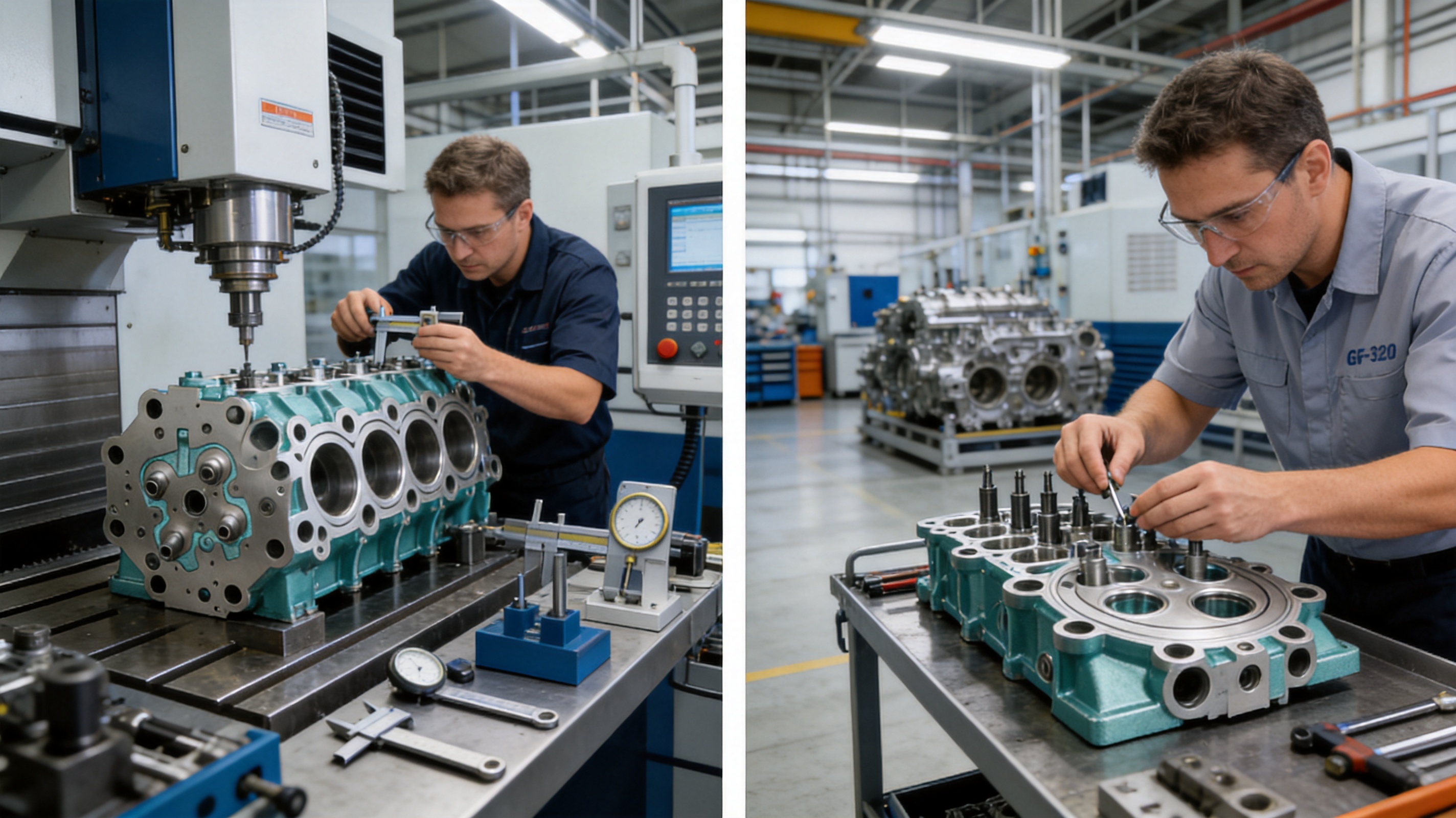
Inspection is an essential part of cylinder head manufacturing because many important characteristics cannot be judged by appearance alone. A surface may look smooth while containing a dimensional error, an internal void, a blocked passage, or a sealing problem. A professional inspection program therefore combines visual checks, dimensional measurement, functional verification, and, where appropriate, non-destructive testing.
Dimensional Inspection
Dimensional inspection confirms that the part conforms to the approved drawing or technical reference. Measurements may include overall height and width, bolt-hole locations, valve guide bores, seat positions, sealing face flatness, injector location, and other critical interfaces. Measurement equipment must be suitable for the required accuracy and properly maintained.
Dimensional control is especially important for aftermarket parts because the replacement must work with an existing engine assembly. A small mismatch can create installation difficulty or require unauthorized modification. Verification before shipment helps reduce the risk of receiving a component that cannot be installed during a tightly scheduled repair.
Surface and Sealing Checks
The head-to-gasket sealing surface must be free from unacceptable scratches, distortion, corrosion, burrs, and other conditions that could cause leakage. Valve seating surfaces must also be checked for correct contact and finish. Depending on the production configuration, the manufacturer may perform pressure or leakage tests on relevant passages and sealing areas.
Customers should protect these surfaces during transportation and storage. The cylinder head should be kept dry, covered, and supported on a stable surface. Machined faces should not be placed directly on dirty or abrasive floors. Proper storage prevents damage that could otherwise be incorrectly attributed to the manufacturing process.
Internal Defect Control
Because a cylinder head may include complex internal structures, inspection for internal defects can be important. The appropriate method depends on the material, design, customer specification, and applicable quality standard. A supplier may use visual inspection, dimensional checks, pressure testing, or other suitable methods as part of its production controls.
Customers with special requirements should communicate them before production. For example, shipyard projects, fleet maintenance programs, and classification-related work may require specific inspection records, material documentation, or acceptance criteria. Early communication allows the supplier to align production and documentation with the project requirements.
Installation and Maintenance Considerations
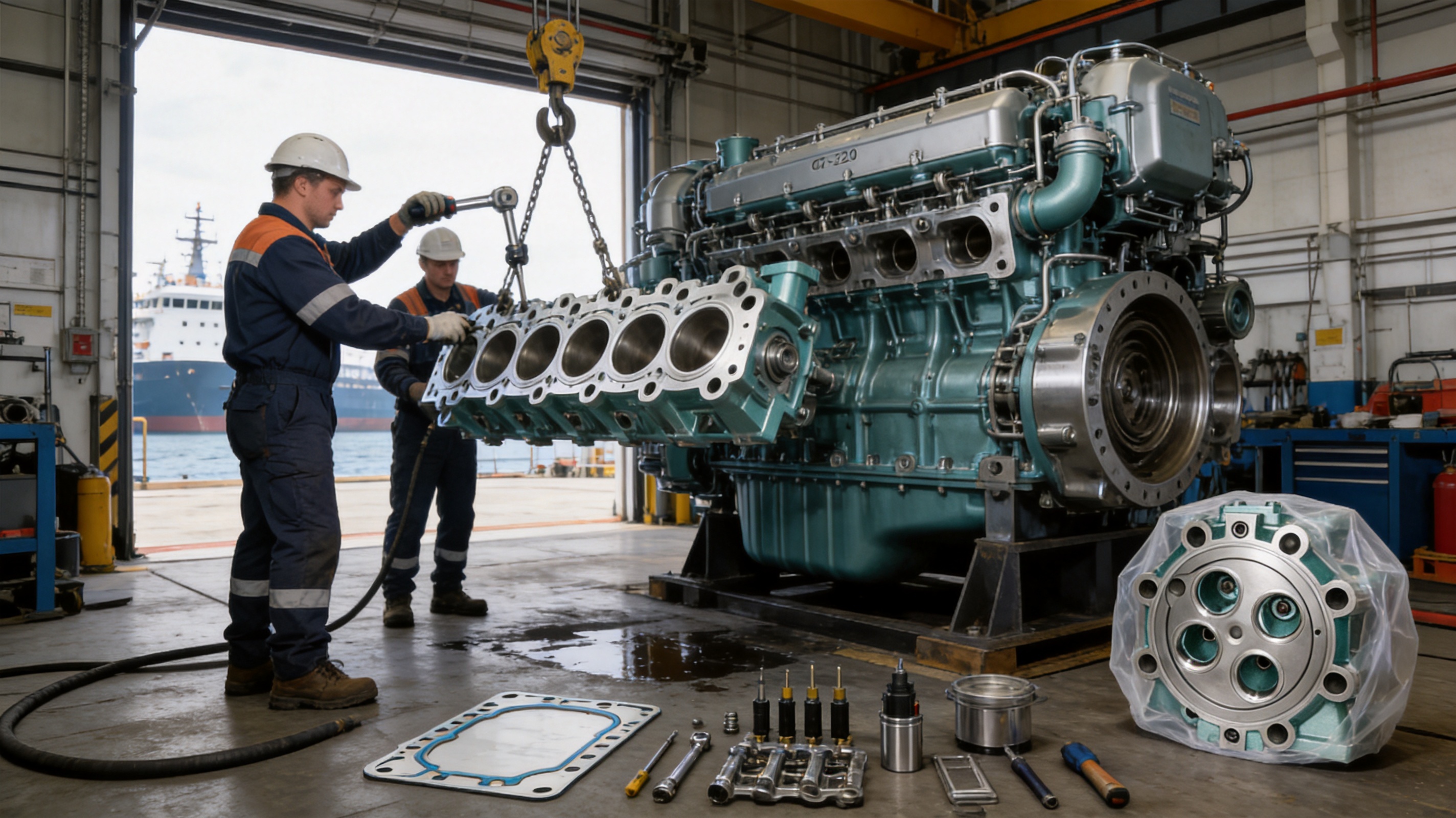
Correct installation is essential to achieving the intended performance of GC-320. The installation should be carried out by qualified technicians familiar with the engine model and the manufacturer’s service procedures. The engine must be isolated, depressurized, drained, and prepared according to appropriate safety practices before the cylinder head is removed or installed.
Pre-Installation Checks
Before installation, technicians should compare the replacement head with the removed component and verify the product code, major dimensions, mounting arrangement, valve configuration, injector interface, and cooling passages. The engine block and cylinder liner should be cleaned and inspected. Old gasket material, carbon deposits, corrosion, and debris must be removed without damaging the sealing surfaces.
The condition of related components should also be evaluated. A new cylinder head installed with worn valves, damaged guides, defective studs, distorted gaskets, or contaminated coolant may not deliver reliable results. The overhaul team should determine whether associated components are suitable for reuse or should be replaced at the same time.
Gasket and Fastening Practice
The correct gasket and fastening procedure are fundamental to sealing. The gasket must match the engine application and should not be reused unless the engine manufacturer specifically permits reuse. Fasteners should be checked for damage, stretch, thread condition, and length. Tightening must follow the specified sequence and torque or tension method.
Uneven tightening can distort the head or create localized gasket stress. Excessive tightening may damage threads or deform components, while insufficient tightening can cause combustion leakage or coolant loss. Technicians should use calibrated tools and retain installation records for important maintenance projects.
Valve Train and Injector Verification
After installation, the valve train should be checked for correct clearance, movement, and alignment. The injector should be installed with the correct sealing components and tightened according to the applicable procedure. Any replaced valve, guide, seat, or cage should be inspected to confirm proper contact and movement.
Before full-load operation, the engine should be inspected for leaks and abnormal conditions. Initial operation may require monitoring of coolant temperature, lubrication pressure, exhaust temperature, combustion behavior, and unusual noise. A controlled commissioning process helps identify installation issues before they develop into major damage.
Cooling System Maintenance
The cooling system must be clean and correctly filled. Scale, rust, oil contamination, and debris can reduce heat transfer and restrict passages. Coolant quality and concentration should follow the engine manufacturer’s recommendations. Air trapped in the system may also affect circulation and create temperature variations.
Good cooling system maintenance is one of the most effective ways to protect a cylinder head. Even a correctly manufactured component can suffer thermal stress if the engine operates with blocked passages, inadequate coolant flow, or repeated overheating. Regular inspection should therefore be included in the overall maintenance plan.
Applications and Customer Value
GC-320 is intended for domestic diesel engine replacement applications. It may be used by marine operators, ship repair yards, engine rebuilders, spare parts distributors, and industrial maintenance departments that require dependable cylinder head supply. The product is particularly relevant where the original head is no longer economically repairable or where a replacement is needed to reduce vessel downtime.
For distributors, the product can support aftermarket inventory programs. A specialist manufacturer with a broad range of marine diesel components can help distributors serve customers who maintain different engine types. Product coding, packaging, technical data, and consistent communication are important for reducing errors in stock management and order fulfillment.
For shipowners, the product offers another option for planned overhaul and emergency preparedness. Operators may choose to maintain spare cylinder heads in central warehouses, onboard stores, or regional service locations depending on fleet requirements. The correct stock strategy depends on engine criticality, voyage routes, repair access, delivery time, and historical failure patterns.
For repair yards, an aftermarket cylinder head can help coordinate the timing of engine work. A replacement part may be ordered before the head is removed, reducing the risk that a damaged original component will extend the repair schedule. The repair yard should provide complete application information at the quotation stage to ensure that the correct configuration is prepared.
Comparison with Other Replacement Options
| Replacement option | Typical strengths | Important considerations |
|---|---|---|
| Original equipment replacement | Direct brand-channel support and established reference specifications | May involve higher purchase cost, longer delivery time, or limited availability for older engines |
| Specialist aftermarket cylinder head | Competitive value, flexible supply, marine component expertise, and support for older applications | Application data and dimensional verification should be confirmed before ordering |
| Repair or refurbishment of the existing head | May preserve the original component and reduce replacement volume | Feasibility depends on cracks, distortion, corrosion, remaining material, and repair capability |
| Unverified low-cost alternative | Potentially low initial price | Quality consistency, material records, inspection, and technical support may be uncertain |
A specialist aftermarket cylinder head occupies a practical position between expensive original supply and uncertain low-cost sourcing. Its value depends on manufacturing capability, application knowledge, inspection discipline, and customer support. The GC-320 product is supported by a manufacturer whose primary business is the production and supply of marine diesel engine components, rather than by a supplier with no specific engine-part background.
When comparing suppliers, buyers should evaluate more than price. Important questions include whether the supplier can confirm application compatibility, provide drawings or inspection information where required, manage repeated orders, explain the supply scope, protect machined surfaces during shipment, and respond effectively when technical clarification is needed.
Supplier Strength and Service Philosophy
The manufacturer operates from Zhoushan, Zhejiang Province, a location with access to marine transportation and a long connection with maritime activities. Its position near important sea routes supports communication with shipowners, ship repair businesses, and marine equipment distributors. Convenient land, sea, and air transportation can also contribute to practical logistics planning.
The company describes its business philosophy as based on integrity, pragmatism, continuous improvement, quality-first standards, reasonable prices, and dedicated service. These principles are relevant to replacement parts because customers often require clear answers, accurate delivery information, reliable documentation, and practical technical cooperation.
Service quality is particularly important for aftermarket components. Buyers may need help identifying an old engine part, confirming whether a replacement matches a sample, selecting related valve train components, or arranging an order according to a dry-docking schedule. A responsive supplier can reduce communication delays and help customers make better maintenance decisions.
The company has established cooperative relationships with shipowners and dealers in different regions. Such relationships can provide valuable feedback about product performance, installation conditions, packaging requirements, and changing market needs. Continual communication with end users supports product improvement and helps the manufacturer remain connected to real operating conditions.
Ordering Information
Customers interested in GC-320 should provide as much application information as possible. Recommended information includes the product code, engine manufacturer, engine model, serial number, quantity, required delivery date, and whether the cylinder head is required as a bare component or with valves and related parts. Photographs of the existing component may also be useful when identification is uncertain.
For large maintenance projects, customers should specify inspection and documentation requirements before production. These may include dimensional reports, material information, pressure-test records, packaging instructions, or special marking. Early agreement helps prevent misunderstandings and allows the production team to prepare the order correctly.
Packaging should protect the cylinder head from impact, moisture, corrosion, and contamination. Machined surfaces should be covered, openings should be protected, and the component should be securely supported inside the package. Customers should inspect the packaging upon arrival and report any visible transportation damage before installation.
Frequently Asked Questions
What is the GC-320 cylinder head used for?
The GC-320 cylinder head is a replacement spare part intended for domestic diesel engine applications. It is used when the existing cylinder head is damaged, worn, cracked, distorted, corroded, or otherwise unsuitable for continued service.
Is GC-320 an original equipment part?
GC-320 is presented as a high-quality aftermarket replacement component. It is manufactured by a specialist supplier of marine diesel engine parts and should be matched to the correct engine application before purchase.
Why should customers choose a specialist aftermarket supplier?
A specialist supplier typically offers focused knowledge of marine diesel components, broader experience with replacement applications, and more practical support for older or less commonly available engines. It may also provide a more competitive supply option than an original equipment channel.
What information is needed to confirm compatibility?
Customers should provide the product code, engine model, engine serial number, technical drawing information, and photographs or measurements of the existing part when available. The exact requirements depend on the application and supply configuration.
Does the cylinder head include valves and other components?
The supply scope should be confirmed with the supplier before ordering. A cylinder head may be supplied as a bare machined component or as an assembly with selected valves, seats, guides, cages, or related parts, depending on the customer’s requirements.
What are the most important quality factors for a cylinder head?
Important factors include suitable material, accurate dimensions, reliable sealing surfaces, correct valve and injector interfaces, clean cooling passages, resistance to thermal and mechanical stress, and effective inspection before shipment.
Can the existing cylinder head be repaired instead of replaced?
Repair may be possible if the damage is within acceptable limits and a qualified repair facility has the necessary equipment. However, severe cracks, excessive distortion, deep corrosion, damaged valve areas, or insufficient remaining material may make replacement the safer and more economical option.
How should a replacement cylinder head be stored?
The head should be stored in a clean, dry, protected area. Machined surfaces should be covered and protected from impact, moisture, abrasive contamination, and corrosion. Openings should remain protected until installation.
Technicians should inspect the gasket, fasteners, valves, valve seats, guides, cages, injector, cylinder liner, cooling passages, and relevant sealing surfaces. Reusing damaged or excessively worn related components can reduce the service life of the new cylinder head.
How can customers reduce installation problems?
Customers can reduce problems by confirming compatibility before ordering, comparing the replacement with the removed component, using the correct gasket, following the approved tightening sequence, checking valve clearances, cleaning the cooling system, and commissioning the engine under controlled conditions.
What makes the manufacturer suitable for international supply?
The manufacturer has operated in the marine diesel component field since 1996, maintains a product range covering multiple engine parts, uses advanced equipment and experienced personnel, holds ISO 9001 certification obtained in 2001, and has production and logistics resources for serving shipowners and dealers in different regions.
Conclusion
The GC-320 cylinder head is a practical aftermarket solution for domestic diesel engine maintenance. Its importance extends beyond the replacement of a single metal component. A cylinder head affects combustion sealing, valve operation, cooling performance, engine efficiency, and the reliability of the complete power unit. Selecting a dependable replacement can therefore contribute to lower downtime, more predictable maintenance, and better control of lifecycle costs.
The product is supported by a manufacturer with a long history in marine diesel engine component production, a broad range of related spare parts, ISO 9001 quality management certification, experienced personnel, advanced equipment, and substantial production facilities. These strengths provide a more reliable foundation than sourcing from an unverified general-purpose supplier.
The principal advantages of GC-320 include aftermarket value, practical availability, compatibility-oriented production, support for engine overhaul projects, and access to a specialist product range. Customers should still confirm the exact engine application, supply scope, dimensions, documentation, and installation requirements before purchase. With correct selection, professional installation, and proper cooling and maintenance practices, the replacement cylinder head can support stable engine operation and long-term marine service.
References
1. ISO 9001: Quality Management Systems — Requirements.
2. General marine diesel engine overhaul and maintenance practices.
3. Cylinder head inspection, valve train service, and combustion chamber maintenance principles.
4. Industrial manufacturing principles for cast and machined engine components.
5. Marine engine cooling system maintenance and thermal management guidance.
6. Manufacturer-provided product and company information for the GC-320 cylinder head.