عربى

Content
- 1 Product Overview
- 2 Why the Cylinder Head Matters in a Marine Diesel Engine
- 3 Key Product Advantages
- 4 Manufacturing Expertise and Company Strengths
- 5 Advanced Manufacturing Process
- 6 Production and Quality Strengths Compared with Generic Alternatives
- 7 Installation and Overhaul Considerations
- 8 Maintenance Practices for Longer Service Life
- 9 Procurement Guidance for International Buyers
- 10 Applications and Suitable Users
- 11 Environmental and Operational Benefits
- 12 Technical Limitations and Verification Responsibilities
- 13 Frequently Asked Questions
- 13.1 What is the DE-18 product?
- 13.2 Is the DE-18 an original equipment manufacturer part?
- 13.3 Can the DE-18 fit every Daihatsu marine diesel engine?
- 13.4 Is the cylinder head supplied as a bare casting or a complete assembly?
- 13.5 What are the main advantages of purchasing from a specialized manufacturer?
- 13.6 What information should be included in a quotation request?
- 13.7 How should the cylinder head be stored before installation?
- 13.8 What other parts should be checked during replacement?
- 13.9 Does ISO 9001 certification guarantee installation success?
- 13.10 Can the DE-18 help reduce vessel downtime?
- 13.11 Where is the manufacturer located?
- 13.12 How can buyers contact the supplier?
- 14 Conclusion
- 15 References
- 16 Product: DE-18
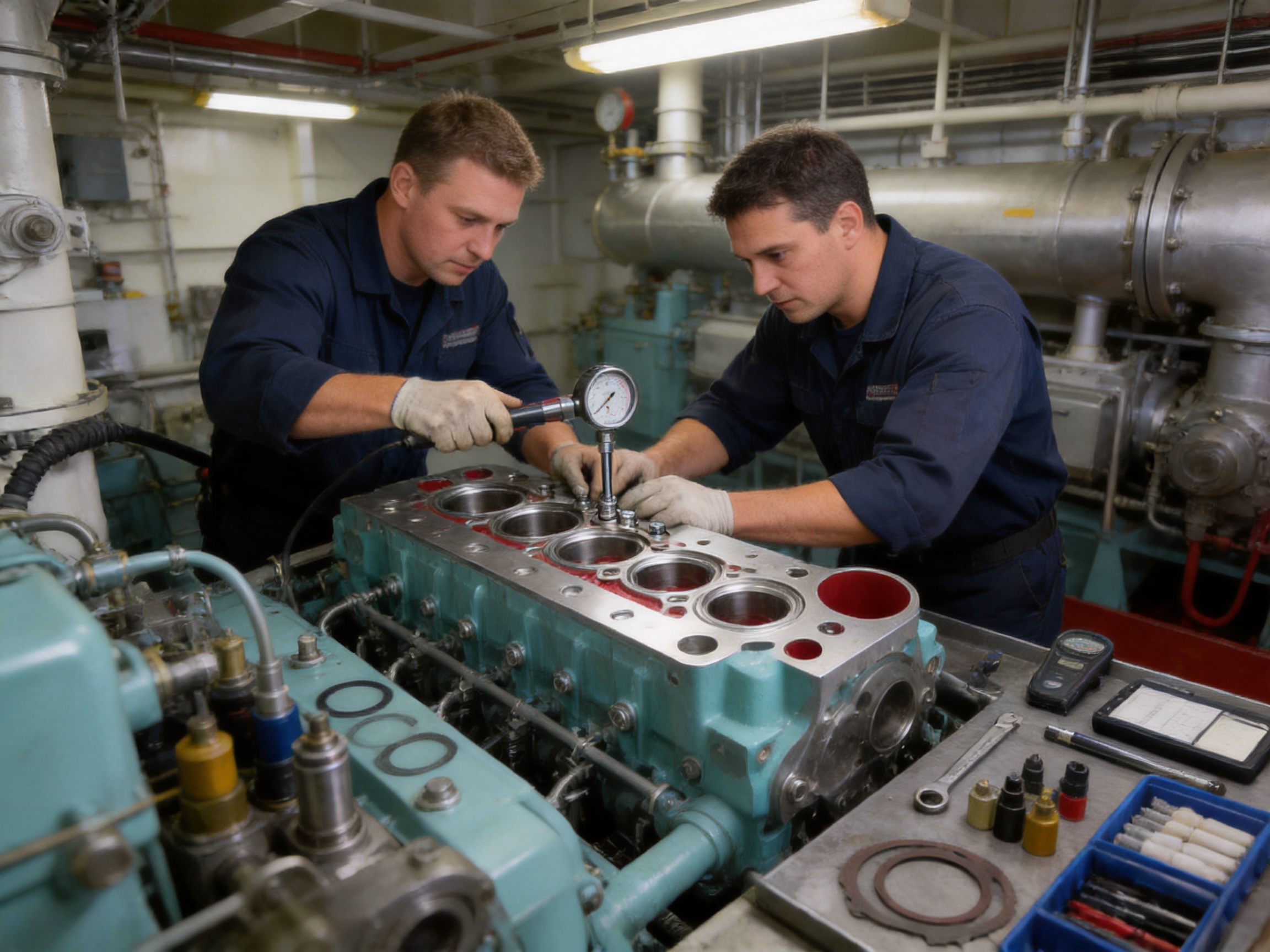
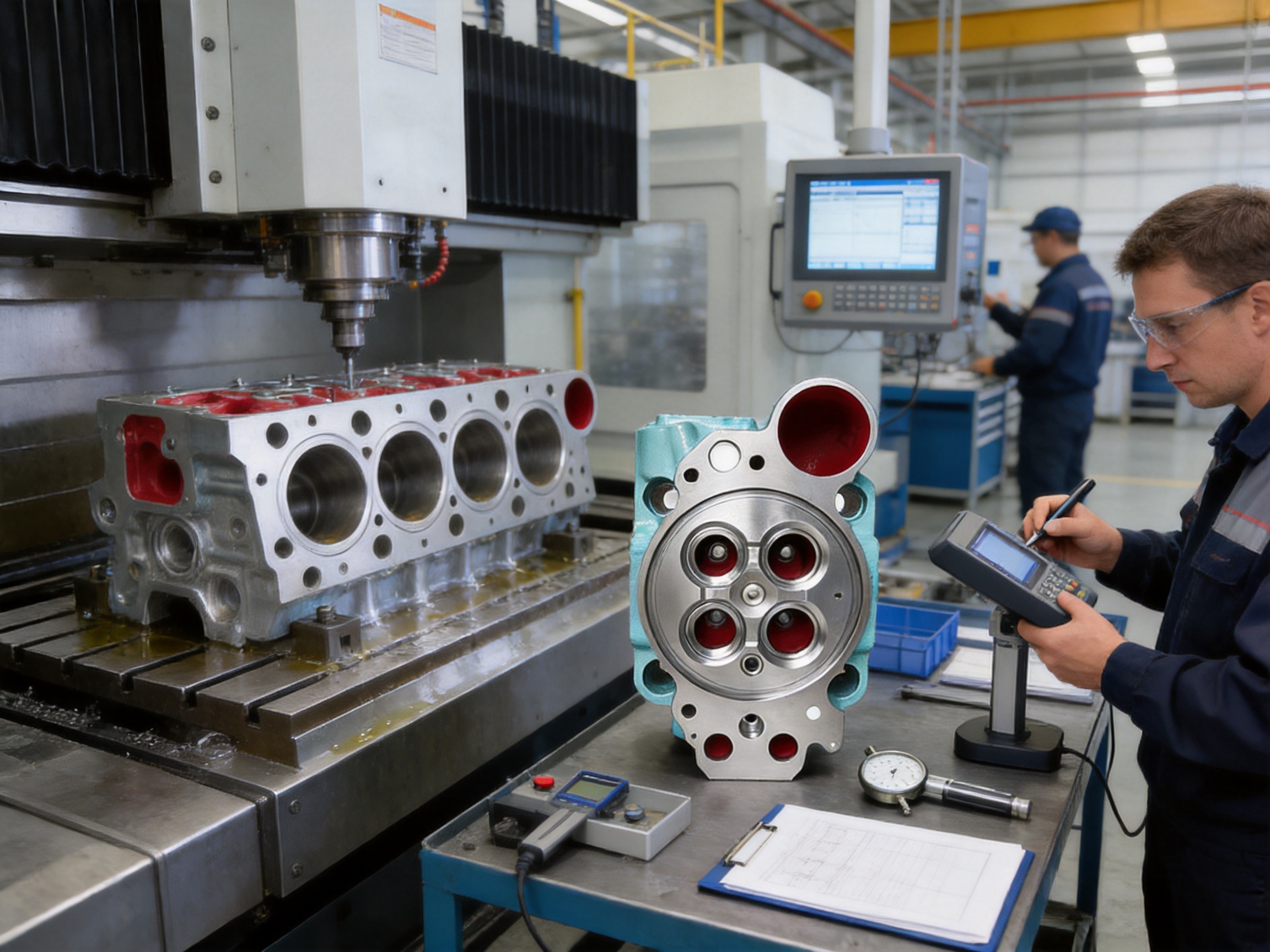
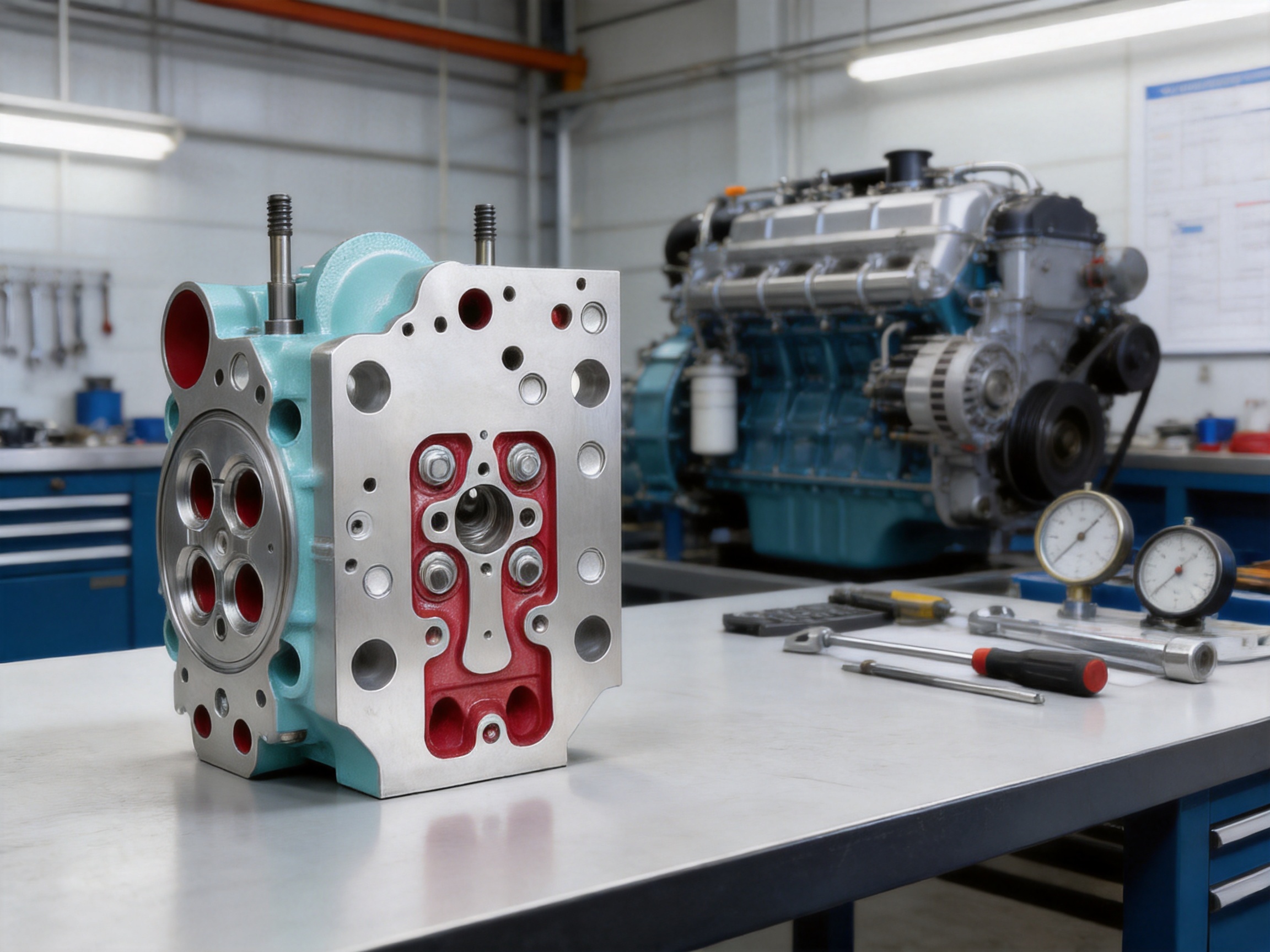
The cylinder head is one of the most important structural and functional components in a marine diesel engine. It closes the top of the cylinder, forms part of the combustion chamber, supports essential valve-train components, and provides passages for cooling water, lubricating oil, intake air, and exhaust gas. Because it operates under repeated cycles of high temperature, combustion pressure, vibration, and thermal expansion, the cylinder head must be manufactured with accurate geometry, dependable material quality, and consistent dimensional control.
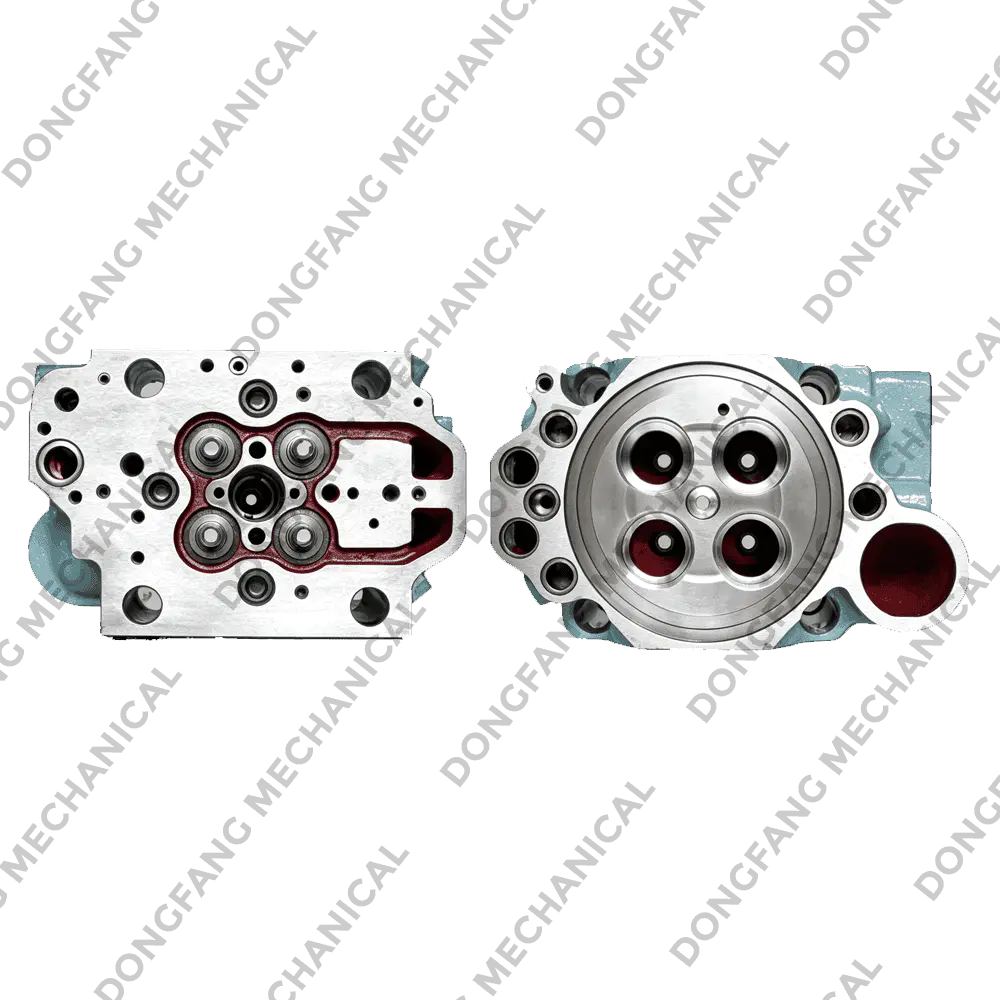
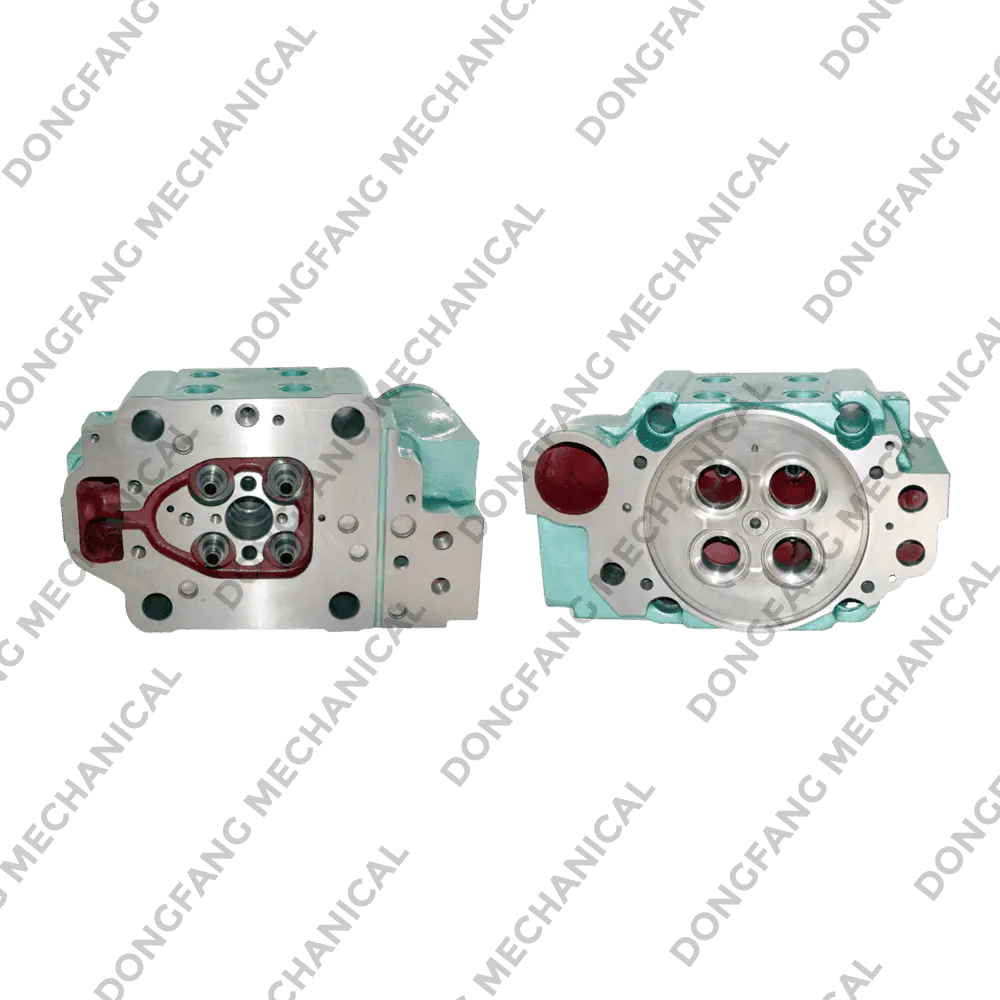
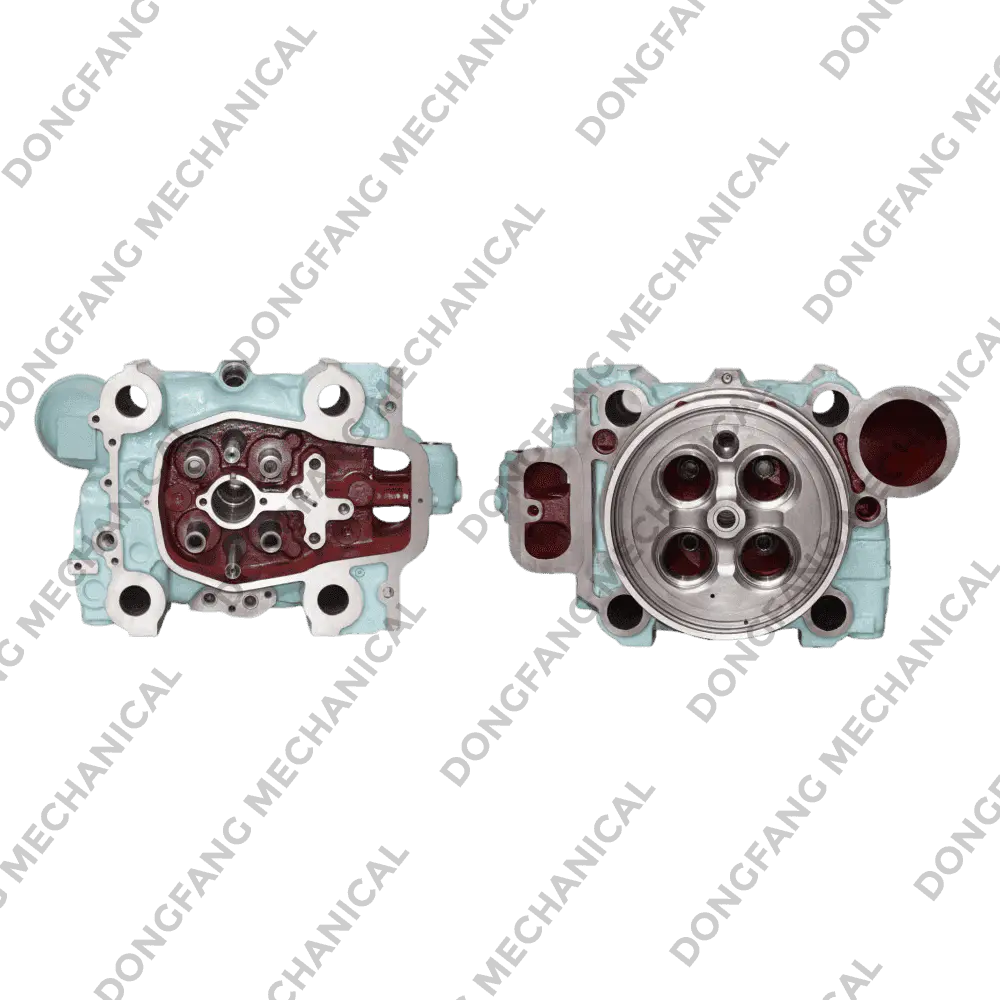
The DE-18 replacement cylinder head is designed for use as an aftermarket spare part compatible with selected Daihatsu marine diesel engine applications. It is produced by Zhoushan Putuo Dongfang Machinery Co., Ltd., a Chinese manufacturer and OEM supplier specializing in cylinder heads, cylinder liners, valves, valve seats, valve cages and guides, connecting rods, piston pins, and piston heads for imported and domestic marine diesel engines.
For shipowners, marine repair companies, engine distributors, and maintenance contractors, the value of a replacement cylinder head is determined by much more than its purchase price. A suitable component must provide reliable installation, accurate interface dimensions, sound internal passages, stable operation under marine conditions, and practical support throughout the procurement and maintenance process. The DE-18 product is positioned to meet these requirements through specialized experience, controlled manufacturing, inspection procedures, and a production system focused on marine diesel engine components.
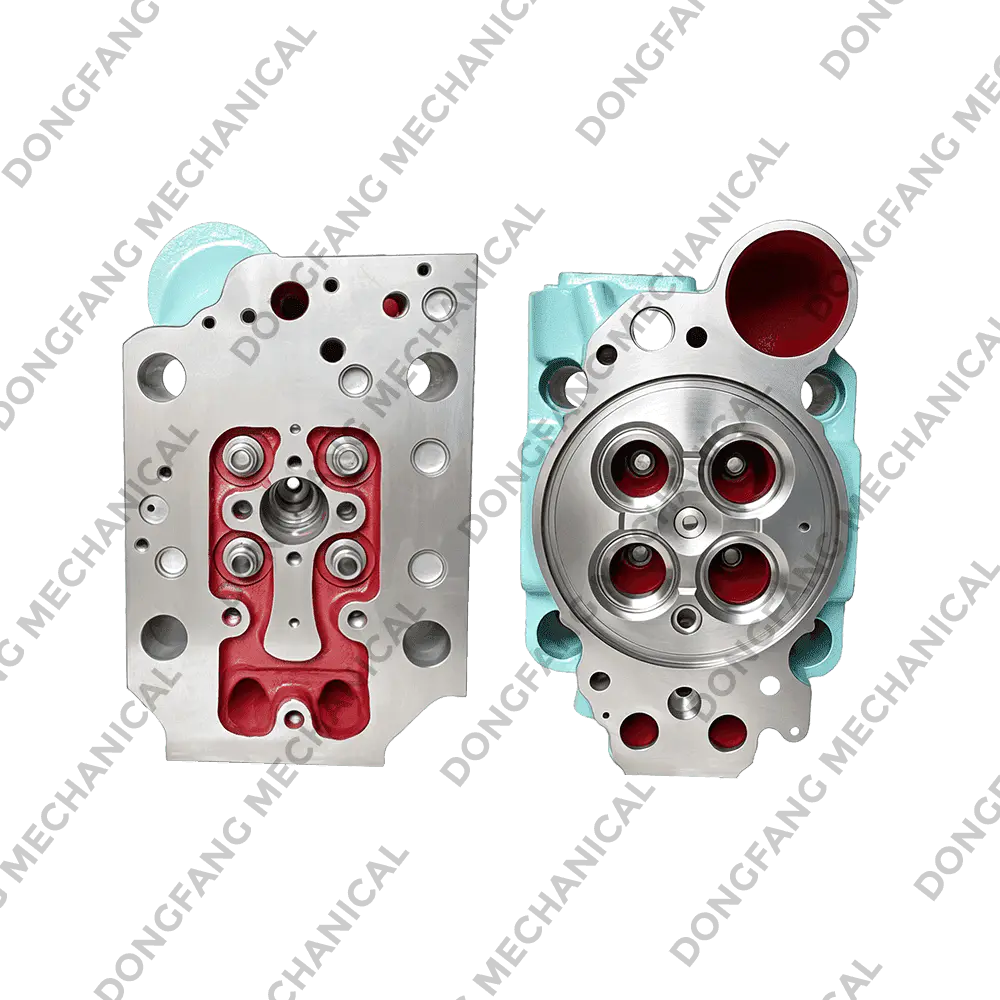
DE-18
Product Overview
The DE-18 is a replacement cylinder head intended for compatible Daihatsu marine diesel engine applications. Its principal function is to provide the upper sealing and operating structure of the engine cylinder. When installed with the appropriate gasket, valves, valve seats, guides, fasteners, and related components, the cylinder head contributes to compression retention, combustion efficiency, exhaust discharge, intake flow, and cooling performance.
As an aftermarket component, the DE-18 is intended to provide a practical alternative to purchasing a complete replacement engine or relying exclusively on a higher-priced original supply channel. The product is especially relevant when an existing cylinder head has developed cracking, distortion, corrosion, damaged valve seats, worn guide bores, combustion leakage, or other defects that make continued operation unsafe or uneconomical.
A cylinder head replacement should always be selected according to engine model, component reference, dimensional requirements, and operating application. The product title alone should not be treated as sufficient confirmation of interchangeability. Before ordering, buyers should provide the engine model, serial information where available, existing part number, drawings or measurements, and photographs of the original component. This verification process helps reduce the risk of installing a visually similar but technically unsuitable part.
The DE-18 can be considered for several maintenance situations, including planned overhauls, emergency repairs, refurbishment of spare engines, fleet standardization, and preparation of critical onboard replacement inventory. Its use may help maintenance teams shorten repair planning and avoid extended downtime caused by waiting for a complete engine assembly or an unavailable original component.
Why the Cylinder Head Matters in a Marine Diesel Engine
In a four-stroke marine diesel engine, the cylinder head generally contains or supports the intake and exhaust valve assemblies, fuel injector location, valve guides, valve seats, cooling passages, and the upper combustion chamber surface. In some engine configurations, it also provides mounting points for rocker arms, bridge pieces, injection equipment, starting-air components, and other valve-train or service accessories.
The cylinder head must perform several functions at the same time. It must withstand the pressure generated during combustion while maintaining a gas-tight seal with the cylinder liner or engine block. It must transfer heat away from the combustion area without developing excessive thermal gradients. It must maintain accurate alignment between valves, guides, seats, injectors, and related components. It must also resist corrosion caused by cooling water, condensation, combustion products, and the general marine environment.
Failure in one area can affect the complete engine. A distorted sealing surface may cause combustion-gas leakage and gasket failure. A damaged valve seat may reduce compression or cause a valve to burn. A blocked cooling passage may create localized overheating. A cracked area near an injector bore or exhaust port may permit fluid leakage or allow combustion damage to spread. Poor guide alignment can lead to abnormal valve wear, oil consumption, and unstable engine operation.
For these reasons, a replacement cylinder head should be treated as a precision-engineered component rather than as a simple cast or machined metal part. Correct material selection, casting integrity, machining accuracy, heat-treatment control, surface finishing, and final inspection all contribute to the service value of the finished product.
Key Product Advantages
Application-Focused Replacement Design
The DE-18 is developed for a specific marine diesel engine application category rather than as a generic industrial cylinder head. Application-focused production allows the manufacturer to pay attention to mounting interfaces, valve-train locations, cooling passages, combustion-chamber geometry, and the installation requirements associated with marine engine maintenance.
This focus can be advantageous compared with low-cost components made without sufficient reference to the original application. A cylinder head that appears similar externally may still have different internal passage dimensions, valve-seat positions, bolt-hole locations, injector geometry, or sealing-surface tolerances. A component manufactured for a defined engine family is more likely to support an organized verification and fitting process.
Attention to Dimensional Compatibility
Dimensional consistency is essential for a replacement cylinder head. Important interfaces may include the cylinder sealing surface, bolt or stud holes, valve-guide bores, valve-seat locations, injector bore, cooling-water connections, oil passages, and accessory mounting points. The DE-18 manufacturing approach is intended to maintain these interfaces through machining operations and inspection procedures.
For a maintenance department, dimensional compatibility can reduce fitting time and the need for unplanned modification. It can also help technicians use established overhaul procedures, existing service tools, and known gasket and valve-train arrangements. However, final compatibility must still be verified against the exact engine version and the condition of the mating components.
Suitability for Marine Operating Conditions
Marine engines operate for long periods under load, often in environments with high humidity, salt exposure, vibration, variable cooling-water quality, and limited access for repair. A replacement cylinder head must therefore be considered in relation to durability and service stability, not only initial installation.
The manufacturer’s specialization in imported marine diesel engine components provides an important production advantage. Its experience includes components exposed to combustion heat, cooling-water circulation, valve impact, and continuous mechanical loading. This background supports a manufacturing philosophy centered on practical marine use, component interchangeability, and long-term maintenance requirements.
Potential Reduction in Total Maintenance Cost
A competitively priced replacement cylinder head may reduce total maintenance expenditure when compared with purchasing a complete new engine or replacing several major assemblies unnecessarily. The economic benefit can include the component price, shorter procurement time, reduced labor associated with extensive modification, and lower vessel downtime.
Total cost should be evaluated carefully. Buyers should consider the condition of valves, seats, guides, springs, injectors, rocker components, gaskets, fasteners, and the cylinder liner or block before deciding on a replacement head. In some cases, combining the DE-18 with a planned valve and sealing overhaul can produce a more reliable result than replacing the cylinder head alone.
Support for Planned Spare-Parts Management
Shipowners and fleet operators often maintain critical spare parts for engines that cannot remain out of service for long periods. A replacement cylinder head can form part of a planned inventory strategy, particularly for vessels operating far from major repair centers or for engines with long lead times for original components.
Keeping a verified spare head in controlled storage may help maintenance teams respond to unexpected damage. The component should be protected from moisture, contamination, impact, and corrosion during storage. Identification records should include the product alias, application information, purchase documentation, inspection records, and any dimensional verification performed before installation.
Manufacturing Expertise and Company Strengths
Zhoushan Putuo Dongfang Machinery Co., Ltd. was founded in 1996 and is located in the Shenjiamen Pingyang Industrial Zone of Zhoushan, Zhejiang Province, China. The company’s location provides access to marine transportation networks and a region closely associated with shipbuilding, vessel repair, marine equipment, and seaborne logistics.
The company specializes in the development, research, manufacturing, and import of components for imported and domestic marine diesel engines. Its product range includes cylinder heads and cylinder liners as well as valves, valve seats, valve cages and guides, connecting rods, piston pins, and piston heads. This broader product capability is valuable because these parts often work together as a coordinated engine system.
A manufacturer that understands multiple related components can better evaluate their interfaces and service relationships. For example, the performance of a cylinder head is linked to the condition of the valve seat, guide, valve face, injector bore, gasket, and cylinder sealing surface. Knowledge of these adjacent components supports more complete technical communication with customers and helps maintenance teams identify associated parts that may require inspection or replacement.
The company obtained ISO 9001 certification in 2001 and has been rated as an AAA-level enterprise. ISO 9001 certification reflects the presence of a documented quality-management framework. Certification alone does not guarantee that every individual component is suitable for every engine, but it demonstrates the importance assigned to controlled procedures, record keeping, corrective action, and continual improvement.
The company covers more than 8,000 square meters and operates a workshop of over 5,000 square meters. Its reported annual production exceeds 5,000 sets. This production scale can provide several advantages: accumulated manufacturing experience, repeatable process planning, a stable supplier and workforce structure, and the ability to serve both individual repair requirements and larger distributor orders.
The company also reports more than 20 years of experience in its specialized field. Such experience is particularly relevant to marine diesel parts because many maintenance requirements involve older engine models, discontinued parts, dimensional comparisons, reverse engineering, refurbishment planning, and compatibility checks. Experienced personnel are more likely to recognize the practical differences between apparently similar components and to understand the causes of common cylinder-head failures.
Advanced Manufacturing Process
Technical Review and Application Confirmation
The manufacturing process begins with a technical review of the required component. This review may involve original drawings, reference samples, part numbers, customer measurements, engine-model data, and photographs. The purpose is to clarify the geometry and interfaces before production begins.
For a product such as the DE-18, application confirmation is especially important because marine engine models may have variations based on production series, rating, vessel installation, emissions configuration, or later design revisions. A responsible supplier should confirm the relevant details rather than relying only on a broad engine-family description.
Material and Casting Control
The cylinder head must have sufficient strength, heat resistance, dimensional stability, and resistance to the operating environment. The choice of material and casting method affects the component’s ability to withstand thermal cycling and mechanical stress.
During casting, attention should be given to mold preparation, metal cleanliness, filling behavior, solidification, shrinkage, and the formation of internal defects. Inadequate control can produce porosity, inclusions, shrinkage cavities, or hidden cracks. These defects may not be obvious during a simple visual inspection, yet they can become serious problems after the component enters service.
After casting, the component may undergo cleaning, removal of excess material, surface preparation, and initial dimensional checks. Areas such as water-jacket passages, combustion surfaces, valve locations, and mounting faces deserve particular attention because defects in these areas can affect sealing, cooling, or component alignment.
CNC Machining and Precision Finishing
Modern machining equipment allows critical surfaces and holes to be produced with repeatable positioning and controlled dimensions. Machining may include the cylinder sealing face, bolt holes, valve-guide bores, valve-seat pockets, injector bore, accessory mounting points, oil passages, and cooling connections.
Computer numerical control machining can reduce variation between production batches when the process is supported by verified programs, suitable tooling, and inspection feedback. It also permits the production of complex geometries that would be difficult to achieve consistently through manual methods alone.
Surface finish is important in sealing and wear areas. A sealing face that is too rough may damage the gasket or permit leakage. A face that is incorrectly machined may create uneven loading. Valve-seat and guide locations must also be processed so that replacement or installation of related parts can be performed accurately.
Machining of Valve and Injector Interfaces
Valve and injector interfaces are among the most sensitive regions of a cylinder head. The valve must contact its seat evenly, while the guide must maintain the correct relationship between the valve stem and the seat. The injector bore must position the injector correctly in relation to the combustion chamber and sealing arrangement.
Incorrect geometry in these areas can cause incomplete combustion, compression loss, hot spots, valve burning, excessive guide wear, or fuel leakage. For this reason, machining and inspection should focus on concentricity, depth, angle, surface condition, and alignment. Related components should be checked together during assembly rather than evaluated in isolation.
Cooling-Passage Integrity
Cooling passages carry heat away from the combustion chamber, exhaust-port area, and other high-temperature regions. Their shape and openness influence heat transfer and thermal balance. Sand, scale, machining debris, or casting irregularities can restrict coolant flow and create localized overheating.
Cleaning and passage inspection are therefore essential parts of cylinder-head preparation. Depending on the production and customer requirements, inspection may include visual examination, cleaning verification, pressure testing, and checks for leakage between cooling passages and combustion or oil areas.
Inspection and Quality Control
Quality control should be applied at several stages rather than only at the end of production. Incoming material and process inputs should be controlled. Casting surfaces should be examined. Machined dimensions should be measured against technical requirements. Critical holes and faces should be checked for location, size, and alignment.
Final inspection may include visual examination, dimensional measurement, surface-condition checks, hardness or material verification where specified, and pressure or leakage testing. The exact inspection plan depends on the product design, customer requirements, and applicable technical documentation.
A strong inspection system helps identify defects before shipment and creates records that support traceability. For distributors and shipowners, inspection documentation can be useful when parts are stored for later use or when a technical question arises during installation.
Production and Quality Strengths Compared with Generic Alternatives
| Evaluation Area | DE-18 Manufacturing Advantage | Importance to the Buyer |
|---|---|---|
| Application focus | Developed as a replacement component for a defined marine engine application category | Supports more organized compatibility verification and installation planning |
| Marine experience | Produced by a company specializing in imported and domestic marine diesel engine components | Provides practical understanding of marine operating conditions and overhaul needs |
| Related component capability | Manufacturing experience includes cylinder liners, valves, seats, guides, connecting rods, and piston components | Helps customers evaluate the cylinder head as part of a complete engine repair |
| Quality management | ISO 9001 certification and documented production management | Supports process consistency, records, corrective action, and continual improvement |
| Production capacity | Workshop exceeding 5,000 square meters and reported annual production above 5,000 sets | Supports repeat orders, distributor supply, and planned spare-part procurement |
| Customer communication | Technical confirmation can be based on model information, measurements, photographs, and reference details | Reduces the risk of ordering an unsuitable visually similar component |
| Commercial flexibility | Aftermarket and OEM-supplier production model | Offers an alternative sourcing route for maintenance and replacement requirements |
The comparison above does not imply that every low-cost competitor is unsuitable or that every aftermarket component has identical quality. Instead, it identifies the manufacturing and service factors that should be considered when comparing suppliers. Price is important, but it should be evaluated together with dimensional control, material integrity, inspection, technical support, delivery reliability, and after-sales communication.
Installation and Overhaul Considerations
Before installing a replacement cylinder head, the maintenance team should inspect the cylinder liner, block or upper landing surface, studs, nuts, washers, gasket, valves, valve springs, guides, seats, injector, rocker gear, and cooling connections. A new cylinder head cannot compensate for a damaged mating surface, incorrect fastener condition, blocked cooling passage, or defective valve-train component.
The old cylinder head should be removed carefully so that the cause of failure can be identified. Cracking, discoloration, erosion, gasket damage, valve-seat recession, corrosion, and unusual deposits can provide important information. If the reason for the original failure is not corrected, the replacement head may experience the same problem.
All mating surfaces should be clean and free from old gasket material, corrosion products, oil, and foreign particles. Cleaning should be performed without damaging precision surfaces. Bolt holes and threaded areas should be checked for contamination or deformation. Fasteners should be inspected for stretching, thread damage, corrosion, and loss of clamping capability.
The gasket must be correct for the engine application and installed in the correct orientation. Reusing a compressed or damaged gasket is generally inappropriate for a major sealing joint. Fasteners should be tightened according to the engine manufacturer’s specified sequence, stages, torque values, or angle requirements. When the engine design requires it, tightening tools should be calibrated.
After installation, valve clearances, injector position, rocker-arm alignment, lubrication, cooling-water circulation, and any required timing settings should be checked. The engine should be started under controlled conditions and observed for leaks, abnormal exhaust color, unusual noise, unstable speed, high temperature, or pressure irregularities.
A post-installation inspection is particularly important for marine engines because access may become difficult after the vessel returns to operation. Early detection of leakage or abnormal temperature can prevent a minor installation issue from developing into major engine damage.
Maintenance Practices for Longer Service Life
Proper maintenance begins with clean and correctly treated cooling water. Scale, corrosion, biological contamination, and poor water chemistry can reduce cooling efficiency and damage internal passages. Cooling-water treatment should follow the engine maker’s recommendations and the vessel’s established maintenance program.
Cooling-water temperature and pressure should be monitored. Sudden changes may indicate a blocked passage, thermostat issue, pump problem, air lock, or internal leak. A cylinder head that repeatedly experiences overheating may develop distortion or cracking even if it initially meets all dimensional requirements.
Valve clearance should be checked at the recommended service intervals. Excessive clearance can cause impact loading and poor valve timing, while insufficient clearance can prevent the valve from seating fully as the engine reaches operating temperature. Both conditions can increase wear and raise combustion-related temperatures.
Fuel-system maintenance also affects cylinder-head life. Poor injector spray patterns, incorrect opening pressure, leakage, or delayed injection can create localized overheating and deposit formation around the injector and exhaust-valve areas. Maintaining the fuel system helps protect the combustion chamber and related head components.
Lubricating oil should be kept clean and at the correct level and specification. Oil contamination can accelerate wear in valve guides and rocker components. Excessive oil consumption, blue exhaust smoke, or unusual deposits should be investigated rather than accepted as normal operating behavior.
During periodic overhauls, technicians should examine valve-seat contact patterns, guide clearance, combustion-surface condition, injector bore condition, cooling passages, sealing faces, and signs of erosion or cracking. Early intervention can prevent a small defect from requiring an emergency replacement.
Procurement Guidance for International Buyers
International buyers should provide complete technical information when requesting the DE-18 or any comparable replacement cylinder head. Useful information includes the engine manufacturer and model, engine serial number, cylinder-head reference, vessel application, number of cylinders, original part photographs, and measurements of key interfaces.
Customers should also specify whether they require a bare cylinder head, a head assembled with valves and seats, or a complete assembly with guides, springs, rocker components, and other accessories. The commercial description of “cylinder head” can refer to different supply conditions, so the scope of delivery should be confirmed in writing.
Packaging should protect machined surfaces and internal passages from impact, moisture, dust, and corrosion. Heavy components should be secured to prevent movement during transport. Export documentation should identify the product clearly and include any available inspection or conformity records.
For fleet operators, it is useful to establish a repeatable purchasing specification. The specification may include required documentation, inspection points, packing standards, marking, coating or preservation requirements, and acceptance criteria. A consistent specification helps ensure that later orders match the first approved component.
When purchasing from an aftermarket supplier, buyers should distinguish between a component made to a controlled reference and a component copied only from an external appearance. Technical drawings, inspection records, production traceability, and communication with the manufacturer are valuable indicators of supply quality.
Applications and Suitable Users
The DE-18 may be suitable for shipowners maintaining vessels equipped with compatible Daihatsu marine diesel engines. It can also serve marine engine repair workshops, shipyards, spare-parts distributors, equipment traders, fleet technical departments, and companies that rebuild or support used marine engines.
For a ship repair yard, the product can provide an additional sourcing option when an original cylinder head is unavailable or when the customer requires a cost-conscious repair. For a distributor, it may form part of a broader inventory of marine diesel components. For a shipowner, it may support planned maintenance and reduce reliance on emergency procurement.
The product can be considered for propulsion engines, auxiliary engines, generator sets, and other marine diesel applications only when the exact engine configuration and technical compatibility have been confirmed. The intended application should always be verified before installation.
Environmental and Operational Benefits
Replacing a damaged cylinder head rather than discarding an otherwise serviceable engine can extend the useful life of existing equipment. This approach may reduce the need for a complete engine replacement and lower the material and logistics burden associated with major equipment disposal.
A correctly functioning cylinder head supports efficient combustion, proper valve sealing, stable cooling, and reliable engine output. These factors can contribute to more predictable fuel consumption and fewer unplanned operating interruptions. The environmental benefit depends on correct installation, engine condition, fuel quality, maintenance, and operating practices.
Aftermarket component manufacturing also supports the continued service of older marine engines. Many vessels remain operational for years after the original equipment manufacturer has reduced production of certain parts. A capable replacement supplier helps preserve maintenance options and reduces the pressure to replace complete systems solely because one critical component has become difficult to obtain.
Technical Limitations and Verification Responsibilities
No replacement cylinder head should be installed solely because its external appearance resembles the original. Internal passages, material specifications, valve geometry, injector position, and sealing interfaces may differ between versions. The purchaser and installer share responsibility for confirming suitability.
The information supplied for the DE-18 identifies it as a replacement cylinder head compatible with Daihatsu marine diesel engine applications, but it does not provide a complete dimensional drawing, material certificate, inspection report, or engine-model list. These details should be requested when required by the buyer’s quality system, classification requirements, or vessel maintenance procedure.
For critical propulsion or power-generation equipment, buyers may request additional documentation such as material certificates, dimensional inspection reports, pressure-test records, non-destructive examination results, heat-treatment details, or certificates of conformity. The required documents should be agreed before production or shipment.
The product should be used only by qualified marine-engine technicians who understand the relevant engine procedures. Installation, tightening, valve adjustment, pressure testing, and commissioning should follow the applicable engine documentation and vessel safety rules.
Frequently Asked Questions
What is the DE-18 product?
The DE-18 is an aftermarket replacement cylinder head for compatible Daihatsu marine diesel engine applications. It is manufactured by Zhoushan Putuo Dongfang Machinery Co., Ltd., a Chinese supplier specializing in marine diesel engine components.
Is the DE-18 an original equipment manufacturer part?
The DE-18 is presented as an aftermarket replacement component produced by an OEM supplier and manufacturer. Buyers should confirm the exact commercial status, manufacturing reference, and compatibility documentation required for their application before ordering.
Can the DE-18 fit every Daihatsu marine diesel engine?
No. Marine engine families may contain different models, production versions, ratings, and design revisions. Buyers should provide the engine model, serial number, original part reference, drawings, measurements, or photographs so that compatibility can be checked before purchase.
Is the cylinder head supplied as a bare casting or a complete assembly?
The supply condition should be confirmed with the manufacturer or distributor. Buyers should specify whether they require a bare machined head, a head with valve seats and guides, or a fully assembled cylinder head with valves, springs, and related components.
What are the main advantages of purchasing from a specialized manufacturer?
A specialized manufacturer can provide relevant experience in marine operating conditions, related engine components, dimensional reproduction, machining, inspection, and spare-parts communication. It may also offer more practical technical support than a supplier that handles generic industrial castings without marine-engine expertise.
What information should be included in a quotation request?
A quotation request should include the engine model, serial number, required quantity, original part number, application, delivery destination, supply condition, inspection requirements, and any requested documentation. Photographs and measurements are useful when the original reference is uncertain.
How should the cylinder head be stored before installation?
The cylinder head should be stored in a clean, dry, protected environment. Machined surfaces and internal passages should be preserved against corrosion and contamination. The component should remain securely supported and should not be placed where it can be struck, dropped, or exposed to standing water.
What other parts should be checked during replacement?
Technicians should check the gasket, cylinder sealing surface, fasteners, valves, seats, guides, springs, rocker components, injector, cooling passages, lubrication passages, and the cylinder liner or block. The cause of the original cylinder-head failure should also be investigated.
Does ISO 9001 certification guarantee installation success?
ISO 9001 certification indicates that the company operates a quality-management system, but it does not replace application verification or correct installation. The component must still match the engine, meet the required specifications, and be installed according to the applicable technical procedure.
Can the DE-18 help reduce vessel downtime?
A compatible replacement cylinder head may reduce downtime by providing an alternative to waiting for a complete engine replacement or a difficult-to-source original component. The actual time saving depends on product availability, shipping, inspection, installation, and the condition of related engine parts.
Where is the manufacturer located?
Zhoushan Putuo Dongfang Machinery Co., Ltd. is located in the Shenjiamen Pingyang Industrial Zone of Zhoushan, Zhejiang Province, China. The company reports convenient land, sea, and air transportation access.
How can buyers contact the supplier?
Business inquiries can be directed to Chancy through the company’s listed telephone number or email address. Buyers should provide complete technical information so that the supplier can evaluate the requested cylinder head accurately.
Conclusion
The DE-18 replacement cylinder head provides a practical aftermarket sourcing option for compatible Daihatsu marine diesel engine applications. Its value is based on the role of the cylinder head in engine sealing, combustion, cooling, valve operation, and long-term reliability. A suitable replacement can help shipowners and repair organizations restore engine service without replacing an entire engine assembly.
The principal strengths associated with the product include application-focused manufacturing, marine diesel component experience, controlled machining, attention to critical interfaces, production capacity, and the support of an ISO 9001 quality-management system. The manufacturer’s broader product range in cylinder liners, valves, seats, guides, connecting rods, piston pins, and piston heads also provides a useful foundation for complete overhaul planning.
At the same time, successful use depends on correct technical verification. Buyers should confirm the exact engine model and part reference, define the supply condition, request appropriate inspection documentation, and inspect all mating components before installation. The cylinder head should be installed by qualified personnel using the correct gasket, fasteners, tightening sequence, valve adjustments, and commissioning procedure.
When these steps are followed, the DE-18 can support cost-conscious maintenance, planned spare-parts inventory, and the continued operation of marine diesel engines in demanding service environments.
References
1. Product information supplied for the DE-18 replacement cylinder head and its stated marine diesel engine application.
2. Company profile information supplied for Zhoushan Putuo Dongfang Machinery Co., Ltd., including manufacturing history, product range, facility information, and quality-management credentials.
3. General principles of marine diesel engine maintenance, cylinder-head inspection, valve-train servicing, cooling-system control, and overhaul planning.
4. ISO 9001 quality-management principles relating to documented processes, inspection, traceability, corrective action, and continual improvement.
5. General marine engineering practices for the selection, storage, installation, testing, and maintenance of replacement engine components.