عربى

Content
- 1 Product Overview
- 2 Why the Cylinder Head Matters in Marine Diesel Engines
- 3 Key Product Advantages
- 4 Manufacturing Expertise and Production Capability
- 5 Advanced Manufacturing Process
- 6 Quality Management and Inspection
- 7 Comparison with Lower-Quality Alternatives
- 8 Benefits for Shipowners and Marine Repair Companies
- 9 Installation and Maintenance Considerations
- 10 How to Select the Correct R32 Replacement
- 11 Company Strengths and Service Philosophy
- 12 Environmental and Operational Value
- 13 Ordering and Supply Process
- 14 Frequently Asked Questions
- 14.1 What is the R32 cylinder head used for?
- 14.2 Is the R32 cylinder head suitable for every Wartsila engine?
- 14.3 Can the cylinder head be supplied as a complete assembly?
- 14.4 What makes a marine cylinder head different from a general industrial cylinder head?
- 14.5 What quality checks are important before shipment?
- 14.6 Can the supplier provide related engine components?
- 14.7 What information should be sent with a quotation request?
- 14.8 How should the replacement cylinder head be stored before installation?
- 14.9 What should be checked during installation?
- 14.10 Can a new cylinder head solve repeated overheating problems?
- 14.11 Why is supplier experience important when buying an aftermarket cylinder head?
- 15 Conclusion
- 16 References
- 17 Product: R32
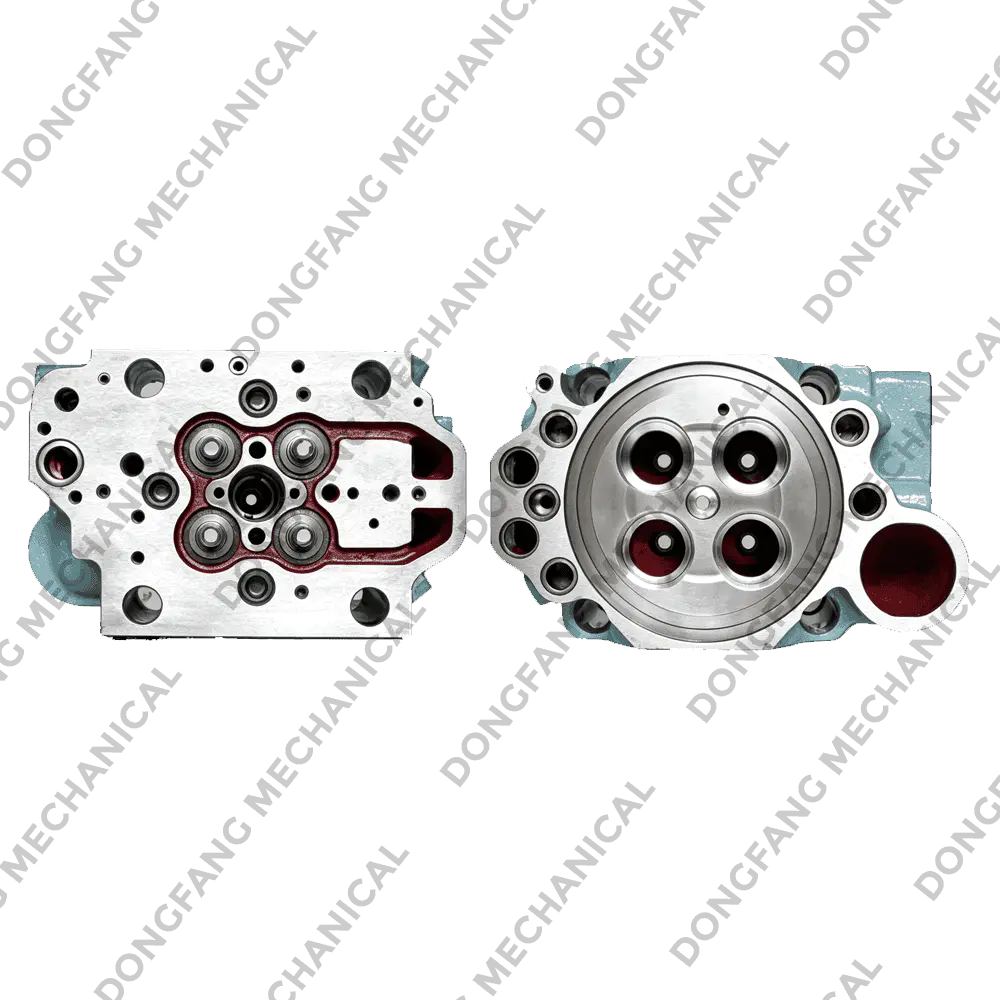
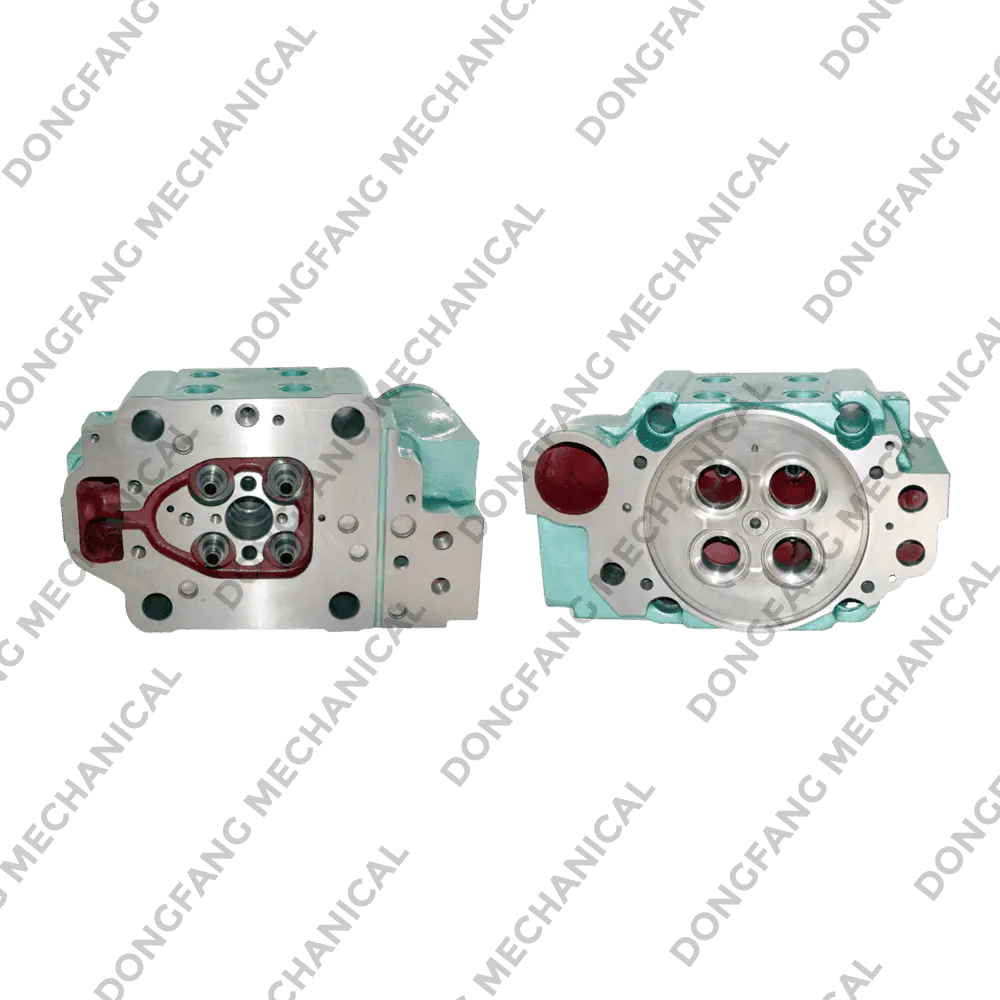
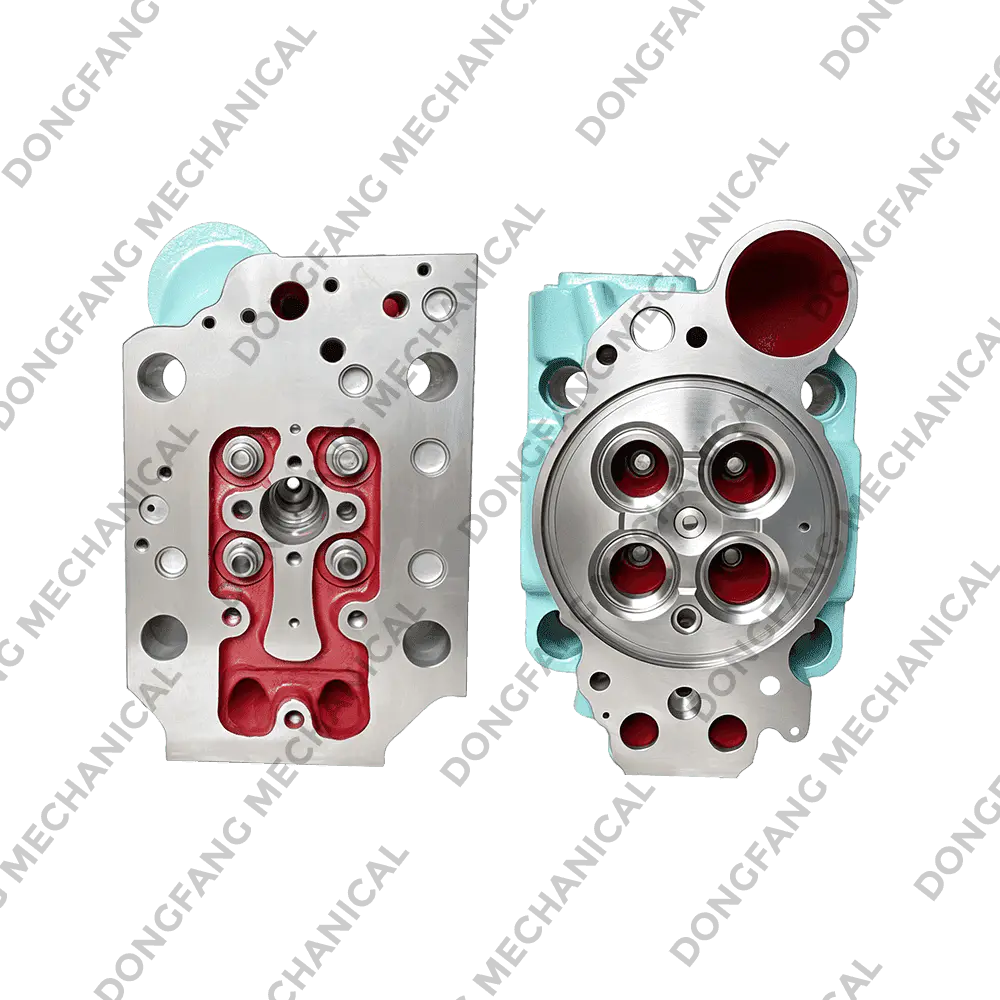
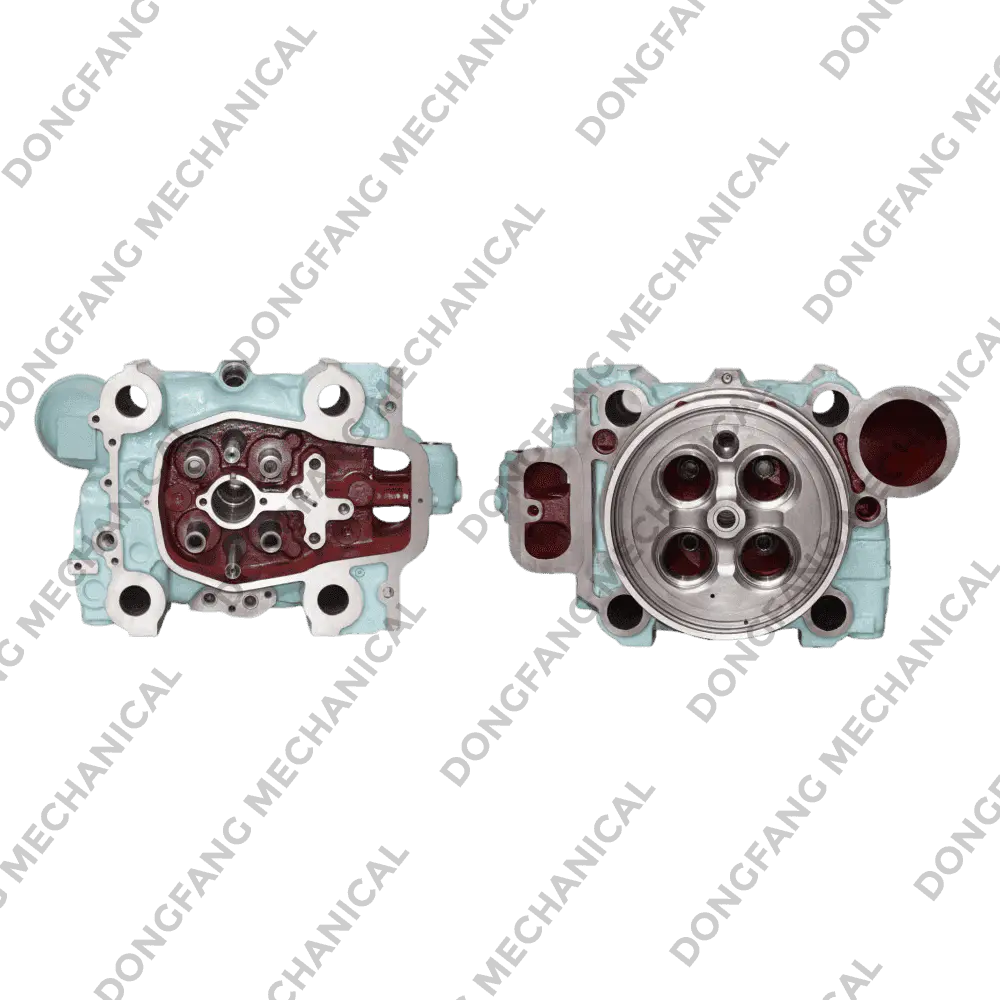
The R32 cylinder head is a replacement component designed for compatibility with selected Wartsila marine diesel engine applications. As one of the most thermally and mechanically demanding parts in a diesel engine, the cylinder head has a direct influence on combustion quality, valve operation, cooling performance, compression integrity, emissions, fuel consumption, and overall engine reliability. A properly manufactured replacement cylinder head can help shipowners, marine repair companies, engine operators, and spare-parts distributors restore engine performance while controlling maintenance costs and reducing equipment downtime.
Zhoushan Putuo Dongfang Machinery Co., Ltd. manufactures and supplies aftermarket cylinder heads and related diesel engine components for marine and industrial applications. The company’s product range includes cylinder heads, cylinder liners, valves, valve seats, valve cages, valve guides, connecting rods, piston pins, and piston heads. The R32 model is listed as a replacement spare part compatible with Wartsila marine diesel engines, supporting customers who require a dependable alternative for scheduled overhauls, emergency repairs, and long-term spare-parts planning.
Unlike a basic cast or machined metal component, a marine diesel cylinder head must satisfy several requirements at the same time. It must withstand repeated combustion pressure, manage high thermal loads, maintain accurate valve geometry, preserve coolant passages, resist corrosion, and remain dimensionally stable throughout extended operating cycles. These requirements make manufacturing experience, process control, inspection, and application knowledge especially important.
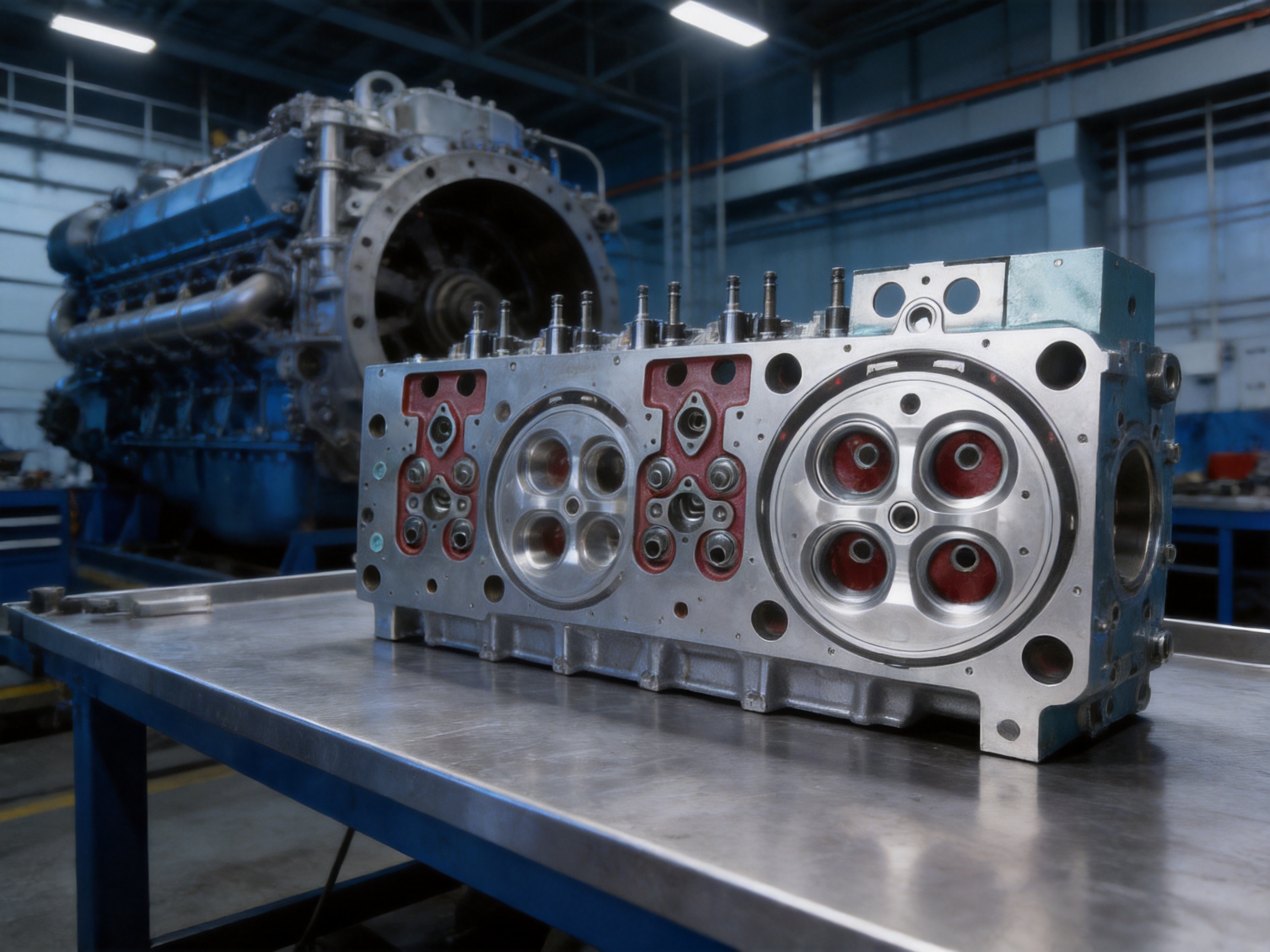
The R32 cylinder head is intended to address these requirements through a combination of appropriate material selection, controlled casting or forging-related preparation, precision machining, careful finishing, and inspection. Its value is not limited to the physical part itself. The complete supply capability includes application support, manufacturing experience, production consistency, and the ability to provide compatible marine diesel engine components from an experienced specialist manufacturer.
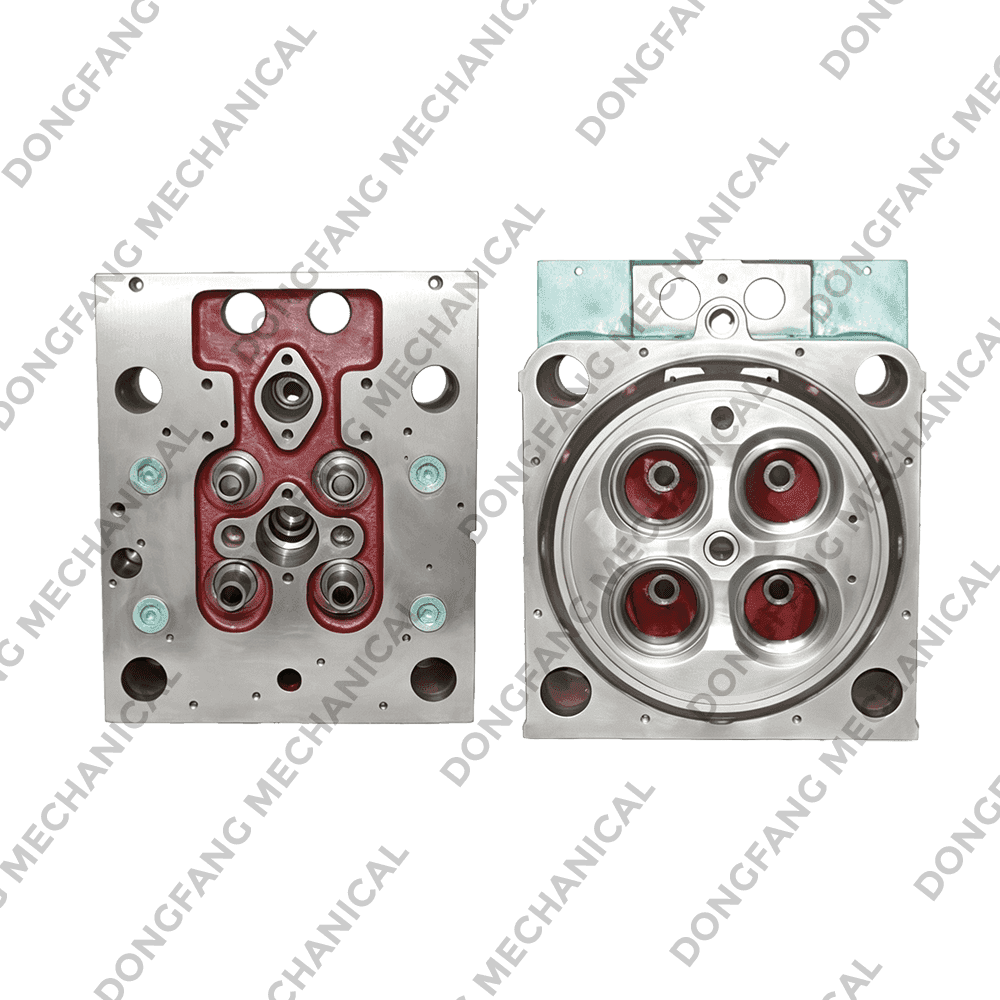
R32
Product Overview
The R32 cylinder head is an aftermarket replacement part for compatible Wartsila marine diesel engine applications. It is produced for use in the upper section of the engine cylinder assembly, where it forms the combustion chamber boundary and supports the valves, valve seats, valve guides, injectors, and associated sealing elements. Depending on the specific engine configuration, the cylinder head may also incorporate passages for cooling water, lubrication, exhaust flow, intake flow, and fuel-injection equipment.
In service, the cylinder head is exposed to alternating thermal cycles. During combustion, the fire deck and surrounding areas experience intense heat and high gas pressure. Between firing events, the component is cooled and subjected to a reduction in temperature. This repeated expansion and contraction can create stress, particularly around valve seats, injector openings, cooling passages, bolt holes, and areas where section thickness changes. A high-quality replacement therefore requires more than dimensional similarity. It requires sound material structure, accurate machining, and attention to stress-sensitive areas.
The R32 product is suitable for customers seeking a replacement cylinder head rather than an entire engine assembly. It may be considered during a planned overhaul when the original head has reached its service limit, or when inspection identifies cracking, corrosion, valve-seat recession, distortion, leakage, or excessive wear. It can also support urgent repair work where restoring engine availability is more important than waiting for a longer supply cycle from an original equipment channel.
Before ordering, the purchaser should confirm the engine model, cylinder-head configuration, part number, drawing reference, dimensions, valve arrangement, cooling layout, and any required modifications. Marine engine families can contain variations according to production year, output rating, cylinder configuration, and application. Product compatibility should therefore be verified using technical documentation and the identification information supplied with the engine.
Why the Cylinder Head Matters in Marine Diesel Engines
The cylinder head closes the upper end of the cylinder and works together with the cylinder liner, piston, piston rings, valves, injector, and sealing components. Its geometry determines the shape of the combustion space and influences the movement of intake air and exhaust gas. A poorly fitted or incorrectly machined head can lead to compression loss, combustion irregularities, increased exhaust temperature, abnormal fuel consumption, and accelerated valve-train wear.
One of the most important functions of the cylinder head is to provide a rigid and stable platform for the valves. Intake and exhaust valves must open and close at the correct timing and seal against their seats during compression and combustion. The valve guide maintains the valve stem position, while the valve seat provides the contact surface required for gas-tight sealing and heat transfer. Any deviation in guide alignment, seat concentricity, or contact width can affect engine performance.
The cylinder head also supports the fuel injector or injection assembly. Correct injector positioning is essential because the fuel spray must enter the combustion chamber at the intended location and angle. Small deviations can influence spray distribution, ignition behavior, combustion temperature, and deposit formation. For this reason, injector bores and related surfaces must be machined accurately and protected from damage during handling and installation.
Cooling passages are another critical feature. Marine diesel engines operate under sustained loads, often for long periods without interruption. The cylinder head must transfer heat away from the combustion zone and distribute it through the cooling system. Blocked, undersized, rough, or incorrectly positioned passages can restrict coolant flow and create localized hot spots. These hot spots may contribute to cracking, gasket failure, valve-seat damage, or distortion.
Sealing performance is equally important. The cylinder head must create a reliable seal with the cylinder liner, engine block, or intermediate sealing arrangement, depending on the engine design. The sealing faces must have the correct flatness, surface finish, and geometry. A defective sealing surface can allow combustion gas, coolant, or lubricating oil to pass between systems. Such leakage can cause loss of compression, coolant contamination, overheating, or serious engine damage.
Key Product Advantages
Application-Focused Compatibility
The R32 cylinder head is identified for compatibility with Wartsila marine diesel engine applications. This application focus is important because marine engine components are not universally interchangeable. A cylinder head must correspond to the engine’s cylinder dimensions, valve layout, injector position, bolt pattern, cooling configuration, and combustion-chamber requirements. A product developed for a defined application is more practical than a generic component that requires uncertain adaptation.
Compatibility also helps maintenance teams organize overhaul work more efficiently. When the replacement part is selected according to the correct engine reference, technicians can prepare the necessary gaskets, fasteners, valves, valve springs, injectors, and adjustment equipment in advance. This reduces the risk of discovering a mismatch after the engine has already been opened.
Suitable for Cost-Controlled Maintenance
Aftermarket cylinder heads can provide an economical option for shipowners and repair organizations that need to manage maintenance budgets. The cost of marine engine ownership includes not only the component price but also vessel downtime, labor, transportation, inspection, and lost operating time. A dependable replacement sourced from an experienced specialist can help reduce the total cost of an overhaul when it meets the required technical and quality standards.
The economic advantage does not come from reducing material quality or eliminating inspection. It comes from focused production, manufacturing specialization, practical supply-chain management, and the ability to serve customers outside a single original equipment channel. The result can be a competitive replacement solution for operators who require responsible cost control without compromising essential performance characteristics.
Designed for High-Temperature Service
A marine diesel cylinder head must remain stable under high combustion temperatures and repeated thermal cycling. The R32 replacement is manufactured with attention to the conditions experienced in heavy-duty diesel operation. Material integrity, wall thickness, cooling-passage design, valve-seat installation, and surface accuracy all contribute to the component’s ability to perform in demanding service.
Thermal performance is not determined by one feature alone. It depends on the relationship between the combustion surface, cooling passages, valve seats, injector area, sealing surfaces, and the engine’s cooling system. Manufacturing controls that preserve these relationships can help limit distortion and maintain consistent operating behavior after installation.
Support for Long Operating Cycles
Marine engines frequently operate under steady loads for extended periods. In this environment, small defects can become major problems because the component receives little opportunity to cool or recover. A cylinder head with stable geometry and properly finished functional surfaces can support reliable operation over long service intervals.
Long service life also depends on correct installation, coolant quality, lubrication, valve adjustment, injector condition, and engine operating practices. The replacement cylinder head is therefore one part of a complete maintenance system. Its performance is strongest when the surrounding components are inspected and serviced at the same time.
Availability of Related Components
Zhoushan Putuo Dongfang Machinery Co., Ltd. manufactures a broader range of diesel engine components. This is useful when a cylinder-head overhaul also requires valves, valve seats, valve cages, valve guides, cylinder liners, connecting rods, piston pins, or piston heads. Sourcing multiple related components from one experienced supplier may simplify communication, technical coordination, packaging, and spare-parts planning.
A coordinated supply approach can also help customers maintain consistency between associated parts. For example, the condition of the valve guide affects valve alignment, the valve seat affects sealing and heat transfer, and the cylinder liner affects piston movement and compression. Treating these components as part of one maintenance system can produce better results than replacing only the most visibly damaged item.
Manufacturing Expertise and Production Capability
Zhoushan Putuo Dongfang Machinery Co., Ltd. was founded in 1996 and has developed more than two decades of experience in imported and domestic marine diesel engine components. The company is located in Shenjiamen Pingyang Industrial Zone, Zhoushan City, Zhejiang Province, China. Its location provides access to land, sea, and air transportation, which is valuable for marine spare-parts supply and time-sensitive repair orders.
The company operates across an area of more than 8,000 square meters, including a workshop of over 5,000 square meters. Its stated production capacity exceeds 5,000 sets annually. This scale provides a balance between specialist manufacturing and sufficient production resources for repeat orders, project-based requirements, and distributor supply.
Manufacturing experience is particularly significant for marine cylinder heads because the component requires several different types of production knowledge. Foundry or blank preparation must be controlled to limit porosity, inclusions, shrinkage, and dimensional instability. Machining must maintain the positions and relationships of multiple functional surfaces. Assembly-related operations must protect valve-seat and guide bores. Inspection must verify both visible dimensions and critical internal characteristics.
Advanced Manufacturing Process
Technical Review and Order Confirmation
The manufacturing process begins with technical review. Before production, the supplier should confirm the engine application, cylinder-head reference, drawings, dimensional requirements, material expectations, and customer specifications. This stage is essential because similar-looking cylinder heads may differ in valve layout, injector position, cooling passages, mounting dimensions, or combustion-chamber geometry.
Application information is compared with available production data and inspection standards. If the customer provides an original sample, drawing, worn component, or detailed measurement record, the information can support identification and process preparation. Clear technical confirmation at the beginning reduces the possibility of manufacturing the wrong configuration and helps ensure that the finished part is evaluated against the correct criteria.
Material and Blank Preparation
The material used for a marine cylinder head must be selected according to the engine application and the component’s thermal and mechanical requirements. Important considerations include strength at operating temperature, resistance to thermal fatigue, machinability, wear behavior around valve seats and guides, and compatibility with the cooling environment.
During blank preparation, attention is given to the shape of the casting or forged base, allowance for machining, section thickness, and the location of critical features. A suitable allowance allows machining to remove surface irregularities while preserving the required final geometry. Excessive or uneven allowance can increase machining time and create dimensional challenges, while insufficient allowance may prevent complete removal of imperfections.
Process control at this stage helps reduce the risk of internal defects. Depending on the production method and customer requirements, quality evaluation may include visual examination, dimensional checks, hardness testing, and non-destructive inspection. The purpose is to identify unacceptable conditions before the component reaches final machining.
Controlled Heat Treatment
Heat treatment may be used to improve material stability and achieve the required mechanical characteristics. It can help reduce residual stress, improve hardness distribution, and support dimensional stability during subsequent machining. The exact treatment depends on the material and production route, but temperature control, holding time, cooling method, and batch traceability are all important.
For a cylinder head, residual stress can become a concern if it causes distortion during machining or later changes in service. Controlled heat treatment and appropriate stabilization procedures help the manufacturer produce a component that retains its geometry more reliably. This is particularly important for large sealing faces, valve-seat locations, injector bores, and mounting surfaces.
CNC and Precision Machining
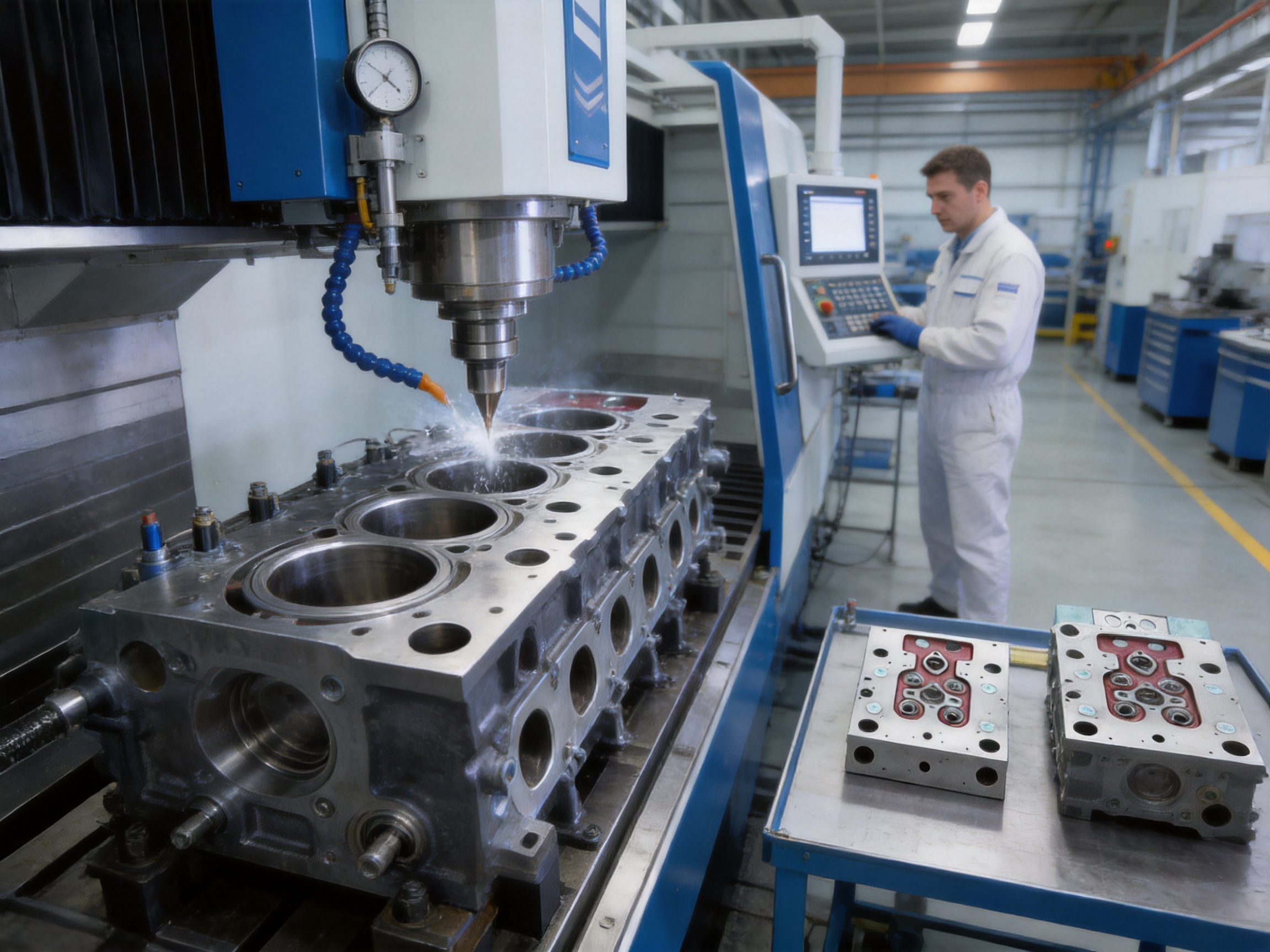
Precision machining transforms the prepared blank into a functional cylinder head. Computer-controlled equipment can be used to process mounting surfaces, sealing faces, valve bores, guide bores, injector openings, cooling connections, threaded holes, and other specified features. Accurate machining requires suitable cutting tools, secure workholding, correct reference points, and careful control of tool wear.
The order of machining operations also matters. A stable reference surface is normally established before other features are processed. Critical bores and faces are then related to the correct datum system. This helps preserve the positional relationships required for installation and valve-train operation.
Machining quality is evaluated through dimensions, flatness, parallelism, perpendicularity, concentricity, position, and surface finish. These characteristics work together. A bore can have the correct diameter but still be unsuitable if it is not aligned with the corresponding seat or sealing surface. Similarly, a flat surface may not provide reliable sealing if its roughness or local waviness is outside the required range.
Valve Seat and Guide Processing
Valve seats and guides are among the most important functional areas of a cylinder head. The guide controls the movement of the valve stem, while the seat creates a sealing interface and transfers heat from the valve to the cylinder head. Their relationship must be controlled carefully.
Guide-bore alignment affects valve movement and seat contact. If the guide is misaligned, the valve may not contact the seat evenly. Uneven contact can cause leakage, localized overheating, accelerated wear, and damage to the valve face. For this reason, guide installation and finishing should be performed with attention to alignment, interference, surface condition, and final internal diameter.
Valve-seat installation requires appropriate interference, correct depth, stable seating, and accurate finishing. The final seat angle, contact width, and concentricity must match the engine requirements. A well-finished seat contributes to compression sealing, heat transfer, and consistent valve operation.
Cooling-Passage and Internal-Surface Control
Internal passages require special attention because they are not always easy to inspect after the component is fully machined. The passages must be free from unacceptable blockage, loose material, excessive roughness, or residues that could restrict coolant flow. Cleaning and flushing operations are therefore important steps before final inspection and packaging.
Cooling passages around the exhaust-valve area and injector region are especially significant because these locations can experience high temperatures. The manufacturing process must preserve the intended wall thickness and passage geometry. Any modification or repair to these areas should be controlled and evaluated carefully.
Final Finishing and Cleaning
After machining, the cylinder head is deburred, cleaned, and prepared for inspection. Sharp edges, machining chips, abrasive particles, and residual coolant must be removed. Internal cleanliness is essential because loose debris can enter the lubrication or cooling system and damage other engine components after installation.
Finished surfaces are protected against corrosion during storage and transportation. Packaging should prevent impact damage to sealing faces, valve-seat areas, threads, and precision bores. For marine spare parts, packaging quality is important because components may pass through multiple transport stages before reaching a shipyard or engine room.
Quality Management and Inspection
The company obtained ISO 9001 certification in 2001 and has been rated as an AAA-level enterprise. A quality management system provides a framework for production planning, document control, process monitoring, inspection, corrective action, and customer communication. Certification alone does not replace technical inspection, but it supports a structured approach to consistent manufacturing.
Inspection of a replacement cylinder head may include several stages. Incoming material or blank inspection checks the starting condition. In-process inspection verifies critical machining operations. Final inspection confirms that the completed part meets the applicable drawing, sample, or technical specification. Inspection records can support traceability and help customers review the product before installation.
Dimensional Inspection
Dimensional inspection may cover overall dimensions, mounting-hole patterns, valve-bore sizes, guide-bore dimensions, injector openings, sealing surfaces, cooling connections, threaded holes, and other features relevant to the specific engine. Measuring equipment must be selected according to the required accuracy and feature type.
Dimensional inspection should not focus only on individual measurements. Functional relationships are also important. The location of a valve guide relative to the valve seat, the position of the injector opening relative to the combustion area, and the alignment of the sealing surfaces can determine whether the part performs correctly after installation.
Surface and Sealing Inspection
Sealing faces are checked for flatness, surface condition, and damage. Uneven surfaces can prevent the gasket or mating component from sealing correctly. Local scratches, dents, corrosion, or raised material should be removed or evaluated before assembly.
Valve-seat contact can be examined after appropriate finishing. The objective is to achieve a continuous and correctly positioned contact band. If the contact is too narrow, too wide, or displaced from the intended location, the valve may not transfer heat effectively or maintain a reliable gas seal.
Non-Destructive Evaluation
Depending on customer requirements and the production specification, non-destructive evaluation may be applied to identify surface or near-surface defects. Methods can include visual inspection, dye penetrant testing, magnetic particle testing, ultrasonic examination, or pressure-related testing where appropriate for the material and design.
Non-destructive evaluation is valuable because some defects may not be visible during ordinary dimensional inspection. Cracks around valve seats, injector openings, mounting areas, or cooling passages can become serious in service. Identifying potential defects before shipment supports safer and more predictable installation.
Pressure and Leakage Checks
Cooling and internal passages may require pressure or leakage checks according to the relevant product specification. These checks help identify leakage paths that could allow coolant to enter the combustion chamber or oil system, or combustion gas to enter the cooling circuit.
Pressure testing should be performed using controlled procedures that protect the component and provide meaningful results. Test pressure, holding time, temperature, sealing method, and acceptance criteria should be defined in advance. Documentation of the test can be supplied when required by the customer or project.
Comparison with Lower-Quality Alternatives
The main advantage of a professionally manufactured aftermarket cylinder head is not simply that it replaces an original component. It is that it is produced with attention to the conditions that determine service performance. Lower-quality alternatives may appear attractive because of a lower initial price, but they can create hidden costs through poor fit, repeated machining, early leakage, valve damage, installation delays, or unplanned engine downtime.
A low-cost cylinder head may have inconsistent material properties, inadequate machining allowance, inaccurate valve-seat geometry, rough internal passages, or insufficient cleaning. It may also lack clear inspection records or reliable application identification. These weaknesses may not be visible when the part is first unpacked. They can emerge only after installation and operation, when correction is more expensive.
In contrast, a specialist manufacturer can combine application knowledge with production experience. The customer benefits from a more structured process for technical confirmation, manufacturing, inspection, and delivery. This does not mean that every aftermarket product is automatically equal to an original component. It means that the replacement should be judged by documented specifications, process control, inspection results, and actual compatibility rather than by price alone.
| Evaluation Area | Professionally Manufactured R32 Replacement | Unverified Low-Quality Alternative |
|---|---|---|
| Application identification | Confirmed according to engine reference, drawings, samples, or technical data | May rely on visual similarity or incomplete information |
| Material control | Material selection and production condition can be reviewed against requirements | Material source or properties may be uncertain |
| Valve-seat accuracy | Seat position, contact, and alignment are treated as critical features | Uneven contact or inaccurate geometry may require rework |
| Cooling passages | Passage cleanliness and integrity are considered during production and inspection | Residue, blockage, or dimensional inconsistency may be present |
| Dimensional consistency | Supported by controlled machining and inspection procedures | Variation between batches may be difficult to predict |
| Quality documentation | Inspection and technical records may be available according to the order | Traceability and inspection evidence may be limited |
| After-sales coordination | Specialist supplier can support related components and application questions | Technical responsibility may be unclear |
| Total maintenance risk | Designed to reduce fitting problems and unplanned repeat work | Lower purchase price may be offset by installation or operating problems |
Benefits for Shipowners and Marine Repair Companies
For shipowners, the R32 cylinder head can support planned maintenance and spare-parts readiness. A vessel operator may keep replacement heads available for scheduled overhauls, especially when the engine is critical to propulsion, power generation, cargo handling, or auxiliary systems. Advance procurement can reduce exposure to long lead times and improve the ability to coordinate a repair during a port call or shipyard period.
For marine repair companies, a compatible aftermarket cylinder head provides an additional sourcing option when an original component is unavailable, costly, or subject to an extended delivery period. Repair specialists can use the component as part of a complete overhaul package, combining it with new valves, guides, seats, gaskets, and related engine parts as required by the inspection results.
For distributors, the product can expand an existing portfolio of marine diesel engine spare parts. The company’s broader product range allows distributors to offer cylinder heads and associated components to customers operating different imported and domestic engine types. This can improve purchasing efficiency and support repeat business based on established technical communication.
For engine operators, a reliable replacement can help reduce the consequences of unexpected cylinder-head damage. A spare head that is correctly identified, properly packaged, and ready for installation can shorten repair preparation time. This is particularly valuable in marine environments, where access to specialized machining equipment may be limited during a voyage or remote port call.
Installation and Maintenance Considerations
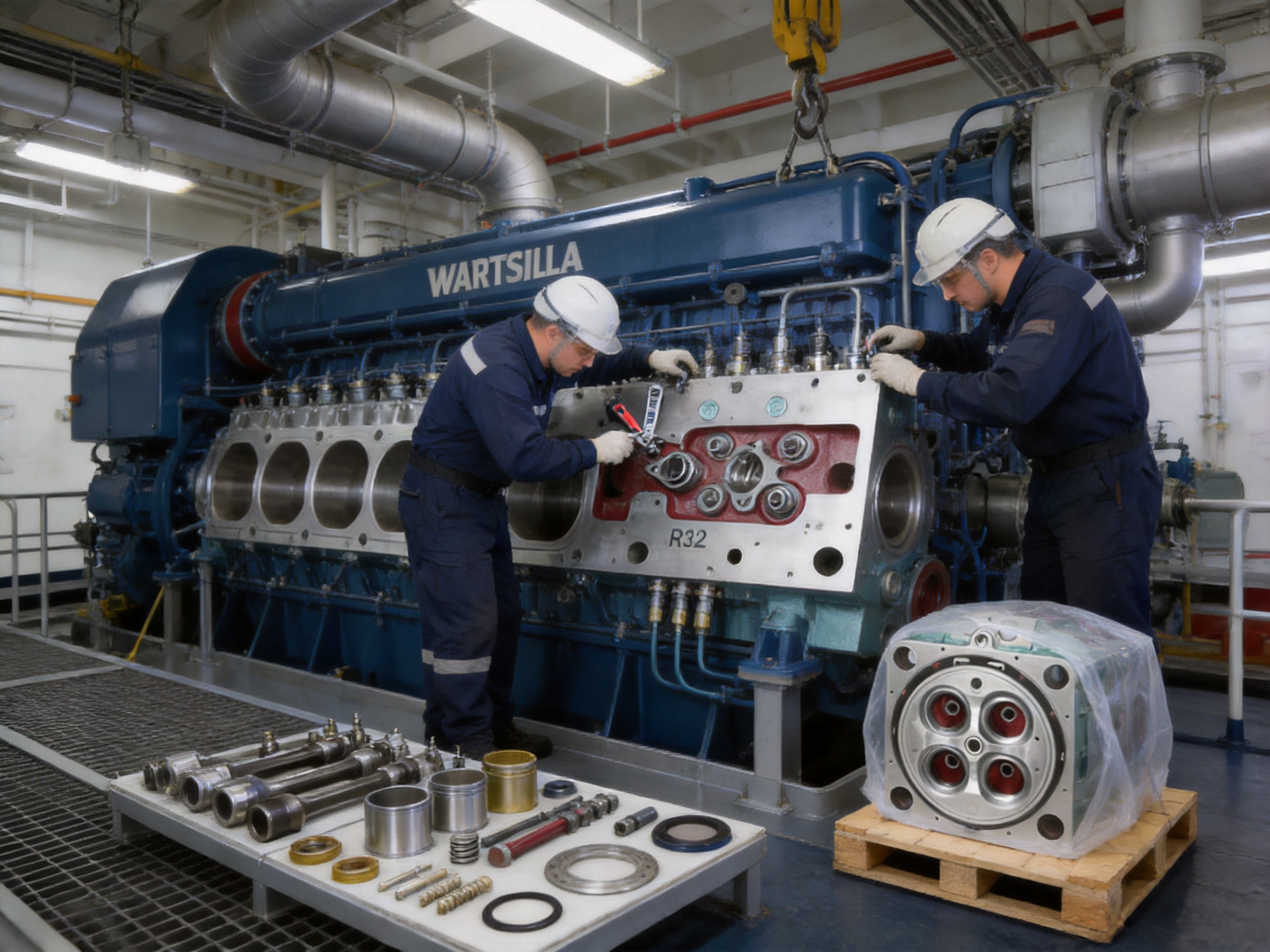
Before installation, the R32 cylinder head should be inspected for transport damage, corrosion, contamination, and changes in the sealing or valve areas. Protective coatings should be removed only according to the supplier’s instructions. All internal passages should be clean, and any temporary plugs or protective materials should be removed before assembly.
The mating surfaces on the engine block, cylinder liner, gasket, and related components must also be inspected. Installing a new cylinder head on a damaged or contaminated mating surface can lead to leakage even when the replacement component itself is correctly manufactured. Surface flatness, bolt condition, thread condition, and gasket selection should be verified as part of the installation procedure.
Fasteners should be inspected and tightened according to the engine manufacturer’s specified sequence and torque or angle requirements. Uneven tightening can distort the cylinder head or create localized gasket loading. Excessive torque may damage threads or introduce stress, while insufficient torque may allow combustion or coolant leakage.
Valve clearances, injector settings, rocker-arm components, and timing-related adjustments should be checked after installation. The exact procedure depends on the engine model. A correct cylinder head cannot compensate for improper valve adjustment, worn valve-train parts, defective injectors, or an inadequate cooling system.
After assembly, the cooling system should be flushed or treated as required, filled with suitable coolant, and checked for air pockets and leaks. The engine should be started and monitored carefully. Important observations may include cooling-water pressure, exhaust temperature, crankcase condition, starting behavior, compression balance, oil condition, and any signs of gas or coolant leakage.
How to Select the Correct R32 Replacement
Customers should provide as much technical information as possible when requesting the R32 cylinder head. Useful information includes the engine manufacturer, engine model, serial number, cylinder number, existing cylinder-head part number, drawing reference, production year, and photographs of identifying features. Measurements or an original sample may also help confirm the configuration.
The customer should state whether the requirement is for a complete cylinder head or a bare casting or machined body. Some projects may require a head supplied with valves, valve seats, guides, springs, injector sleeves, or other assembled components. Clarifying the scope avoids misunderstandings regarding what is included in the quotation and delivery.
Operating conditions should also be considered. Engines used for propulsion, power generation, offshore service, emergency duty, or harbor operations may have different maintenance priorities. The expected operating hours, overhaul schedule, fuel type, cooling medium, and previous failure mode can help the supplier recommend suitable inspection and preparation requirements.
If the original cylinder head failed because of overheating, coolant contamination, abnormal combustion, valve damage, or incorrect adjustment, the cause should be investigated before installing the replacement. Otherwise, the same failure mechanism may damage the new component. A technically correct spare part must be supported by a technically correct repair process.
Company Strengths and Service Philosophy
Zhoushan Putuo Dongfang Machinery Co., Ltd. has built its business around the development, research, manufacturing, and import of marine diesel engine components. Its product knowledge covers both imported and domestic engine applications, giving the company experience with a wide range of component designs and maintenance requirements.
The company’s stated business philosophy emphasizes integrity, pragmatism, continuous improvement, quality-first standards, reasonable pricing, and dedicated service. These principles are relevant to marine spare-parts customers because purchasing decisions often involve more than a single transaction. Customers need accurate communication, dependable delivery, consistent product quality, and practical support when technical questions arise.
Strong cooperation with shipowners and dealers in different regions indicates the importance of long-term supply relationships. Marine engine customers often require repeat orders, mixed product groups, replacement units for multiple vessels, and customized documentation. A supplier capable of maintaining product records and responding consistently can provide greater value than a source focused only on one-time sales.
The company’s annual production capacity of more than 5,000 sets provides a foundation for regular commercial supply. Its workshop area, equipment, and experienced personnel support the manufacturing of cylinder heads and other engine components. At the same time, the company’s specialist focus allows it to maintain attention on the technical features that distinguish marine diesel parts from general industrial castings.
Environmental and Operational Value
A properly functioning cylinder head contributes to efficient combustion and stable engine operation. When compression is maintained, valves seal correctly, and injector positioning remains accurate, the engine can operate closer to its intended performance condition. This may help reduce unnecessary fuel consumption, exhaust temperature imbalance, and premature component wear.
Replacing a damaged cylinder head can also extend the useful life of an existing engine. Extending engine service life reduces the need for premature replacement of large equipment and limits the resources required for a complete engine change. The environmental value of a replacement component therefore includes both operational efficiency and the continued use of existing machinery.
Responsible maintenance remains essential. An aftermarket cylinder head should be installed as part of a complete inspection and repair plan. Correct coolant treatment, fuel quality, lubrication control, combustion adjustment, and regular monitoring all contribute to lower emissions and better equipment utilization.
Ordering and Supply Process
A typical order begins with an inquiry containing the engine and component information. The supplier reviews the application and confirms the product configuration. Commercial details may include quantity, delivery requirements, inspection documents, packaging, and any special machining or assembly needs.
Once the technical and commercial details are confirmed, production or stock preparation can proceed. The customer may request inspection reports, material information, dimensional records, pressure-test results, or photographs before shipment, depending on the project requirements. These documents help the receiving team prepare for installation and maintain internal maintenance records.
Packaging should protect all critical surfaces from impact, moisture, and contamination. Heavy components require stable support to prevent movement during transportation. Ports, bores, threads, and sealing surfaces should be protected with suitable covers or corrosion-control measures. Clear labeling should identify the product, quantity, order reference, and handling requirements.
Because the company is located in Zhoushan and benefits from land, sea, and air transportation, it can support different delivery arrangements. The appropriate transport method depends on urgency, destination, shipment size, and customer preference. Early communication is recommended for projects connected to shipyard schedules or vessel port calls.
Frequently Asked Questions
What is the R32 cylinder head used for?
The R32 cylinder head is an aftermarket replacement component intended for compatible Wartsila marine diesel engine applications. It forms the upper part of the cylinder assembly and supports essential functions such as combustion sealing, valve operation, injector positioning, and cooling.
Is the R32 cylinder head suitable for every Wartsila engine?
No. Compatibility must be confirmed for the specific engine model and configuration. Customers should provide the engine model, serial number, existing part number, drawing reference, and other identifying information before placing an order.
Can the cylinder head be supplied as a complete assembly?
The supply configuration depends on the customer’s requirement and the agreed specification. Customers should clarify whether they need a bare cylinder-head body, a machined head, or a head supplied with valves, valve seats, guides, springs, injector-related parts, and other components.
What makes a marine cylinder head different from a general industrial cylinder head?
Marine cylinder heads are designed for engines that often operate under high and continuous loads. They must withstand repeated thermal cycles, combustion pressure, vibration, cooling demands, and long service intervals. Their dimensions, valve arrangement, cooling passages, and mounting features are also specific to the engine application.
What quality checks are important before shipment?
Important checks may include material verification, dimensional inspection, sealing-surface inspection, valve-seat and guide alignment, internal passage cleanliness, non-destructive evaluation, pressure or leakage testing, and final visual examination. The exact inspection scope should be agreed according to the engine specification and customer requirements.
Yes. The company’s product range includes cylinder liners, valves, valve seats, valve cages, valve guides, connecting rods, piston pins, and piston heads, in addition to cylinder heads. These products can support broader overhaul and maintenance requirements.
What information should be sent with a quotation request?
The request should include the engine manufacturer, engine model, serial number, cylinder number, part number, quantity, delivery destination, required delivery date, and desired supply configuration. Photographs, drawings, and measurements are also useful when available.
How should the replacement cylinder head be stored before installation?
The cylinder head should be stored in a clean, dry, protected area. Precision surfaces and internal passages should remain covered, and corrosion protection should be maintained according to the supplier’s instructions. The component should be supported securely to prevent impact or distortion.
What should be checked during installation?
The mating surfaces, gasket, fasteners, valve-train components, injector components, cooling system, and lubrication system should be inspected. Correct tightening sequence and adjustment procedures must be followed according to the applicable engine documentation.
Can a new cylinder head solve repeated overheating problems?
A replacement may correct damage caused by a failed head, but repeated overheating usually requires investigation of the complete system. Cooling-water flow, coolant quality, thermostat or control equipment, injector condition, fuel quality, valve adjustment, lubrication, and engine loading should all be reviewed.
Why is supplier experience important when buying an aftermarket cylinder head?
Supplier experience supports correct application identification, stable manufacturing, practical inspection, and effective communication. It also helps the customer obtain related components and technical information when the repair involves more than one part.
Conclusion
The R32 cylinder head is a practical aftermarket replacement solution for compatible Wartsila marine diesel engine applications. Its importance comes from the demanding role of the cylinder head in combustion sealing, valve operation, cooling, injector positioning, and engine durability. A suitable replacement must therefore be evaluated through technical compatibility, material integrity, machining accuracy, inspection quality, and manufacturing reliability.
Zhoushan Putuo Dongfang Machinery Co., Ltd. combines more than two decades of marine diesel component experience with a broad product range, dedicated production facilities, established quality management, and the capacity to manufacture more than 5,000 sets annually. Its expertise in cylinder heads, cylinder liners, valves, valve seats, guides, connecting rods, piston pins, and piston heads allows it to support complete or partial overhaul requirements.
Compared with unverified alternatives, a professionally manufactured replacement offers greater confidence in application matching, dimensional consistency, internal cleanliness, valve-seat accuracy, cooling-passage integrity, and technical support. These benefits can help shipowners, distributors, repair companies, and engine operators reduce maintenance risk and control the total cost of marine engine ownership.
For the best result, customers should confirm the exact engine configuration before ordering and provide complete technical information. When the correct component is combined with proper installation, inspection, adjustment, and engine-system maintenance, the R32 cylinder head can contribute to dependable marine diesel operation and a more efficient, better-controlled overhaul process.
References
1. General marine diesel engine maintenance principles for cylinder heads, valves, valve seats, cylinder liners, and cooling systems.
2. ISO 9001 quality management system principles for manufacturing, inspection, traceability, and continuous improvement.
3. Marine engine overhaul practices relating to combustion sealing, valve-guide alignment, injector positioning, and cylinder-head installation.
4. Technical guidance on non-destructive evaluation, dimensional inspection, pressure testing, and surface-finish control for engine components.
5. Product and company information supplied for the R32 aftermarket cylinder head compatible with Wartsila marine diesel engine applications.