عربى

Content
- 1 Product Overview
- 2 Why Cylinder Head Quality Matters in Marine Diesel Engines
- 3 Key Advantages of the DL-32 Aftermarket Cylinder Head
- 4 Material and Structural Considerations
- 5 Manufacturing Process and Quality Control
- 6 Quality Management and Manufacturing Strengths
- 7 Advantages Compared with Less Specialized Alternatives
- 8 Installation and Maintenance Considerations
- 9 Procurement Guidance for Shipowners and Distributors
- 10 Packaging, Storage, and Handling
- 11 Environmental and Operational Responsibility
- 12 Service Support and Long-Term Cooperation
- 13 Recommended Application Workflow
- 14 Frequently Asked Questions
- 14.1 What is the DL-32 cylinder head?
- 14.2 Is the DL-32 suitable for every Daihatsu marine diesel engine?
- 14.3 Can the cylinder head be supplied with valves and guides?
- 14.4 Why is application verification important?
- 14.5 What manufacturing experience supports this product?
- 14.6 Does the manufacturer have a quality-management certification?
- 14.7 What information should be included in an inquiry?
- 14.8 Can the DL-32 support a scheduled overhaul?
- 14.9 What should be checked before installation?
- 14.10 How should the cylinder head be stored?
- 14.11 What makes a specialized aftermarket supplier advantageous?
- 15 Conclusion
- 16 References
- 17 Product: DL-32
A cylinder head is one of the most important structural and functional components in a marine diesel engine. It closes the upper portion of the cylinder, forms the combustion chamber, supports critical valve-train components, and provides passages for air, exhaust gas, cooling water, and lubricating oil. Because it operates under repeated exposure to high temperature, combustion pressure, vibration, and thermal cycling, the cylinder head must be manufactured with accurate geometry, dependable material quality, and consistent machining performance.
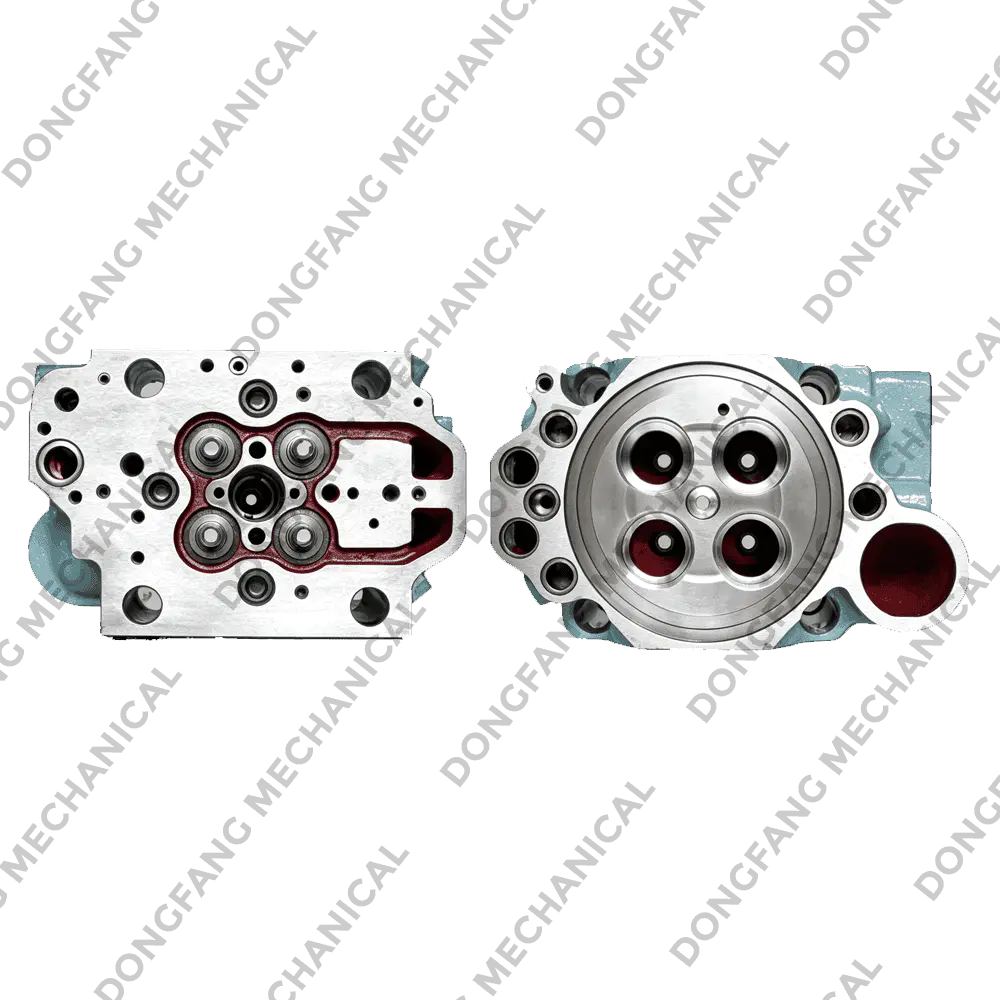
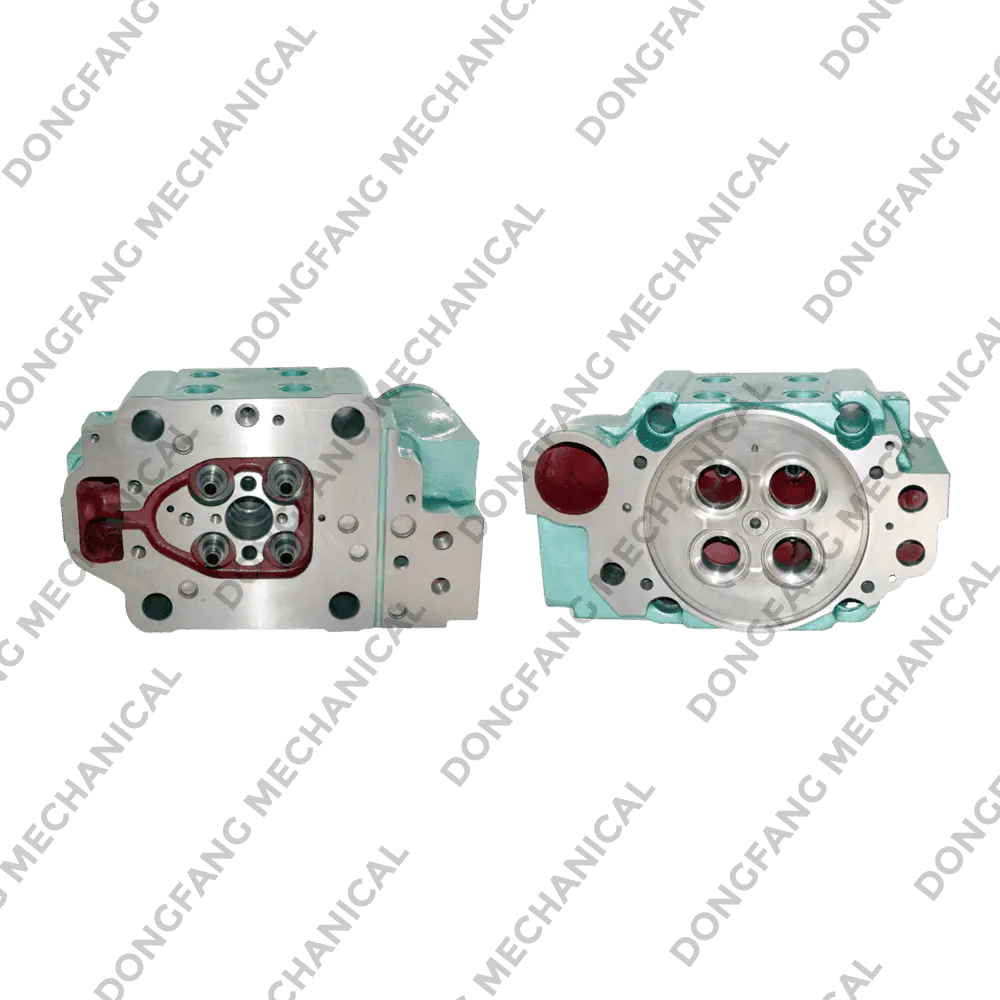
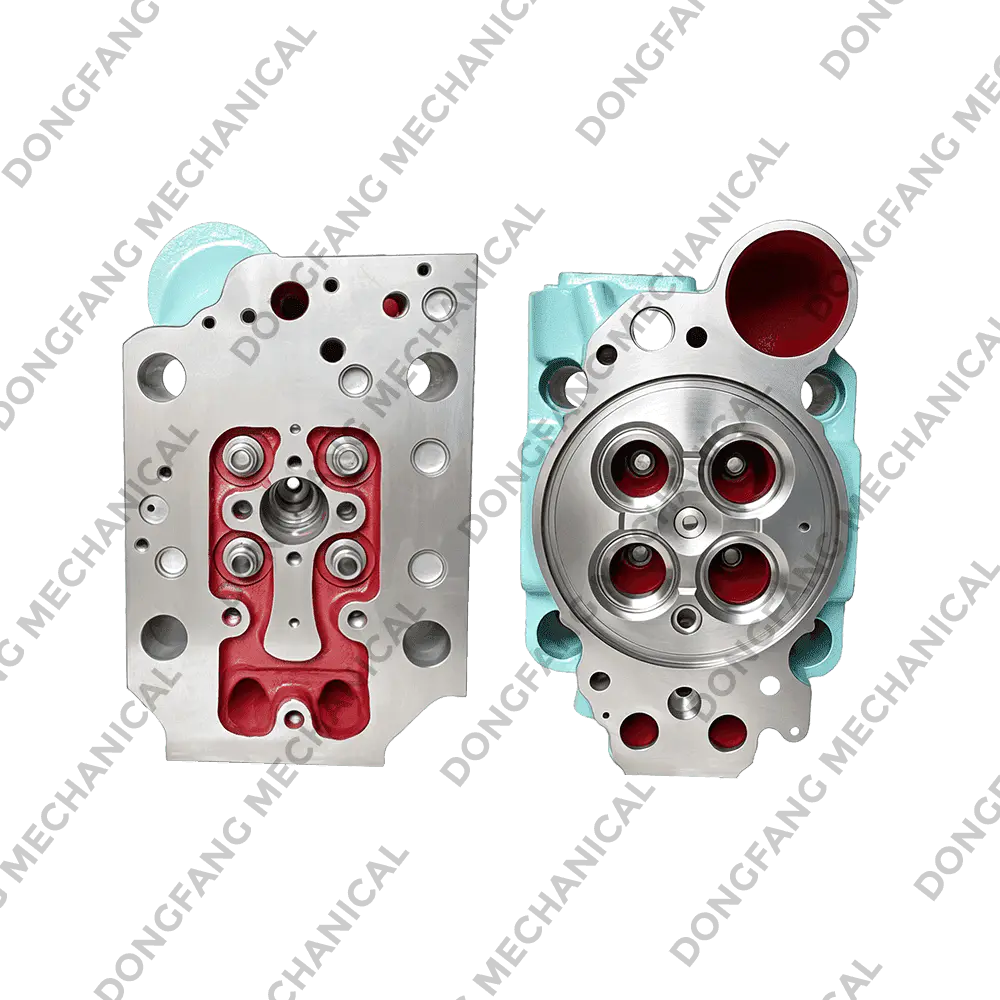
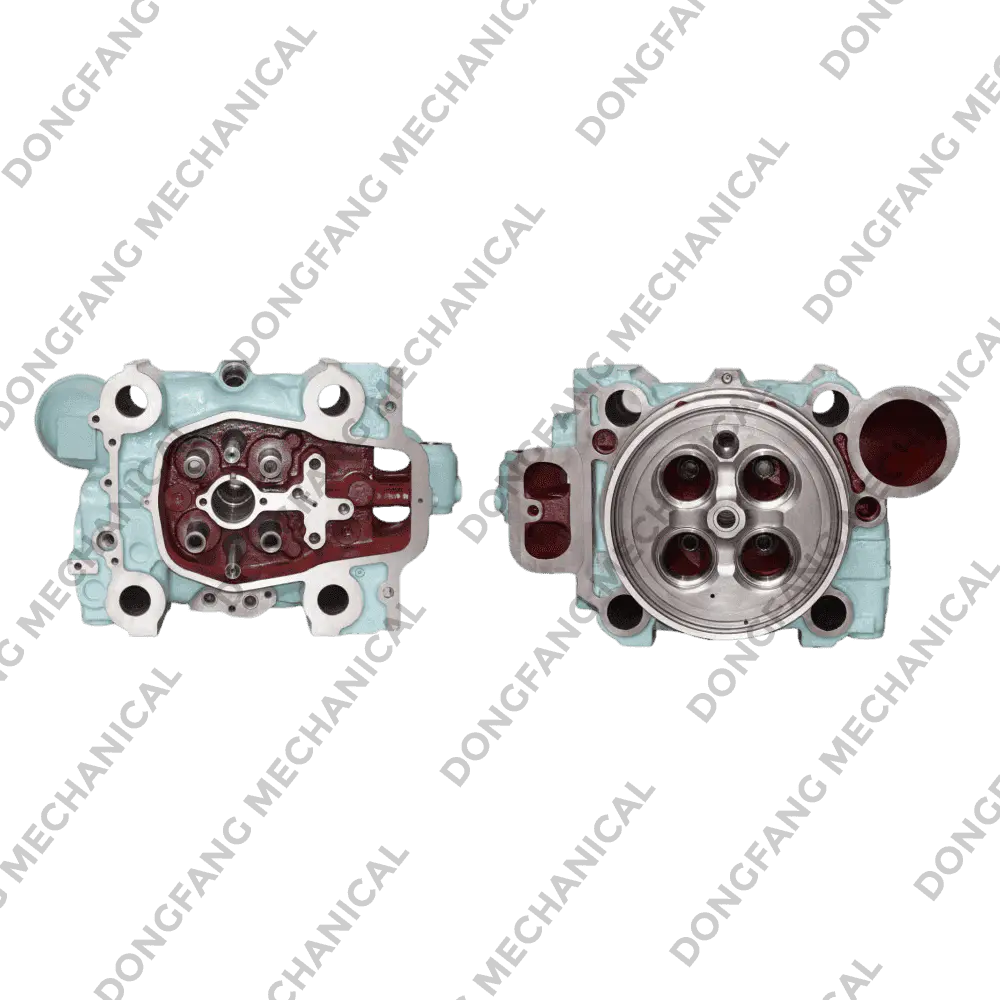
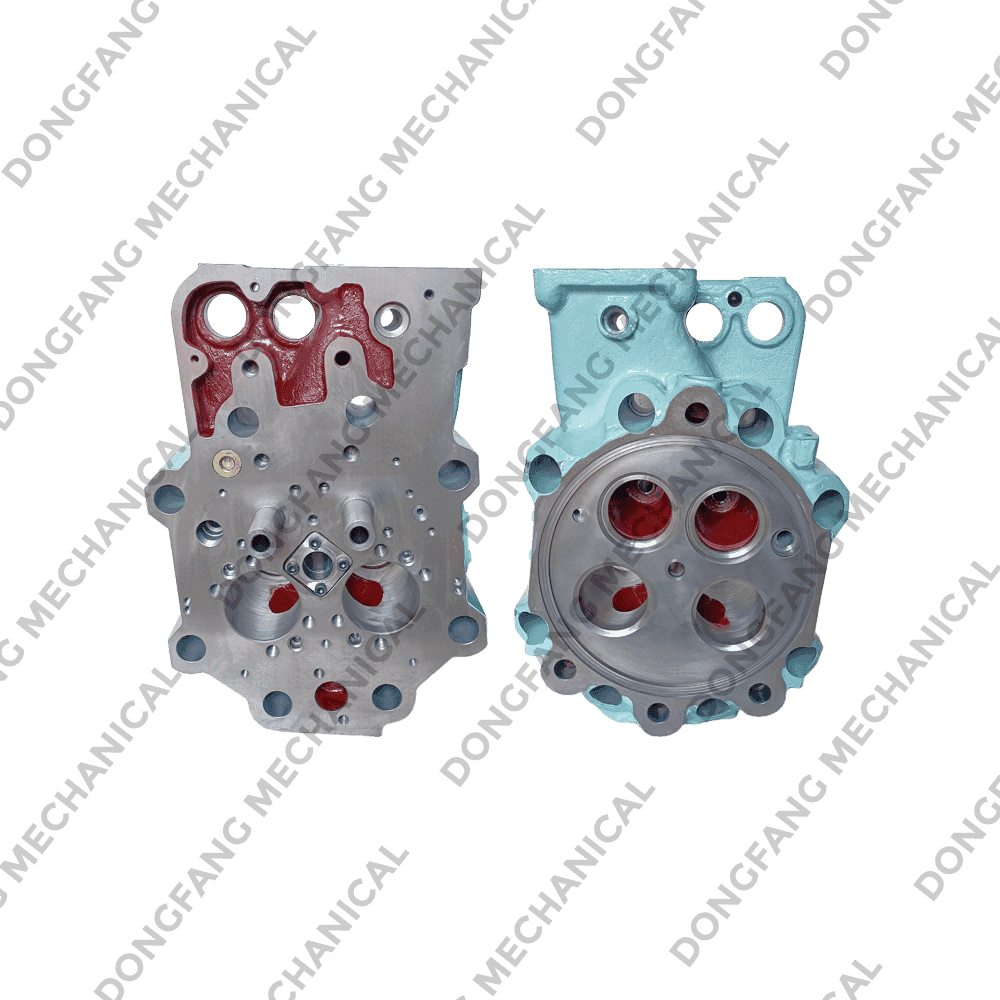
The DL-32 cylinder head is an aftermarket replacement component compatible with Daihatsu marine diesel engine applications, including the reference designation Daihatsu DL26-100. It is designed for shipowners, marine repair companies, engine service workshops, spare-parts distributors, and equipment operators that require a practical replacement solution for maintenance and overhaul work. Its purpose is to help restore the mechanical integrity and operating reliability of a diesel engine without requiring the purchaser to obtain a complete new engine assembly.
For marine operators, selecting a replacement cylinder head is not simply a matter of finding a component with a similar external appearance. The replacement must be suitable for the intended engine family, manufactured with appropriate materials, machined accurately, and inspected carefully before delivery. It must also be supported by a supplier with experience in marine diesel components and an understanding of the demanding conditions found in commercial and industrial vessels.
The DL-32 product represents a focused aftermarket solution supported by a manufacturer with extensive experience in cylinder heads, cylinder liners, valves, valve seats, valve cages and guides, connecting rods, piston pins, and piston heads for imported and domestic marine diesel engines. This product-centered manufacturing capability helps create a practical connection between component design, production, inspection, and service support.
DL-32
Product Overview
The DL-32 cylinder head is categorized as a replacement spare part compatible with Daihatsu marine diesel engines. Its product alias, Daihatsu DL26-100, provides an additional reference for purchasers and maintenance personnel who are matching the component to an existing engine, overhaul list, or spare-parts record.
The cylinder head is intended for professional marine diesel engine maintenance. Depending on the engine configuration and service requirement, a replacement cylinder head may be used during a scheduled overhaul, corrective repair, restoration project, or emergency spare-parts replacement. The correct application should always be confirmed using the engine model, part number, dimensional information, technical drawings, and the purchaser’s maintenance documentation.
A cylinder head normally performs several functions at the same time. It provides the upper boundary of the combustion chamber, contains valve openings, supports or locates valve-related components, and incorporates internal passages that manage cooling and lubrication. In a marine diesel engine, these functions must remain stable during long operating periods and changing load conditions. Any distortion, leakage, surface damage, or inaccurate machining can affect compression, combustion quality, cooling performance, and engine availability.
The DL-32 is therefore more than a simple cast or machined metal replacement. Its value depends on how effectively it supports the complete operating system of the engine. A well-produced cylinder head can help maintenance teams address worn or damaged original components, shorten repair planning, and maintain a consistent spare-parts strategy across vessels or engine rooms.
Reference Identification
| Item | Information |
|---|---|
| Product title | DL-32 |
| Product type | Aftermarket marine diesel engine cylinder head |
| Primary application | Compatible with Daihatsu marine diesel engine applications |
| Reference alias | Daihatsu DL26-100 |
| Typical users | Shipowners, ship repair yards, distributors, service workshops, and industrial engine operators |
| Supply purpose | Replacement, overhaul, scheduled maintenance, and repair support |
The table provides a general product reference only. Marine engines can vary according to production series, configuration, operating duty, and modification history. Customers should provide the engine model, serial number, existing component information, drawings, or dimensional requirements when requesting confirmation.
Why Cylinder Head Quality Matters in Marine Diesel Engines
Marine diesel engines are often expected to operate for extended periods with limited opportunities for unscheduled maintenance. A vessel may rely on its main engine for propulsion, while auxiliary engines provide electrical power, pumping capacity, refrigeration, steering support, and other essential services. A cylinder head failure can therefore create consequences that extend well beyond the component itself.
Combustion pressure repeatedly loads the cylinder head during every operating cycle. At the same time, the component is subjected to high temperatures around the combustion chamber and exhaust valve area. Cooling passages must remove heat efficiently, while the contact surfaces must remain properly sealed. The combination of mechanical stress and thermal stress can gradually produce cracking, deformation, erosion, corrosion, or seat damage if the material and manufacturing process are not suitable.
The cylinder head also interacts with several other precision components. Valve seats must be positioned correctly. Valve guides must maintain the required alignment. Contact surfaces must provide reliable sealing. Threaded holes, mounting faces, and passages must be manufactured within appropriate tolerances. A problem in one area may affect another area after installation, which is why replacement cylinder heads require systematic production and inspection rather than appearance-based acceptance.
For maintenance teams, component consistency is particularly important. A replacement part that varies significantly from one order to the next can complicate inventory planning and installation procedures. Consistent production helps shipowners and distributors establish more predictable inspection routines, compare replacement parts with removed components, and organize future procurement more efficiently.
Key Advantages of the DL-32 Aftermarket Cylinder Head
Application-Focused Compatibility
The DL-32 has been identified for compatibility with Daihatsu marine diesel engine applications and is associated with the Daihatsu DL26-100 reference. This application focus helps buyers begin the selection process with a clear product category instead of searching through unrelated general-purpose engine components.
Compatibility should always be confirmed before purchase, but a product developed for a defined marine engine application offers an important starting point. It allows the supplier and customer to discuss the relevant engine model, installation dimensions, valve arrangement, cooling passages, mounting points, and related components. This is more efficient than treating the part as an unidentified casting with no application background.
Support for Maintenance and Overhaul Work
The DL-32 can support planned engine maintenance as well as replacement requirements created by wear or damage. During a major overhaul, a shipowner may decide to replace cylinder heads that have reached the end of their service life, even if the engine has not experienced a complete failure. Preventive replacement can help reduce the risk associated with cracks, repeated resurfacing, worn valve locations, and declining sealing performance.
For repair workshops, an aftermarket cylinder head can provide an alternative sourcing route when an original component is unavailable, has a long delivery period, or is no longer economical to purchase. The availability of a suitable replacement may help the workshop plan the repair around the vessel’s schedule and reduce the time that an engine remains out of service.
Manufacturing Experience in Related Components
The manufacturer specializes in a broad range of marine diesel engine components, including cylinder heads and cylinder liners, as well as valves, valve seats, valve cages and guides, connecting rods, piston pins, and piston heads. This component range is an advantage because the production team works with parts that operate together inside the same engine environment.
Knowledge of related components can improve practical understanding of interface requirements. A cylinder head is not an isolated product: its valve seats, guides, valves, gasket surfaces, cooling passages, and combustion chamber geometry must work with adjacent engine parts. Experience across these categories supports more informed manufacturing, inspection, and customer communication.
Designed for Professional Marine Use
The DL-32 is positioned as a marine diesel replacement part rather than a general automotive cylinder head. Marine engines commonly operate under continuous or heavy-duty conditions, and maintenance decisions are often influenced by vessel schedules, safety requirements, spare-parts availability, and operating costs. A marine-focused component supplier is better placed to understand these practical concerns.
Professional users also require documentation and communication that support procurement decisions. Clear product identification, application confirmation, dimensional review, and production coordination can be as important as the physical component itself. A supplier experienced in marine engine parts can help make these stages more organized.
Potentially More Flexible Procurement
Aftermarket sourcing can offer flexibility in procurement, particularly when customers need replacement parts for older engines or mixed fleets. Original equipment supply channels may not always provide the required delivery time or commercial terms. A qualified aftermarket manufacturer can help customers maintain access to components while continuing to use established engine systems.
The commercial advantage should not be judged only by the initial purchase price. Total value also includes product consistency, delivery coordination, technical communication, inspection support, packaging, and the ability to source related engine components. A reliable aftermarket product can contribute to lower maintenance disruption and more manageable inventory planning.
Material and Structural Considerations
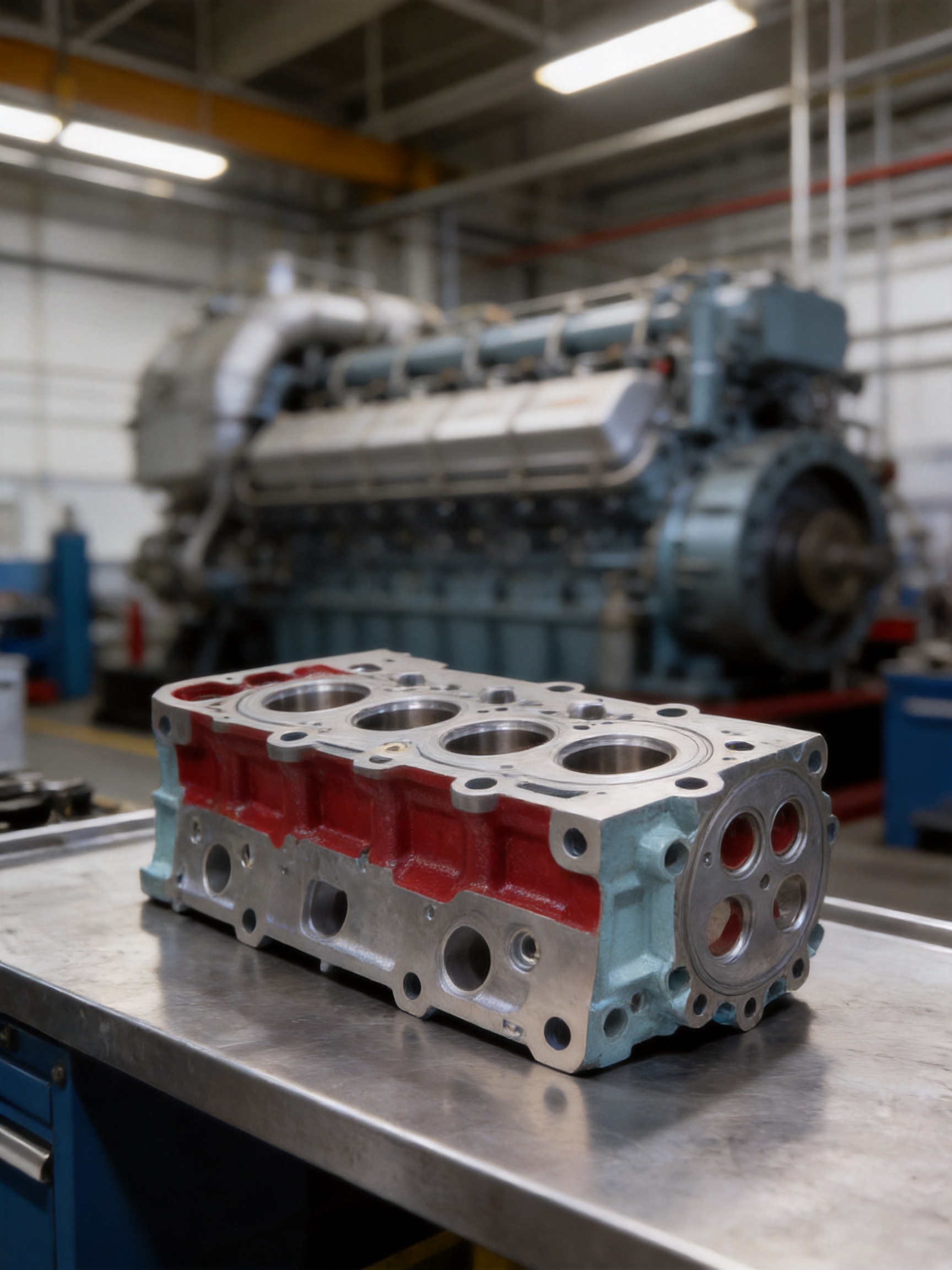
The performance of a cylinder head begins with the suitability of its material and casting or forging condition. The material must tolerate heat, pressure, vibration, and repeated temperature changes. It must also be capable of being machined accurately so that valve-related components, mounting surfaces, and passages meet the required design geometry.
In practice, material selection should correspond to the engine application and the manufacturer’s established production specification. Important considerations may include thermal conductivity, strength at operating temperature, resistance to thermal fatigue, machinability, dimensional stability, and compatibility with coolant and combustion conditions. The final material specification should be confirmed through the supplier’s technical documentation and the requirements of the intended engine.
The structure of a cylinder head is also significant. Areas around the combustion chamber, injector location, exhaust valve, valve seat, and cooling passages may experience concentrated thermal and mechanical loads. Smooth transitions, adequate wall thickness, and controlled machining help reduce stress concentrations. The production process must preserve these structural features from initial forming through final inspection.
When an existing cylinder head is removed during an overhaul, the maintenance team may find evidence of service conditions such as carbon deposits, corrosion, pitting, valve-seat recession, or thermal cracking. A replacement part should be evaluated according to the reason for the original failure. For example, cooling-system problems, incorrect operating temperature, poor fuel quality, improper valve adjustment, or gasket leakage may damage a newly installed component if the underlying cause is not corrected.
Manufacturing Process and Quality Control
Engineering and Application Review
A professional manufacturing process begins before metal is poured or machining starts. The supplier reviews the application, product reference, drawings, samples, technical data, and customer requirements. This stage helps establish the correct component identity and prevents an avoidable mismatch between the requested product and the engine configuration.
For a product such as the DL-32, the application review may include confirmation of the Daihatsu reference, cylinder arrangement, mounting dimensions, valve layout, injector or fuel-system interface, cooling-water passages, gasket contact surfaces, and related replacement components. The exact review scope depends on the information provided by the customer and the technical records available for the engine.
Clear communication at this stage is especially important for older marine engines. Historical engines may have undergone repairs, upgrades, local modifications, or component substitutions during their service life. Comparing the current component with original drawings and physical measurements can help prevent an incorrect assumption based only on a model name.
Pattern, Mold, or Preform Preparation
Once the product requirements are established, the manufacturing team prepares the pattern, mold, machining reference, or other production tooling required for the component. Accuracy in this stage influences the material distribution, external shape, machining allowance, and position of important internal features.
Tooling must be maintained carefully. Wear or damage can gradually affect repeated production, producing dimensional variation between batches. A controlled tooling process helps preserve repeatability and reduces the amount of correction required during machining. It also supports more stable comparison between production parts and approved reference samples.
Controlled Forming and Casting
For a cast cylinder head, the forming process must produce a sound component with suitable internal integrity. Metal temperature, mold condition, filling behavior, solidification, and cooling all influence the final result. Internal defects such as shrinkage, porosity, inclusions, or incomplete filling can reduce reliability even when the external surface appears acceptable.
Manufacturing control should therefore include attention to melting practice, cleanliness, pouring conditions, solidification behavior, and post-casting treatment. The exact process varies according to the selected material and factory equipment, but the objective remains consistent: produce a stable base component that can withstand machining and service loads.
After forming, the component may require cleaning, removal of excess material, heat treatment, stress relief, or other preparatory operations. These steps help prepare the cylinder head for precision machining and may improve dimensional stability. The manufacturer’s established process should define the appropriate treatment for each product specification.
Precision Machining
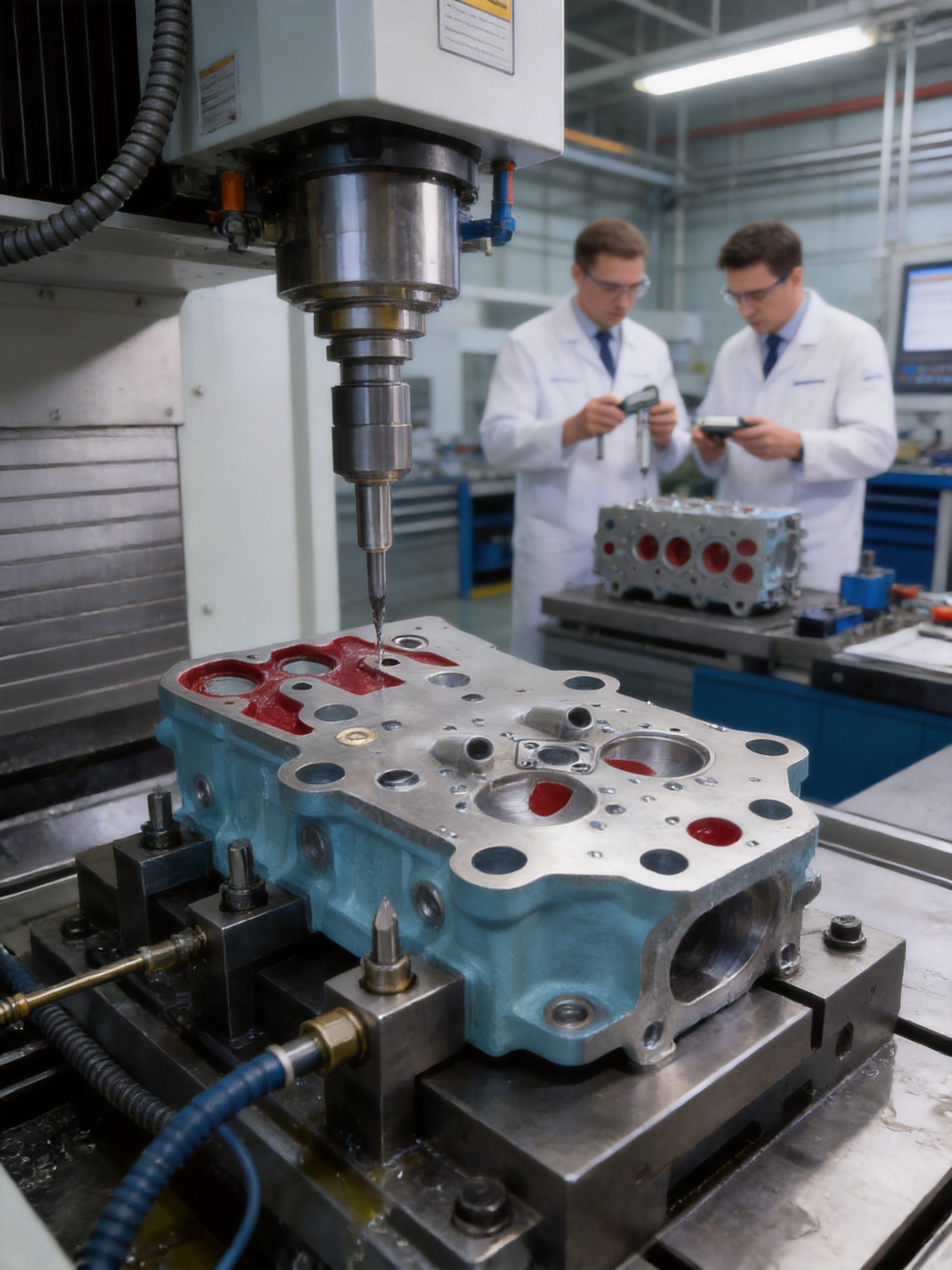
Machining converts the formed component into a functional engine part. Important operations can include machining of the cylinder-head mounting face, combustion-chamber areas, valve openings, valve-seat locations, guide bores, threaded holes, gasket surfaces, and other reference features.
Accuracy is essential because many cylinder-head interfaces must work together. A mounting surface that is not sufficiently flat can affect gasket sealing. A valve-seat location that is not concentric with the guide bore can influence valve contact. Incorrect depth or geometry can affect valve projection, compression conditions, and clearance. Cooling or lubrication passages must also remain open and correctly positioned.
Modern machining equipment can improve repeatability by controlling tool movement, reference points, cutting parameters, and inspection data. However, equipment alone does not guarantee quality. Experienced technicians must understand the function of each surface, monitor tool condition, manage clamping, and identify abnormalities during production.
Valve-Train Component Installation and Matching
Depending on the order specification, a cylinder head may be supplied as a basic machined head or as an assembly containing selected valve-related components. The customer should confirm whether valves, seats, cages, guides, or other parts are included.
When valve seats and guides are installed, their fit and alignment require careful control. The components must be positioned securely, and the final machining or lapping operation must create a suitable contact pattern. The objective is to support reliable sealing while maintaining correct valve movement and heat transfer.
Because the manufacturer also produces valves, valve seats, valve cages, and guides, it can coordinate related component requirements more efficiently than a supplier that handles only one isolated part. This may be useful for customers completing a full cylinder-head overhaul or purchasing a group of matched replacement components.
Inspection and Testing
Inspection should take place throughout the manufacturing process rather than only at the end. Incoming material and production conditions can be reviewed before forming. Dimensions can be checked after rough machining. Critical surfaces and passages can be examined during final machining. The completed cylinder head can then undergo final dimensional review and, where applicable, pressure or leak testing.
Typical inspection areas may include overall dimensions, mounting-face flatness, valve-guide alignment, valve-seat position, threaded-hole condition, passage continuity, surface finish, and visible casting quality. The exact inspection plan should follow the product drawing, customer requirements, and the manufacturer’s quality system.
Quality records can provide useful evidence for customers and distributors. Depending on the order, documentation may include inspection reports, material information, dimensional records, pressure-test results, or other manufacturing records. Buyers should identify documentation requirements before production begins so that the supplier can prepare the appropriate package.
Quality Management and Manufacturing Strengths
The manufacturer was established in 1996 and has more than two decades of experience in imported and domestic marine diesel engine components. This history provides a substantial foundation for product knowledge, production organization, and customer service. Experience is particularly valuable in the marine aftermarket because many customers need replacement parts for engines with long service histories and varied maintenance records.
The company obtained ISO 9001 certification in 2001 and has been recognized as an AAA-level enterprise. ISO 9001 certification indicates that the organization operates a documented quality-management system intended to control processes, responsibilities, records, and continual improvement. Certification does not remove the need for product-specific verification, but it demonstrates a formal approach to managing manufacturing and customer requirements.
The company occupies more than 8,000 square meters, including a workshop of more than 5,000 square meters. Its reported annual production exceeds 5,000 sets. These facilities and production capabilities support a structured manufacturing environment rather than a purely trading-based supply model. For customers, this can improve production coordination, order planning, and communication about replacement requirements.
Advanced equipment, experienced professionals, and stable product quality are identified as core company strengths. In cylinder-head manufacturing, these strengths work together. Equipment provides repeatable machining and inspection capability. Skilled personnel interpret technical information and manage process variation. A stable quality system connects the two by establishing consistent procedures and records.
The company’s broad product range is another important advantage. Its experience includes cylinder heads, cylinder liners, valves, valve seats, valve cages and guides, connecting rods, piston pins, and piston heads. Customers can therefore discuss several related components with one specialized supplier. This can simplify sourcing for overhaul projects and help maintain consistency among parts that interact within the same engine.
Advantages Compared with Less Specialized Alternatives
Many suppliers can offer a component that appears similar to a marine cylinder head. However, visible similarity does not establish technical equivalence. A less specialized supplier may lack application records, marine operating experience, related-component knowledge, or the machining capability required for critical interfaces.
A specialized manufacturer offers several potential advantages. First, it understands that marine diesel parts operate under continuous and severe conditions. Second, it is more familiar with the dimensional and functional relationships between cylinder heads and associated valve-train parts. Third, it can communicate with customers about engine references, overhaul needs, and inspection requirements more effectively.
Another difference is process ownership. A manufacturer with its own workshop, equipment, production staff, and quality system can manage more stages internally. This may reduce dependence on unidentified subcontractors and make it easier to trace questions about materials, machining, inspection, or delivery. Internal process control can also support better consistency for repeat orders.
Aftermarket value should also be compared with the full cost of ownership. A very low purchase price may become expensive if the component requires excessive corrective machining, causes installation delays, or fails prematurely. A properly manufactured replacement with predictable dimensions can reduce workshop time and help avoid additional disruption. The best comparison includes quality, service life expectations, delivery reliability, documentation, and technical support.
Installation and Maintenance Considerations
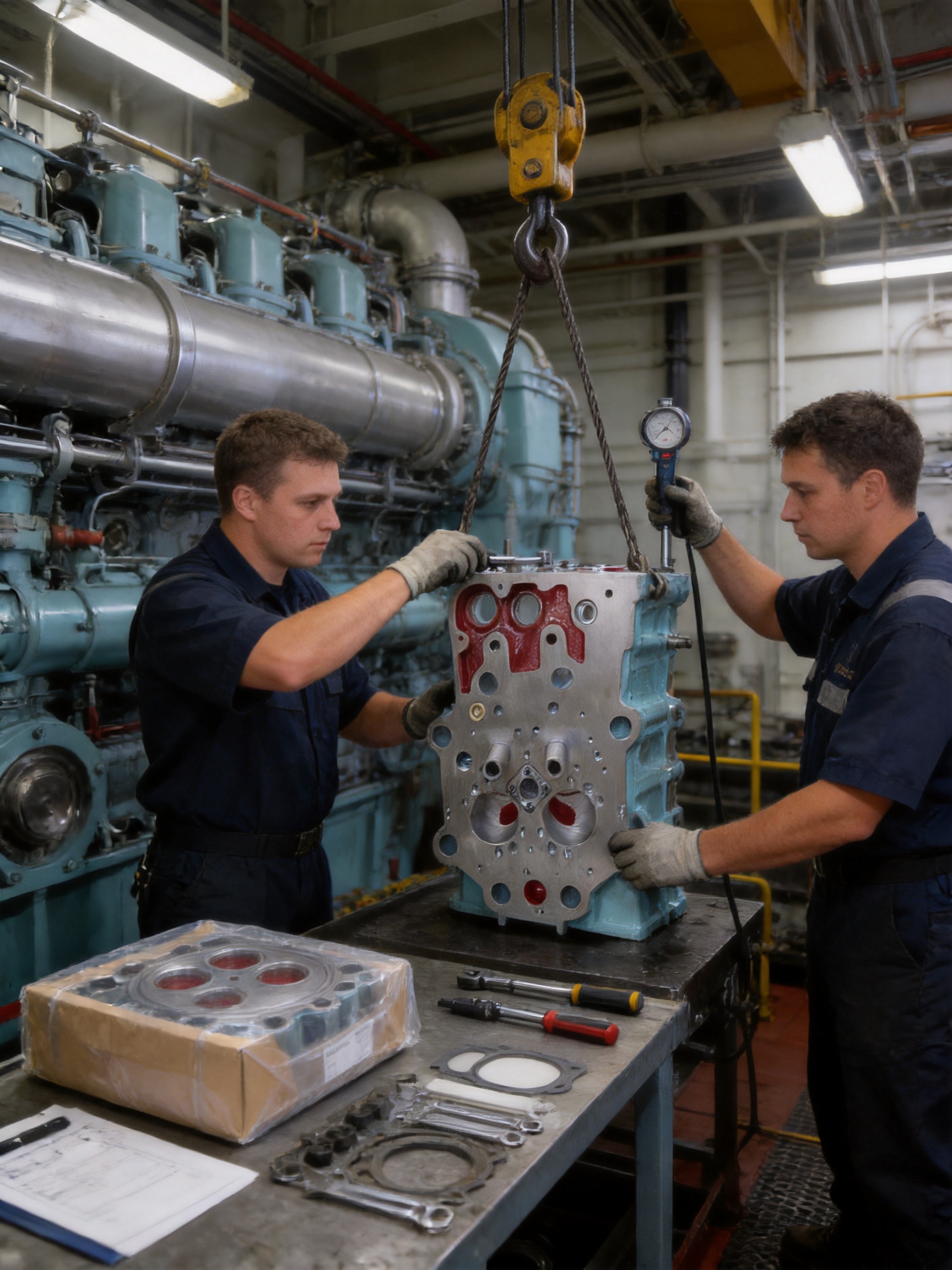
Before installing the DL-32, maintenance personnel should confirm the product identity and compare the replacement with the removed cylinder head. Important checks may include external dimensions, mounting-hole locations, gasket surfaces, valve arrangement, guide and seat dimensions, cooling passages, and any specified projection or clearance measurements.
The engine block and related components should also be inspected. A new cylinder head cannot compensate for a damaged block surface, unsuitable gasket, blocked cooling passage, worn fastener, incorrect valve component, or unresolved overheating problem. Installation should follow the engine maker’s maintenance procedures and the approved workshop practices for the specific engine.
Contact surfaces should be clean and free from unwanted carbon, oil, corrosion, old gasket material, or machining debris. Fasteners should be checked for condition and installed using the specified tightening sequence and torque or tension method. Incorrect tightening can create uneven stress, distortion, gasket leakage, or damage to threaded areas.
Valve clearance, injector position, compression-related dimensions, and other settings should be checked according to the applicable engine documentation. After installation, the cooling system and lubrication system should be examined for leaks or restrictions. Initial operation should be monitored for abnormal temperature, pressure, exhaust behavior, noise, or coolant loss.
Maintenance records should identify the installed part, engine location, installation date, operating hours, and inspection results. These records help the shipowner evaluate performance and plan future replacement work. They also assist the supplier if technical questions arise during service.
Procurement Guidance for Shipowners and Distributors
Purchasers should provide as much technical information as possible when requesting a DL-32 cylinder head. Useful information may include engine manufacturer, engine model, serial number, cylinder number, existing part number, photographs, drawings, key dimensions, and the intended quantity. If the engine has been modified, that information should also be communicated.
Customers should clarify whether they require a bare cylinder head, a fully machined component, or an assembly with valves, seats, guides, cages, and other parts. They should also specify whether inspection reports, material certificates, pressure-test records, or dimensional reports are needed.
For vessel operators, delivery planning is important. The order schedule should consider machining time, inspection, packing, transport, customs procedures, and possible installation preparation. Keeping essential spares in a controlled inventory can reduce the consequences of an unexpected cylinder-head problem.
Distributors should maintain clear application records and avoid combining different references under one uncontrolled stock code. Product labels, purchase documents, and warehouse records should identify the DL-32 reference and the applicable Daihatsu engine information. Good catalog management reduces the risk of sending a visually similar but technically incorrect part.
Questions to Ask Before Ordering
| Question | Reason |
|---|---|
| Which engine model and serial number will use the part? | Confirms the intended application and helps identify variations. |
| Is the required reference DL-32 or Daihatsu DL26-100? | Connects the order to the correct product record. |
| Is the head required as a bare, machined, or assembled component? | Defines the scope of supply. |
| Are valves, seats, guides, or cages included? | Prevents misunderstandings about related components. |
| Which inspection documents are required? | Allows the supplier to prepare records before shipment. |
| Are there special packaging or delivery instructions? | Protects the component and supports vessel scheduling. |
Packaging, Storage, and Handling
A cylinder head is a precision component and should be protected during handling and transportation. Machined surfaces, valve openings, threaded areas, and passages should be protected from impact, moisture, dirt, and corrosion. Suitable packaging should prevent movement inside the shipping container and provide adequate support for the component’s weight.
Upon arrival, the purchaser should inspect the package for visible damage and compare the delivered product with the order documents. Any signs of impact, water exposure, corrosion, or missing protective covers should be recorded promptly. If long-term storage is required, the part should be kept in a clean, dry, controlled environment and protected according to the supplier’s recommendations.
Storage personnel should avoid placing heavy components directly on critical machined faces. Lifting equipment must be suitable for the component weight, and lifting points should be selected to prevent distortion or accidental impact. Before installation, protective coatings or plugs should be removed in accordance with the applicable workshop procedure.
Environmental and Operational Responsibility
Reliable cylinder-head manufacturing contributes to responsible engine operation. A properly maintained diesel engine can operate more efficiently and with fewer unplanned repairs. Stable compression, effective valve sealing, correct cooling, and controlled combustion support the engine’s intended performance and help reduce avoidable downtime.
Manufacturing responsibility also includes efficient use of materials, control of machining waste, proper handling of oils and coolants, and compliance with applicable workplace and environmental requirements. A documented quality system can support more organized production and reduce the amount of rejected or reworked material.
For shipowners, extending the useful life of an existing engine through suitable replacement parts may also be more practical than replacing the complete power unit. This approach can reduce the immediate resource requirement associated with a full engine replacement while allowing the vessel to continue using a familiar maintenance platform.
Service Support and Long-Term Cooperation
Marine spare-parts procurement is most effective when it is treated as an ongoing technical relationship rather than a single transaction. A supplier that understands the customer’s fleet, engine references, maintenance cycles, and documentation requirements can provide more useful support over time.
The manufacturer’s stated business philosophy emphasizes integrity, pragmatism, continuous improvement, quality-first standards, reasonable prices, and dedicated service. These principles are relevant to long-term aftermarket cooperation because marine customers value predictable communication and dependable follow-through. When a technical question occurs, customers need a supplier that can review product records, discuss measurements, and coordinate with production personnel.
Long-term cooperation can also improve repeat-order efficiency. Once an engine reference and customer specification have been verified, future orders may be processed with clearer records and fewer uncertainties. Feedback from installed components can be used to improve inspection focus, packaging methods, or documentation for later shipments.
Recommended Application Workflow
A practical workflow begins with identification. The customer records the engine model, serial number, component reference, and current application. The supplier then reviews the information and confirms whether the DL-32 is suitable for the Daihatsu marine diesel engine requirement.
The next stage is technical clarification. The customer and supplier agree on the supply condition, included components, dimensional requirements, inspection documents, quantity, and delivery schedule. If the engine has unusual modifications, drawings or photographs should be exchanged before production.
Production follows the approved technical information. The component is formed, treated as required, machined, assembled if specified, and inspected according to the manufacturing plan. Any nonconforming condition should be addressed before shipment rather than left for the installation team to discover.
After delivery, the customer inspects the package and component, prepares the engine interfaces, and installs the cylinder head according to the engine’s maintenance instructions. Operating data and inspection observations should be recorded during commissioning and early service.
Finally, the customer provides feedback and updates the spare-parts record. This closes the procurement cycle and creates useful information for future maintenance. Such a workflow helps convert a replacement cylinder head from a simple purchase into a controlled reliability-support activity.
Frequently Asked Questions
What is the DL-32 cylinder head?
The DL-32 is an aftermarket replacement cylinder head for Daihatsu marine diesel engine applications. It is also associated with the reference alias Daihatsu DL26-100. The precise application should be confirmed using the engine model, serial number, drawings, and dimensional information.
Is the DL-32 suitable for every Daihatsu marine diesel engine?
No universal assumption should be made. The product is identified for a specific Daihatsu application, but marine engines may vary by model, production series, configuration, and modification history. Customers should request application confirmation before ordering.
Can the cylinder head be supplied with valves and guides?
The supply condition depends on the order specification. Customers should state whether they require a bare cylinder head, a machined head, or an assembly containing valves, valve seats, valve cages, guides, and related components.
Why is application verification important?
Cylinder heads may look similar while differing in mounting dimensions, cooling passages, valve arrangement, combustion-chamber geometry, and component interfaces. Verification reduces the risk of receiving a part that cannot be installed or does not meet the engine’s requirements.
What manufacturing experience supports this product?
The manufacturer has specialized in imported and domestic marine diesel engine components since 1996. Its product range includes cylinder heads, cylinder liners, valves, valve seats, valve cages and guides, connecting rods, piston pins, and piston heads.
Does the manufacturer have a quality-management certification?
The company obtained ISO 9001 certification in 2001 and has been rated as an AAA-level enterprise. Product-specific inspection requirements should still be confirmed for each order.
What information should be included in an inquiry?
An inquiry should include the engine manufacturer and model, engine serial number, existing part number, cylinder number, quantity, photographs or drawings, required supply condition, inspection-document requirements, and delivery destination.
Can the DL-32 support a scheduled overhaul?
Yes. It can be considered for planned replacement during an overhaul, subject to application confirmation and technical acceptance. A scheduled replacement may help maintenance teams address wear, damage, or end-of-service-life concerns before an unexpected failure occurs.
What should be checked before installation?
The purchaser should check the component identity, dimensions, mounting faces, valve-related features, passages, threads, surface condition, and included parts. The engine block, gasket, fasteners, cooling system, and related components should also be inspected.
How should the cylinder head be stored?
It should be stored in a clean, dry environment with machined surfaces and passages protected from moisture, dirt, corrosion, and impact. The component should be supported properly and should not be placed directly on critical sealing surfaces.
What makes a specialized aftermarket supplier advantageous?
A specialized supplier combines application knowledge, marine-component experience, manufacturing capability, inspection procedures, and technical communication. This can provide more dependable support than sourcing an unidentified component based only on external appearance or low price.
Conclusion
The DL-32 cylinder head is a practical aftermarket replacement solution for selected Daihatsu marine diesel engine applications, including the Daihatsu DL26-100 reference. Its importance comes from the role of the cylinder head in combustion sealing, valve operation, cooling, and overall engine reliability.
The product is supported by a manufacturer with a long history in marine diesel engine components, a broad related-product portfolio, ISO 9001 certification obtained in 2001, established production facilities, experienced personnel, and reported annual output of more than 5,000 sets. These strengths support a structured approach to application review, forming, machining, component matching, inspection, and customer service.
Compared with less specialized alternatives, the DL-32 offers the potential advantages of marine-focused manufacturing, application-oriented identification, related-component expertise, professional aftermarket support, and more flexible procurement. Its suitability should nevertheless be confirmed carefully for each engine through technical records and dimensional verification.
For shipowners, distributors, and repair workshops, the best procurement decision combines product compatibility, manufacturing quality, inspection documentation, delivery planning, installation control, and long-term supplier support. When these factors are managed together, a replacement cylinder head can help restore engine serviceability, support scheduled maintenance, and contribute to a more reliable marine power system.
References
1. Manufacturer-provided product information for the DL-32 cylinder head and Daihatsu DL26-100 application reference.
2. Manufacturer-provided company profile and production capability information for Zhoushan Putuo Dongfang Machinery Co., Ltd.
3. ISO 9001: Quality Management Systems — Requirements.
4. General marine diesel engine maintenance principles relating to cylinder heads, valve assemblies, cooling passages, sealing surfaces, and overhaul procedures.
5. General engineering guidance on dimensional inspection, pressure testing, material control, machining quality, and installation practices for heavy-duty diesel engine components.