عربى

Content
- 1 Product Overview
- 2 Why the Cylinder Head Is Critical to Marine Engine Performance
- 3 Engineering Advantages of the L16/24 Replacement Cylinder Head
- 4 Advanced Manufacturing Process
- 5 Manufacturing Experience and Company Strengths
- 6 Advantages Compared with Generic or Poorly Controlled Alternatives
- 7 Benefits for Shipowners and Repair Organizations
- 8 Recommended Inspection Before Installation
- 9 Maintenance Practices That Support Long Service Life
- 10 Purchasing and Technical Coordination
- 11 Frequently Asked Questions
- 11.1 What engine is the L16/24 cylinder head intended for?
- 11.2 Is this cylinder head an original equipment part?
- 11.3 What are the main functions of the cylinder head?
- 11.4 Can the cylinder head be supplied with valve seats and guides?
- 11.5 How does the product differ from a generic replacement?
- 11.6 What quality systems support production?
- 11.7 What should be checked before installation?
- 11.8 Can this product help reduce maintenance costs?
- 11.9 How should the product be stored before installation?
- 11.10 What information should be included in an inquiry?
- 12 Conclusion
- 13 References
- 14 Product: L16/24
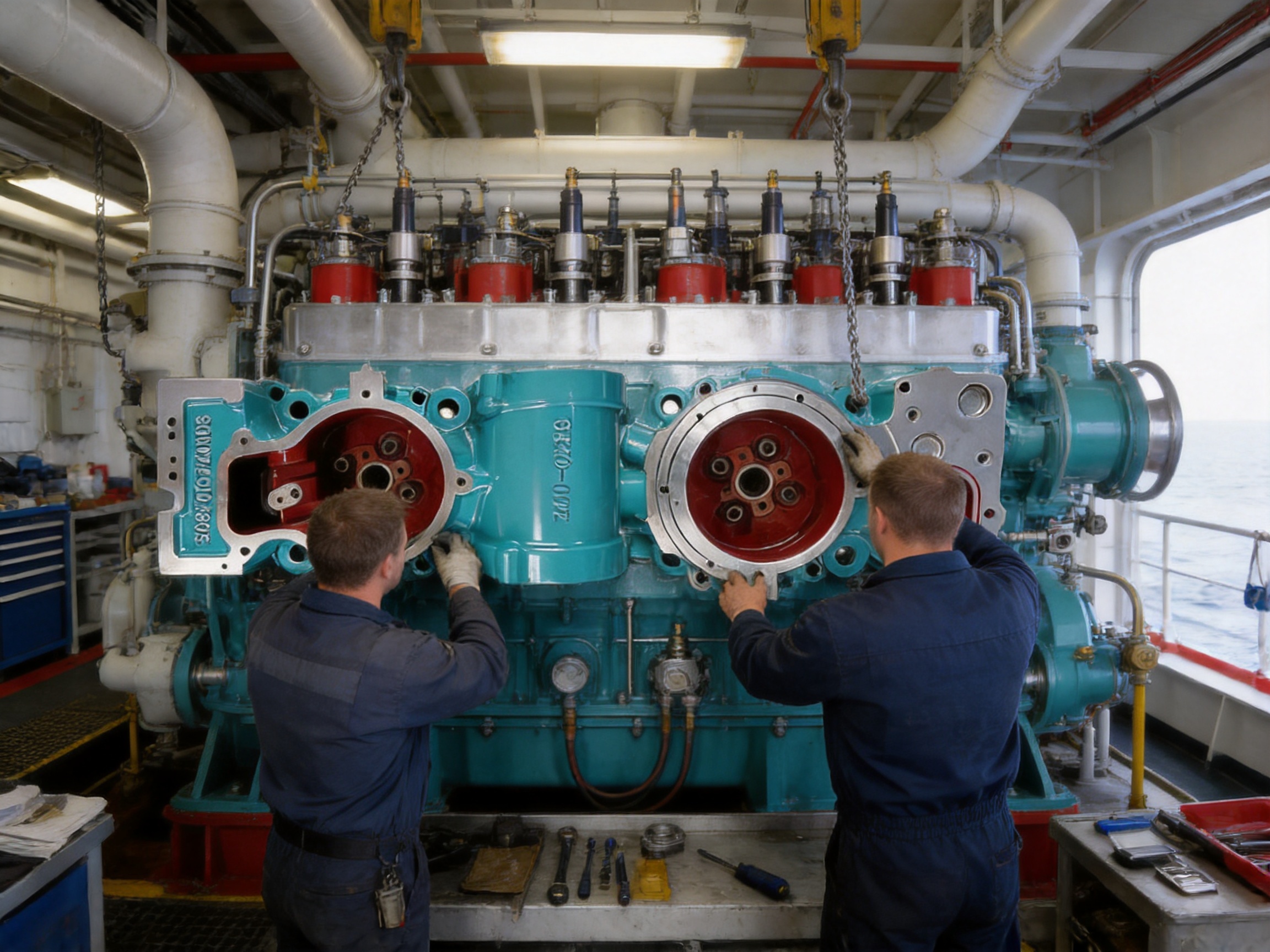
In a marine diesel engine, the cylinder head is one of the most important structural and functional components. It closes the top of the cylinder, forms part of the combustion chamber, supports essential valve and fuel-injection components, and helps transfer heat away from the combustion zone. When a cylinder head is damaged, distorted, cracked, or worn beyond acceptable limits, the result can be reduced engine performance, increased fuel consumption, difficult starting, exhaust smoke, cooling-water leakage, and unplanned vessel downtime.
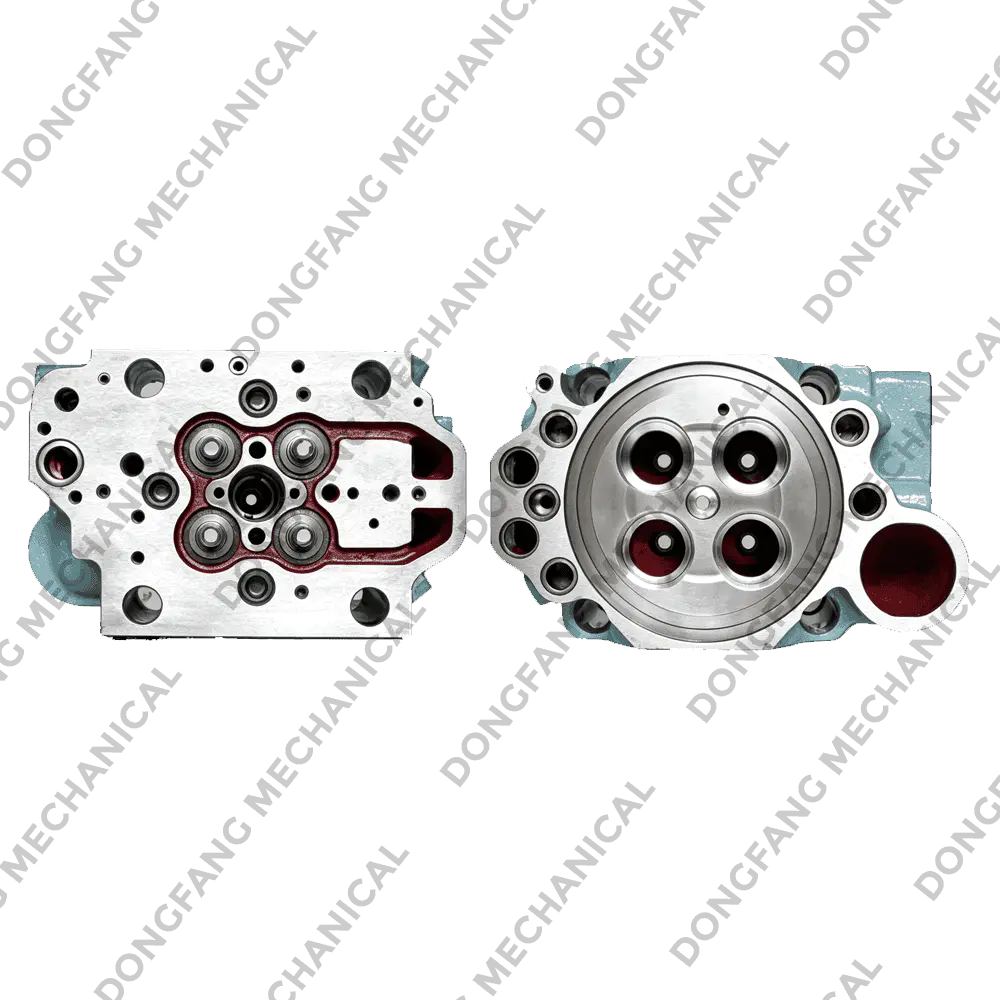
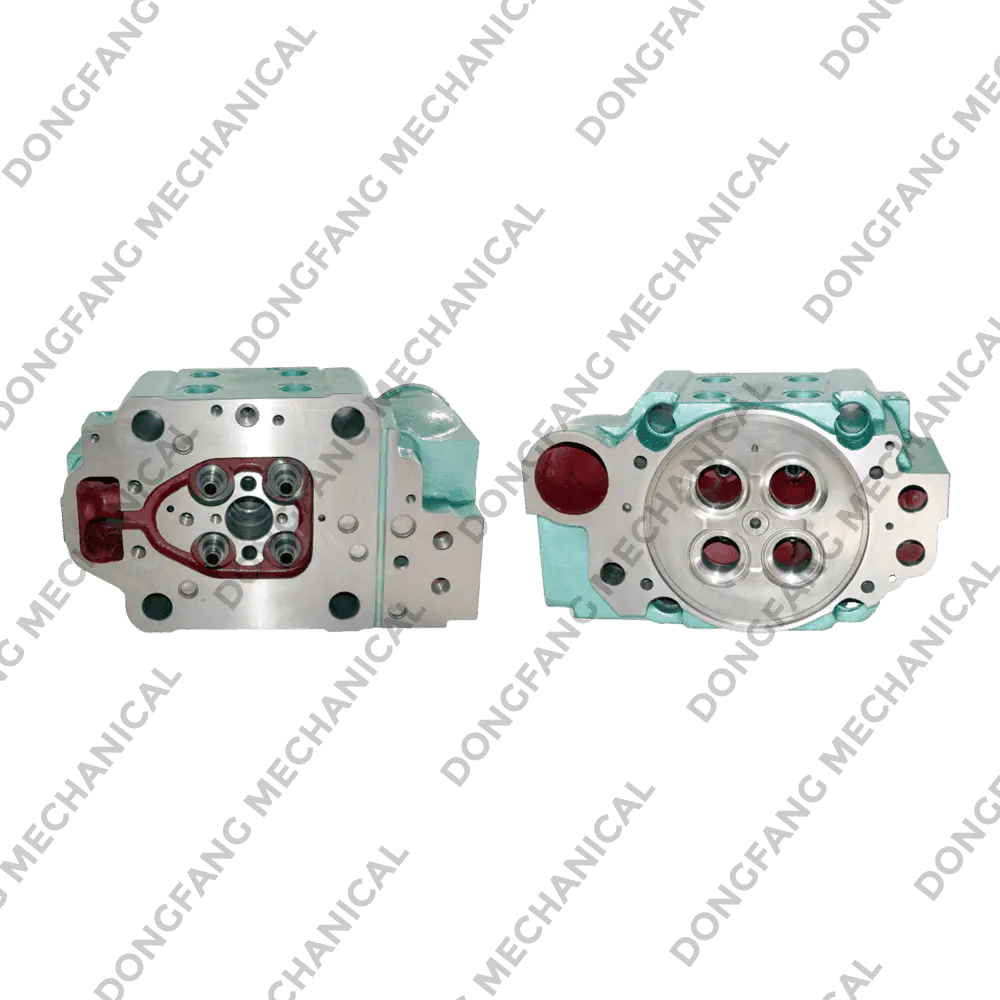
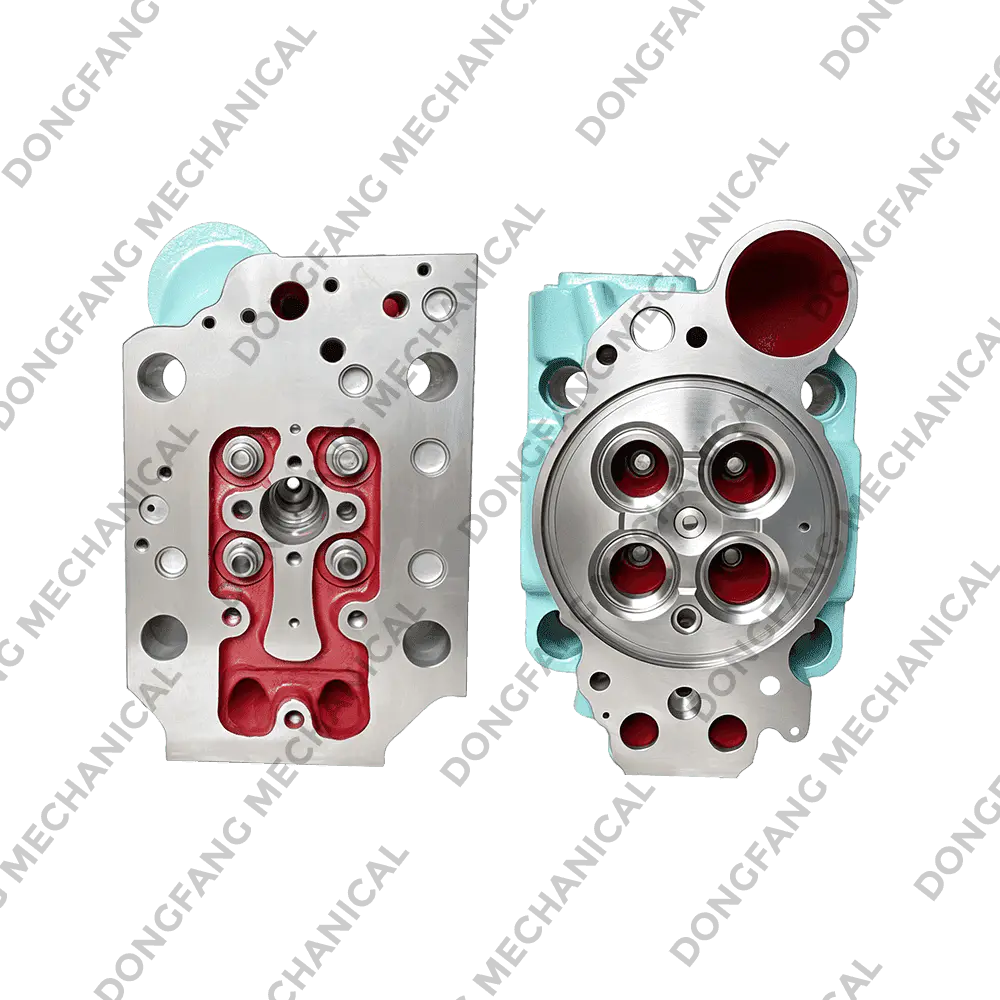
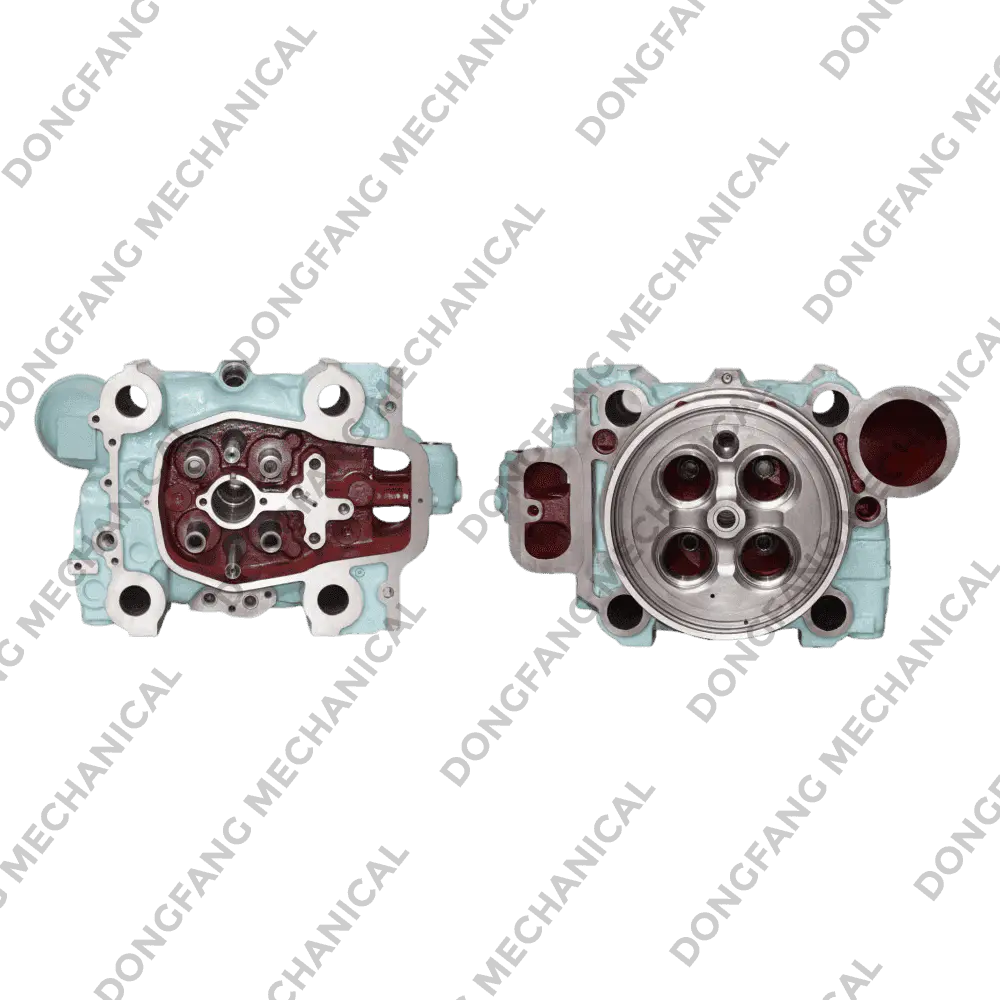
The L16/24 cylinder head is a replacement component developed for marine diesel engine applications compatible with MAN L16/24 engine systems. It is intended for shipowners, marine repair companies, engine service providers, spare-parts distributors, and industrial buyers seeking a dependable alternative to high-cost original components. Manufactured by an experienced Chinese marine diesel engine component producer, the product combines aftermarket value with controlled production, material selection, machining accuracy, and inspection procedures.
For operators, the value of a replacement cylinder head is not determined by purchase price alone. A reliable component must provide dimensional compatibility, adequate strength, effective sealing, stable cooling performance, suitable valve-seat positioning, and consistent performance during long operating cycles. The L16/24 replacement cylinder head is therefore designed as a complete engineering solution rather than simply a cast-metal replacement part.
Product Overview
The L16/24 cylinder head is a replacement spare part for marine diesel engines using the L16/24 configuration. Its main purpose is to restore the upper sealing and combustion structure of the engine while supporting the correct installation and operation of valves, valve seats, valve guides, fuel-injection equipment, and related fittings.
The cylinder head operates in a demanding environment. During every engine cycle, it is exposed to high combustion pressure, rapidly changing temperatures, mechanical loading from the valve train, and continuous contact with cooling water and lubricating oil. It must maintain its shape and sealing performance despite repeated thermal expansion and contraction. It must also work in coordination with the cylinder liner, piston crown, cylinder-head gasket, exhaust valve, inlet valve, fuel injector, and cooling passages.
A replacement cylinder head that appears visually similar but lacks correct internal geometry may create serious operating problems. Small deviations in valve-seat depth, injector position, sealing-surface flatness, or cooling-passage design can affect combustion quality and component life. For this reason, the L16/24 product is produced according to controlled drawings, machining requirements, and inspection standards appropriate for marine diesel engine service.
| Item | Product Information |
|---|---|
| Product type | Marine diesel engine cylinder head |
| Engine application | L16/24 compatible marine diesel engine systems |
| Product role | Replacement spare part for repair, overhaul, and maintenance |
| Main functions | Combustion-chamber sealing, valve support, injector support, and heat transfer |
| Related components | Cylinder liner, gasket, valves, valve seats, valve guides, fuel injector, and cooling system |
| Supplier capability | Manufacturing, machining, inspection, and supply of marine diesel engine components |
| Typical buyers | Shipowners, repair yards, distributors, service companies, and engine-overhaul contractors |
Why the Cylinder Head Is Critical to Marine Engine Performance
The cylinder head performs several functions at the same time. First, it seals the top of the cylinder and contains the pressure generated when fuel is burned. Second, it creates the upper section of the combustion chamber, where the shape and position of the fuel-injection and valve openings influence combustion efficiency. Third, it provides mounting locations for valve-train components and injection equipment. Fourth, it contains or connects to cooling passages that carry heat away from the combustion area.
These functions are closely connected. If the sealing face is not sufficiently flat, combustion gas may escape through the head gasket. If a valve seat is not correctly positioned, the valve may fail to seal, resulting in hot gas leakage and accelerated seat damage. If a valve guide is misaligned, the valve stem can wear unevenly and may not move smoothly. If the cooling passages are restricted or incorrectly formed, localized overheating may cause cracking, distortion, or premature failure.
Marine engines often operate for long periods under steady load. Unlike many short-duration land applications, a marine propulsion or auxiliary engine may be required to run continuously for many hours or days. A cylinder head must therefore provide stable performance over extended operating cycles. Its quality affects not only the engine itself but also vessel scheduling, fuel economy, maintenance planning, and operational safety.
For these reasons, replacing a worn cylinder head with a properly manufactured component can be more practical than attempting to repair a severely damaged original part. Repair may be appropriate in some cases, but extensive cracking, repeated distortion, damaged injector bores, or serious corrosion can make repair uncertain or uneconomical. A correctly produced replacement cylinder head can simplify overhaul work and reduce the risk of recurring defects.
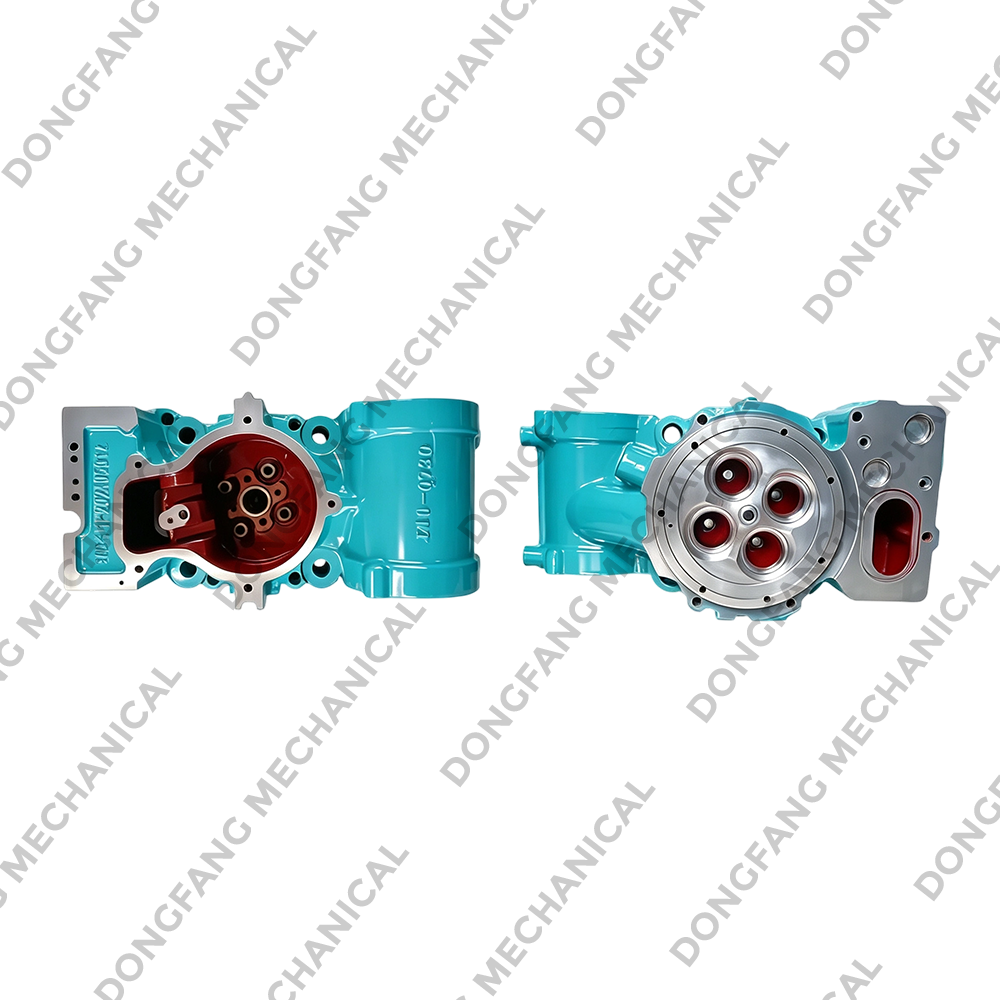
L16/24
Engineering Advantages of the L16/24 Replacement Cylinder Head
Application-Oriented Dimensional Compatibility
The first advantage of a high-quality replacement cylinder head is compatibility with the intended engine application. The L16/24 cylinder head is developed for the relevant engine configuration rather than as a generic component. Important features include the external mounting arrangement, sealing surfaces, valve positions, injector location, cooling connections, and internal passage geometry.
Application-oriented manufacturing helps reduce installation difficulties during engine overhaul. A component that matches the correct engine family can support more efficient preparation, fitting, and inspection. It can also reduce the need for unplanned modification, which is especially valuable when repair work is being performed in a shipyard or during a limited port stay.
Buyers should still confirm the engine model, component number, design revision, and installation requirements before ordering. Marine engines may be subject to configuration differences, service updates, or vessel-specific modifications. Providing accurate technical information to the supplier helps ensure that the supplied cylinder head corresponds to the required engine version.
High-Strength Construction for Continuous Service
A cylinder head must withstand mechanical and thermal stress simultaneously. The combustion chamber is subjected to repeated pressure pulses, while the surrounding metal experiences temperature changes between intake, combustion, exhaust, and cooling stages. The product is therefore manufactured from a suitable cylinder-head material selected for strength, thermal stability, machinability, and resistance to service-related deterioration.
Material quality is only one part of performance. The casting must also have a sound structure with controlled wall thickness and correctly formed internal areas. Excessive porosity, inclusions, shrinkage defects, or uneven sections can reduce fatigue resistance and may create leakage paths. A controlled production process helps reduce these risks by combining appropriate casting practice with visual inspection, dimensional checks, and machining control.
For marine use, strength must be balanced with thermal conductivity and dimensional stability. A material that is excessively hard may be difficult to machine or more sensitive to stress concentration. A material that is too soft may experience accelerated wear at valve seats and threaded areas. The objective is to produce a cylinder head with a practical balance of strength, heat-transfer performance, wear resistance, and serviceability.
Stable Combustion-Chamber Geometry
The cylinder-head geometry directly influences the operating condition inside the combustion chamber. The injector opening, valve openings, sealing surfaces, and chamber profile must be positioned accurately. Correct geometry helps the injector deliver fuel into the intended region and allows the valves to open and close without interference.
Accurate geometry also supports uniform compression conditions between cylinders. If the head volume or sealing height differs significantly from the required specification, compression pressure and combustion behavior may change. This can contribute to uneven exhaust temperatures, vibration, smoke, poor starting, or increased fuel consumption. Controlled machining and inspection are therefore essential even when the cylinder head appears correct externally.
Reliable Valve and Injector Support
The cylinder head is designed to accommodate important wear components, including valve seats and valve guides. These components must be positioned accurately and securely. The valve seat provides the sealing contact for the valve, while the guide controls the valve stem and helps maintain alignment during movement.
Correct support for the fuel injector is equally important. The injector must be installed at the intended angle and depth so that fuel is atomized and directed correctly. The injector seat and surrounding sealing surfaces must be clean, accurately machined, and free from damage. Poor injector positioning can lead to combustion irregularities, leakage, carbon deposits, and elevated thermal loading.
Depending on overhaul requirements, valve seats, valve guides, valves, and other related parts may be supplied separately or installed and finished according to the customer’s technical specification. Buyers can discuss the required configuration before production or delivery. This makes the cylinder head suitable for different maintenance strategies, including complete replacement, partial overhaul, or integration into a larger repair package.
Effective Cooling-Passage Design
Cooling is essential to cylinder-head durability. The combustion chamber, valve bridges, injector area, and exhaust-valve region can experience particularly high temperatures. Properly formed cooling passages help transfer heat into the cooling water and reduce the risk of thermal concentration.
A replacement cylinder head must reproduce the intended cooling arrangement accurately. Blocked, incomplete, or poorly finished passages can cause local overheating. Corrosion or scale inside the cooling system can also restrict flow after installation, so the engine cooling circuit should be cleaned and tested during overhaul.
The product is manufactured with attention to casting integrity and passage formation. After machining, the relevant openings and surfaces can be checked for cleanliness and dimensional conformity. Pressure testing or other inspection methods may be included according to the production plan and customer requirements. These controls help support dependable sealing between the combustion space and cooling system.
Advanced Manufacturing Process
Technical Review and Production Planning
Manufacturing begins with a review of the required engine application and product specifications. The production team evaluates the applicable drawings, dimensional requirements, material expectations, machining allowances, and inspection points. This stage is important because the cylinder head contains multiple functional surfaces and internal passages that must work together.
Production planning also considers the customer’s required configuration. Some buyers may need a bare casting, while others may require a fully machined cylinder head with valve seats, valve guides, plugs, and related components. The supplier can organize the process according to the intended use, delivery schedule, and inspection requirements.
Clear production planning reduces the risk of errors caused by incorrect assumptions. It also establishes traceability from material preparation through casting, machining, inspection, packing, and shipment. For international marine spare-parts supply, traceability is particularly useful because the component may be installed by a service team in a different country from the manufacturing location.
Pattern, Mold, and Casting Control
The cylinder head begins as a casting. The pattern and mold must reproduce the external profile and internal passage structure with sufficient accuracy. Core placement is especially important because it defines the cooling passages, valve areas, and other internal cavities.
During casting, temperature, pouring practice, material preparation, and solidification conditions influence the final structure. Controlled handling helps reduce common casting defects such as porosity, shrinkage cavities, inclusions, cold shuts, and incomplete filling. The production team must also consider wall thickness and areas where heat may accumulate during solidification.
After casting, the component is cleaned and visually examined. Excess material is removed, and key areas are checked for obvious surface defects. Depending on the inspection plan, additional non-destructive or pressure-related checks may be applied to identify defects that are not visible from the outside.
Heat Treatment and Stress Control
Heat treatment may be used to achieve the required material condition and improve dimensional stability. The precise process depends on the selected material and technical specification. Controlled heating and cooling can help relieve residual stress introduced during casting and reduce the possibility of distortion during subsequent machining.
Stress control is important because a cylinder head has several large openings, thin wall areas, and complex transitions. If residual stress remains in the casting, machining may release it and cause dimensional movement. Stabilizing the material before final machining helps improve the consistency of sealing faces, bores, and mounting surfaces.
CNC and Precision Machining
After the casting has passed preliminary checks, machining establishes the final functional dimensions. Computer-controlled machining equipment can be used to produce accurate mounting holes, sealing faces, valve openings, injector bores, threaded areas, and connection surfaces.
Machining accuracy is essential for the cylinder-head gasket interface. The sealing face must meet requirements for flatness, surface finish, and position. If the surface is too rough, gasket sealing may be compromised. If it is excessively smooth or incorrectly finished, the gasket may not perform as intended. The correct result depends on the gasket type and the engine manufacturer’s technical requirements.
Valve-seat and valve-guide bores must also be machined with correct alignment. The axis of each bore must correspond to the intended valve movement. Accurate machining reduces the risk of uneven contact, valve leakage, guide wear, and abnormal heat transfer. Injector bores require comparable attention because even small errors may affect injector installation and sealing.
Modern machining methods improve repeatability from one cylinder head to the next. This is particularly valuable for fleet operators and distributors who require consistent spare parts across multiple repair projects. Repeatable machining also supports more predictable installation work and reduces the amount of corrective fitting required at the shipyard.
Installation of Valve Seats and Guides
Valve seats and guides are precision components. Their installation requires control of bore size, interference fit, alignment, seating depth, and final finishing. If the fit is too loose, the component may move or transfer heat poorly. If the fit is too tight, installation stress may damage the surrounding material or distort the component.
After installation, the valve-seat area may require machining or lapping to establish the correct contact pattern. The finished seat must provide an effective gas seal while transferring heat from the valve into the cylinder head. The valve guide must allow smooth stem movement without excessive clearance.
These operations require experienced technicians and suitable equipment. The manufacturing company’s long-term specialization in cylinder heads, liners, valves, valve seats, valve cages, guides, connecting rods, piston pins, and piston heads provides a broader understanding of how related engine components interact. This component knowledge supports better control of the cylinder-head production process.
Inspection and Quality Assurance
Quality assurance is carried out through multiple stages rather than a single final check. Incoming materials, castings, machined dimensions, surface conditions, and finished assemblies can all be reviewed. This approach helps identify problems early and prevents defective work from advancing unnecessarily through the production process.
Typical inspection activities may include dimensional measurement, visual examination, surface-finish verification, bore alignment checks, thread inspection, valve-seat position checks, and pressure or leakage testing where applicable. The exact inspection scope can be agreed according to the customer’s requirements and the intended application.
Quality management is supported by the company’s ISO 9001 certification and established production experience. Certification does not replace technical inspection, but it indicates that the organization operates within a documented quality-management framework. Procedures, responsibilities, records, and corrective actions can therefore be managed in a structured way.
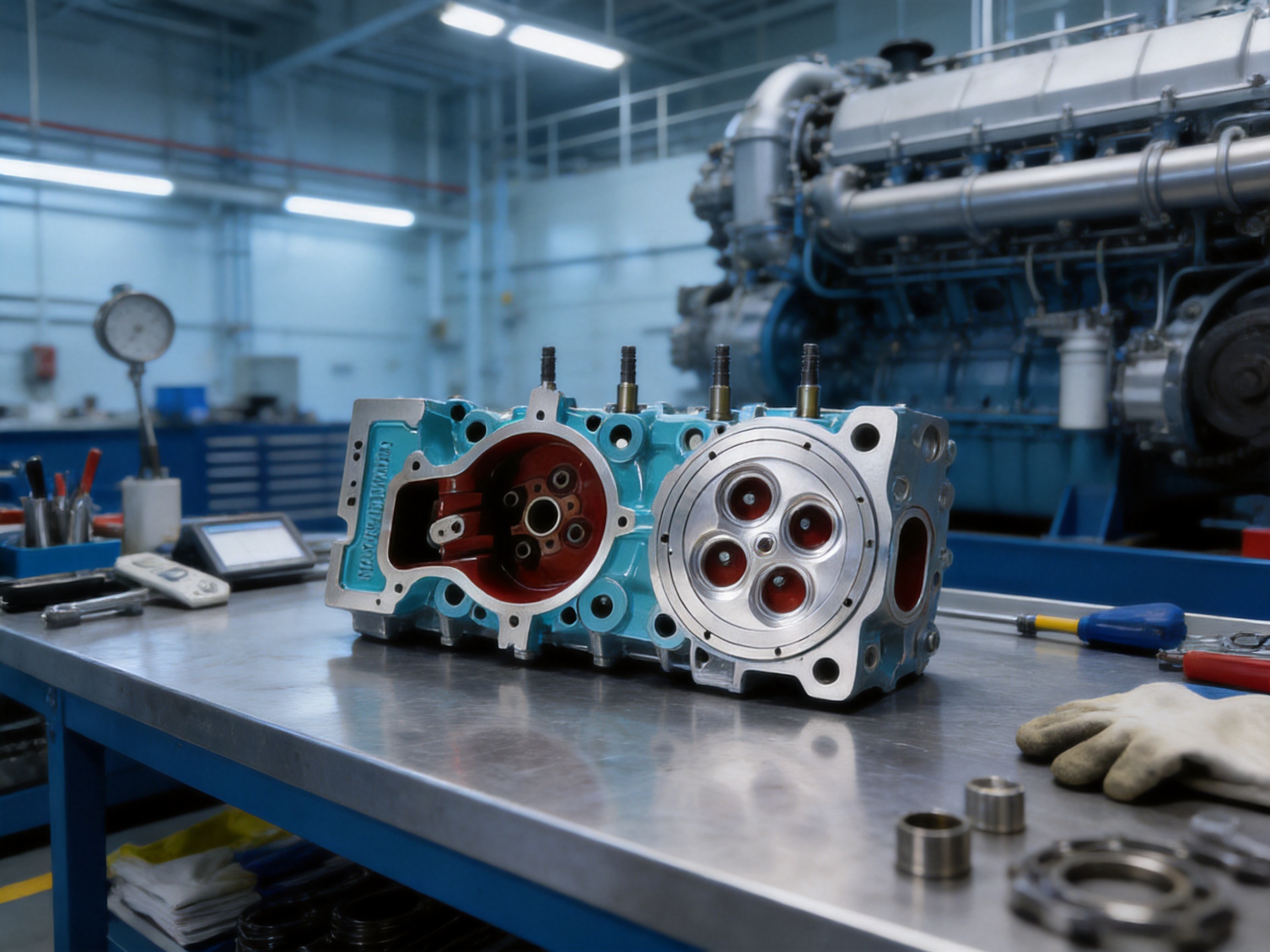
Manufacturing Experience and Company Strengths
The manufacturer was established in 1996 and has specialized in imported and domestic marine diesel engine components for more than two decades. This long operating history provides practical knowledge of marine engine repair requirements, spare-parts distribution, and component manufacturing.
The company is located in Zhoushan, Zhejiang Province, an area with strong maritime connections. Its location near important marine activity and transport routes supports communication with shipowners, ship-repair businesses, dealers, and international customers. Convenient land, sea, and air transportation also helps the company organize the movement of heavy machinery components and maintenance parts.
The facility covers more than 8,000 square meters, including a workshop of over 5,000 square meters. This provides space for casting-related activities, machining, inspection, storage, and production management. The company reports annual production of more than 5,000 sets, demonstrating the ability to support both regular orders and repeat supply programs.
Its product range includes cylinder heads, cylinder liners, valves, valve seats, valve cages and guides, connecting rods, piston pins, and piston heads. This broader product portfolio is an advantage for customers who prefer to source several related components from one experienced supplier. It can simplify communication, reduce the number of separate purchase orders, and support more coordinated overhaul planning.
The company’s business philosophy emphasizes integrity, practical cooperation, continuous improvement, quality-first standards, reasonable pricing, and dedicated service. These principles are relevant to marine spare-parts purchasing, where buyers often need technical assistance, reliable delivery, clear communication, and consistent quality rather than a one-time low-price transaction.
Advantages Compared with Generic or Poorly Controlled Alternatives
More Than a Visual Match
One of the most important differences between a properly developed replacement cylinder head and a generic alternative is the depth of application knowledge. A generic casting may resemble the required component but still differ in internal passages, valve positions, material condition, machining allowances, or sealing geometry.
The L16/24 replacement cylinder head is produced for a defined marine engine application. This application focus encourages attention to the functional features that are not immediately visible. The result is a component intended to support correct installation and operation rather than merely match the external outline.
Better Consistency Between Orders
In fleet maintenance, consistency matters. If each replacement part has different machining quality or dimensional variation, service teams may spend additional time checking, adjusting, or correcting the components. A controlled manufacturing system helps provide more consistent parts across different orders.
Consistency also supports inventory management. Distributors and repair companies can develop greater confidence in the product when repeat orders follow the same technical and quality expectations. This is especially useful when spare parts must be stocked before an engine overhaul or emergency repair.
Reduced Risk of Premature Failure
No component can eliminate every operating risk, but careful material control, casting inspection, machining, and testing can reduce the likelihood of premature cylinder-head problems. Properly manufactured sealing surfaces help reduce combustion-gas leakage. Correct valve-seat geometry helps control valve temperature and sealing. Accurate cooling passages help reduce thermal concentration.
These factors can contribute to longer service intervals and more predictable maintenance. They may also reduce the chance that a newly installed cylinder head will require immediate rework because of leakage, misalignment, or dimensional incompatibility.
Practical Aftermarket Value
Original equipment components may be unavailable, lead times may be long, or prices may not be suitable for every maintenance budget. A high-quality aftermarket cylinder head provides an alternative for operators who need dependable performance while controlling total repair costs.
The value of the L16/24 cylinder head comes from the balance between product quality, manufacturing experience, technical capability, and reasonable pricing. It is not positioned as an unverified low-cost substitute. Instead, it is intended to provide a practical replacement option for professional marine maintenance and engine overhaul work.
Benefits for Shipowners and Repair Organizations
For shipowners, component reliability directly affects vessel availability. A cylinder-head failure can interrupt propulsion or auxiliary power and may create secondary damage to valves, pistons, liners, injectors, and exhaust equipment. Using a suitable replacement part during planned maintenance can help reduce the chance of unexpected disruption.
For ship-repair yards, a compatible cylinder head can improve workflow. When the component arrives correctly machined and appropriately inspected, technicians can focus on cleaning, measurement, assembly, and engine testing rather than extensive corrective machining. This can be valuable when a vessel has a narrow repair window.
For distributors, the product offers an opportunity to provide a marine-specific component supported by an experienced manufacturer. Technical product information, application review, and repeat supply capability can help distributors serve shipowners and repair companies more effectively.
For overhaul contractors, the cylinder head can be included in a larger package of related engine components. Since the manufacturer also produces cylinder liners, valves, valve seats, guides, connecting rods, piston pins, and piston heads, it may be possible to coordinate several parts for the same engine project.
Recommended Inspection Before Installation
Even a newly manufactured replacement cylinder head should be inspected before installation. Marine engine assembly requires careful cleaning and verification because contamination or incorrect assembly can damage otherwise sound components.
The sealing face should be checked for cleanliness, damage, and conformity with the applicable gasket requirements. Mounting holes and threads should be examined to ensure that fasteners can be installed smoothly. Cooling passages should be free from casting residue, machining chips, dirt, and protective material.
Valve seats and guides should be checked for correct installation and visible damage. If valves are supplied separately, the contact pattern and stem clearance should be verified according to the engine maintenance specification. Injector bores and sealing surfaces should be cleaned and checked before the injectors are installed.
All related components should be matched to the correct engine configuration. The cylinder-head gasket, fasteners, valves, injectors, cooling connections, and valve-train parts must be appropriate for the L16/24 application. Fasteners should be tightened using the correct sequence and torque or angle procedure specified for the engine.
After assembly, the engine should be inspected for cooling-water leakage, lubricating-oil leakage, fuel leakage, abnormal exhaust temperature, valve-train noise, and irregular combustion. Initial operation should be monitored carefully, particularly after a major overhaul.
Maintenance Practices That Support Long Service Life
The life of a cylinder head depends on the overall condition of the engine. Regular cooling-system maintenance is essential. Water quality, corrosion protection, flow rate, temperature, and cleanliness should be controlled. Deposits or restricted passages can cause localized overheating even when the cylinder head itself is correctly manufactured.
Fuel-injection maintenance is equally important. Poor injector spray patterns, incorrect injection timing, or leaking injectors can increase combustion temperature and impose abnormal loads on the cylinder head. Scheduled injector testing and calibration can therefore protect the combustion chamber and valve area.
Valve clearance should be checked according to the engine maintenance schedule. Incorrect clearance may prevent complete valve seating or increase mechanical impact. Inadequate seating can cause hot-gas leakage, while excessive clearance can produce noise and accelerated wear.
During inspections, operators should look for signs such as repeated gasket failure, unexplained cooling-water loss, white or dark exhaust smoke, uneven exhaust temperatures, compression loss, difficult starting, and coolant contamination. These symptoms may indicate a cylinder-head problem or another engine fault requiring professional diagnosis.
When the cylinder head is removed, it should be inspected for cracks, erosion, corrosion, valve-seat movement, guide wear, gasket impressions, and distortion. Measurements should be recorded rather than relying only on visual judgment. Accurate maintenance records help identify recurring issues and support better decisions about repair or replacement.
Purchasing and Technical Coordination
Before placing an order, buyers should provide the engine model, required quantity, part number if available, cylinder-head configuration, delivery destination, and desired inspection documents. Photographs, drawings, or measurements can be useful when the engine has been modified or when several design versions exist.
Buyers should also clarify whether the cylinder head is required as a bare machined component or as a more complete assembly. The requested condition may include valve seats, valve guides, valves, plugs, and other related parts. Clear instructions help the manufacturer prepare the correct quotation and production plan.
Packaging requirements should be discussed for international shipment. Cylinder heads are heavy precision components and should be protected against impact, moisture, corrosion, and contamination. Suitable internal supports, protective coatings, sealed wrapping, and strong export packaging help preserve the component during transportation and storage.
Storage conditions are important after delivery. The cylinder head should be kept in a dry, clean environment away from corrosive chemicals and unnecessary handling. Machined surfaces should remain protected until assembly. Before installation, all temporary protective materials must be removed from passages and sealing areas.
Frequently Asked Questions
What engine is the L16/24 cylinder head intended for?
The product is intended for marine diesel engine systems compatible with the L16/24 configuration. Buyers should confirm the exact engine model, component number, and design version before ordering to ensure correct application.
Is this cylinder head an original equipment part?
It is a professionally manufactured aftermarket replacement component. It is produced by an experienced marine diesel engine parts manufacturer and is intended to provide a practical alternative for repair, overhaul, and spare-parts supply.
What are the main functions of the cylinder head?
The cylinder head seals the top of the cylinder, forms part of the combustion chamber, supports valves and fuel-injection components, and transfers heat through the cooling system. It must maintain dimensional accuracy and sealing performance under repeated thermal and mechanical loading.
Can the cylinder head be supplied with valve seats and guides?
The supply configuration should be confirmed with the manufacturer. Depending on the customer’s requirements, the cylinder head may be prepared as a machined component or supplied with selected related parts such as valve seats and guides.
How does the product differ from a generic replacement?
The product is developed for a defined marine engine application and manufactured through controlled casting, machining, component installation, and inspection processes. This application-specific approach helps address internal geometry, valve alignment, injector positioning, cooling passages, and sealing surfaces rather than focusing only on external appearance.
What quality systems support production?
The manufacturer obtained ISO 9001 certification in 2001 and operates with documented quality-management practices. Production is supported by experienced personnel, specialized equipment, dimensional inspection, and process control.
What should be checked before installation?
The sealing face, mounting holes, threads, cooling passages, valve seats, valve guides, injector bores, and related components should be inspected and cleaned. The gasket, fasteners, valves, injectors, and cooling connections must match the correct engine application.
Can this product help reduce maintenance costs?
A suitable aftermarket cylinder head can reduce acquisition cost compared with some original components and may help shorten repair preparation time when supplied correctly machined and inspected. Total savings depend on product configuration, shipping, installation, engine condition, and maintenance practices.
How should the product be stored before installation?
It should be stored in a clean, dry location with machined surfaces protected against corrosion and impact. Internal passages should remain covered until the component is ready for cleaning and assembly.
What information should be included in an inquiry?
An inquiry should include the engine model, cylinder-head identification or part number, quantity, required configuration, delivery location, expected delivery time, and any inspection or documentation requirements. Photographs and drawings are helpful when the engine has unusual modifications.
Conclusion
The L16/24 marine diesel engine cylinder head is a key replacement component for maintaining reliable engine operation. Its responsibilities extend far beyond closing the cylinder. It must contain combustion pressure, maintain accurate valve and injector alignment, support efficient heat transfer, and preserve sealing integrity during long periods of marine service.
The product’s principal advantages come from its application-specific design, controlled material and casting practices, precision machining, attention to valve-seat and guide installation, cooling-passage integrity, and inspection procedures. These characteristics distinguish a professionally manufactured replacement from a generic component that has not been adequately verified for marine engine use.
The manufacturer adds further value through long-term specialization, ISO 9001 certification, a substantial production facility, experienced technical personnel, and a broad range of related marine diesel engine components. Its ability to produce cylinder heads, cylinder liners, valves, valve seats, guides, connecting rods, piston pins, and piston heads supports coordinated procurement for complete overhaul projects.
For shipowners, repair yards, distributors, and engine-service companies, the L16/24 cylinder head offers a practical combination of engineering suitability, aftermarket value, production experience, and supply capability. When correctly selected, inspected, installed, and maintained, it can support dependable engine performance and help reduce the operational risks associated with worn or damaged cylinder-head components.
References
1. Marine Diesel Engine Maintenance Practices, general principles of cylinder-head inspection, valve servicing, cooling-system maintenance, and engine overhaul.
2. ISO 9001 Quality Management Systems, principles for documented production control, inspection, traceability, and continuous improvement.
3. Marine Engine Component Manufacturing Principles, guidance on casting, heat treatment, precision machining, valve-seat installation, and dimensional inspection.
4. Diesel Engine Combustion and Cooling Engineering, general technical principles concerning combustion-chamber sealing, injector positioning, thermal loading, and cooling-passage performance.
5. Shipboard Machinery Maintenance Procedures, recommended practices for spare-parts verification, installation inspection, operating tests, and maintenance records.