عربى

Content
- 1 Understanding the Function of a Diesel Engine Cylinder Head
- 2 Product Overview of the WX-G300 Cylinder Head
- 3 Key Advantages of the Replacement Cylinder Head
- 4 Manufacturing Strengths Behind the Product
- 5 Important Manufacturing Processes for Cylinder Heads
- 6 Advantages Compared with Less Specialized Aftermarket Sources
- 7 Applications and Suitable Customers
- 8 Purchasing and Technical Confirmation Checklist
- 9 Installation and Maintenance Considerations
- 10 Service, Supply, and Customer Support
- 11 Why Supplier Selection Matters for Cylinder Head Reliability
- 12 Quality and Value in Long-Term Fleet Maintenance
- 13 Frequently Asked Questions
- 13.1 What is the WX-G300?
- 13.2 Who manufactures the WX-G300?
- 13.3 Is the WX-G300 compatible with every domestic diesel engine?
- 13.4 Can the cylinder head be supplied as a complete assembly?
- 13.5 What are the main advantages of using an aftermarket cylinder head?
- 13.6 Why is manufacturing experience important for cylinder heads?
- 13.7 What quality credentials does the manufacturer report?
- 13.8 Can the supplier provide parts for other marine diesel engines?
- 13.9 What information should be sent when requesting a quotation?
- 13.10 Does a new cylinder head eliminate the need for engine inspection?
- 13.11 How can a cylinder head’s service life be supported?
- 13.12 Where is the manufacturer located?
- 14 Conclusion
- 15 References
- 16 Product: WX-G300
For marine diesel engines, the cylinder head is one of the most important components in the entire combustion system. It closes the top of the cylinder, forms part of the combustion chamber, supports critical valve-train components, manages the movement of intake air and exhaust gases, and contributes to the circulation of cooling water. Because it operates under high temperature, pressure, vibration, and mechanical stress, the quality of a replacement cylinder head directly influences engine reliability, fuel efficiency, emissions performance, maintenance intervals, and vessel operating safety.
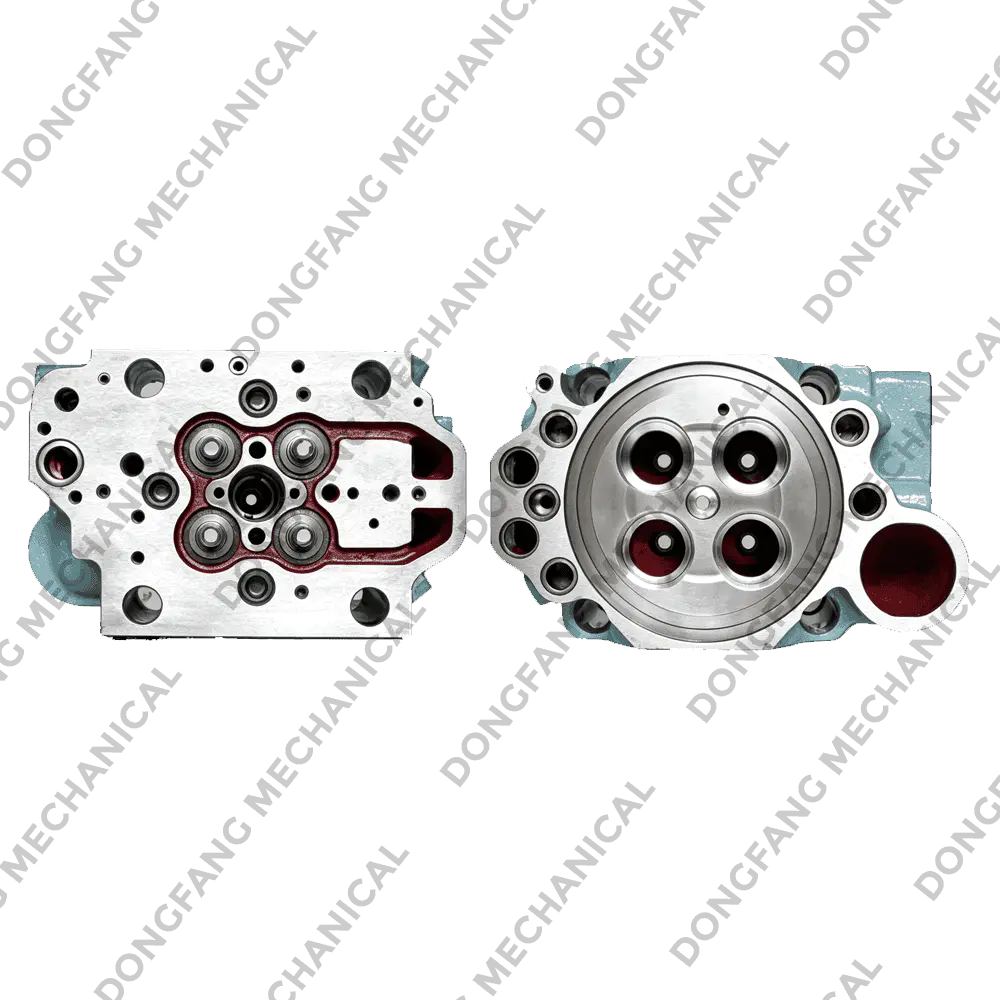
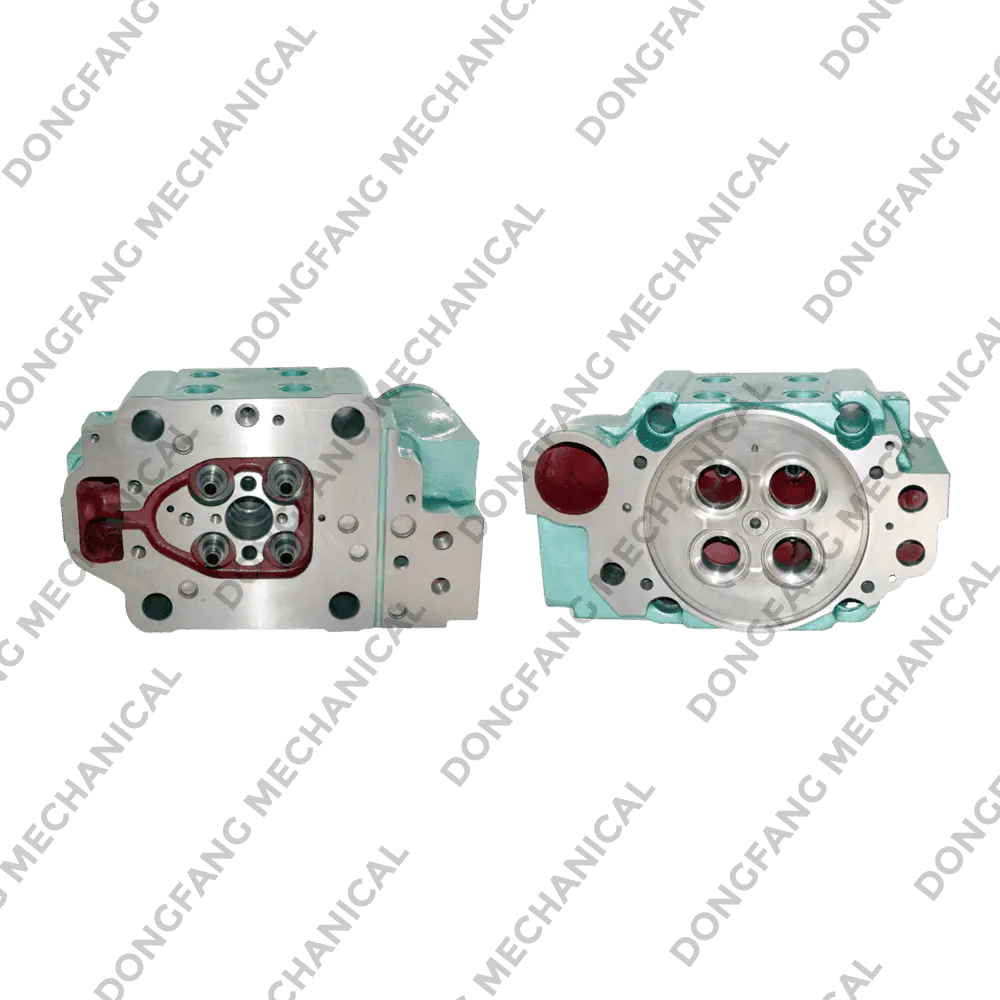
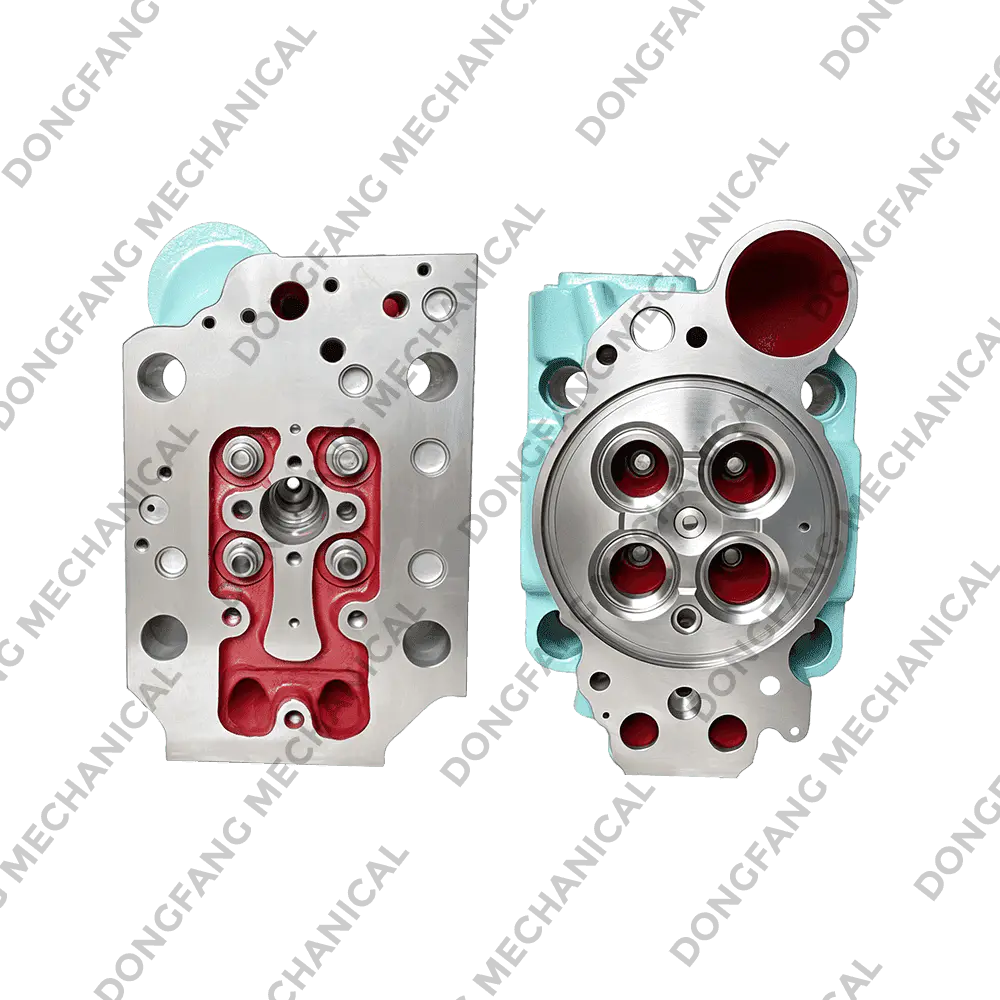
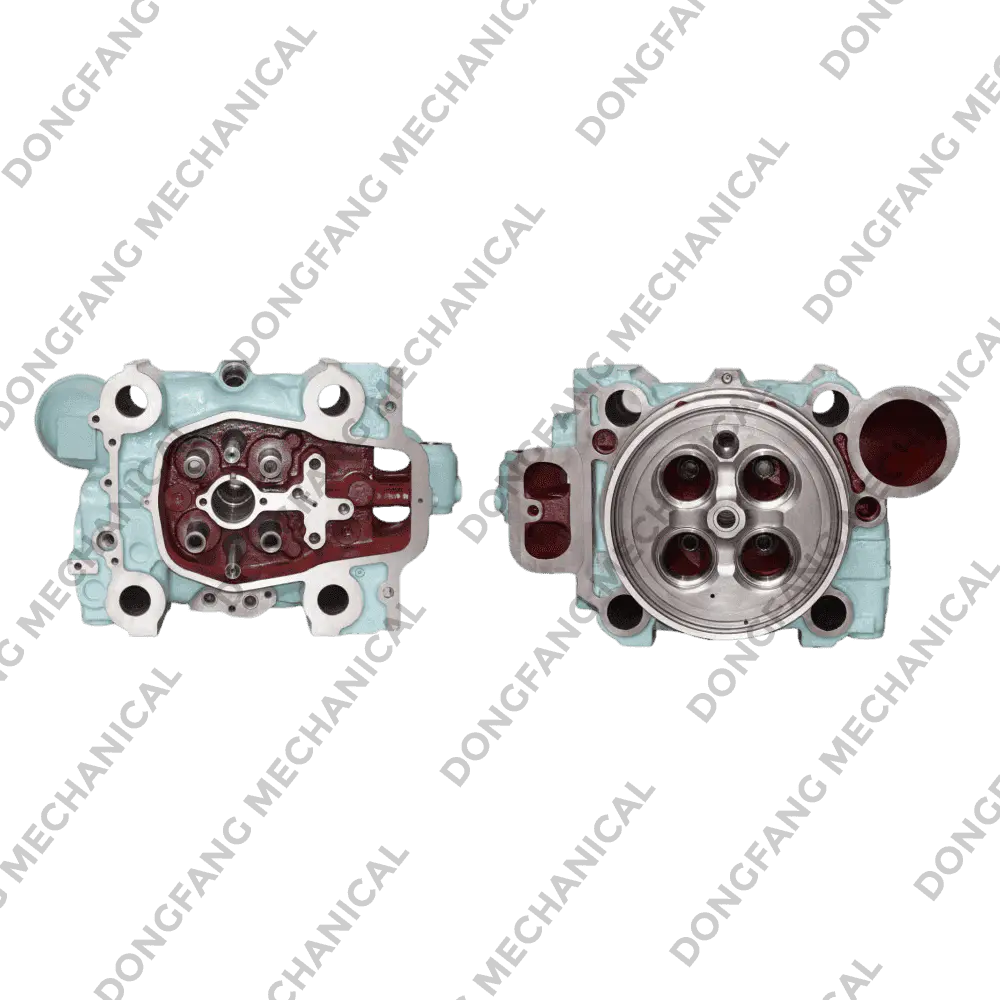
The WX-G300 cylinder head is a replacement spare-part solution developed for domestic diesel engines. It is manufactured by Zhoushan Putuo Dongfang Machinery Co., Ltd., a Chinese producer of cylinder heads, cylinder liners, valves, valve seats, valve cages and guides, connecting rods, piston pins, and piston heads for marine diesel engines. The company has accumulated more than two decades of experience in the development, research, manufacturing, and supply of diesel engine components. This experience supports a product approach focused on dimensional accuracy, stable quality, practical serviceability, and compatibility with demanding marine operating environments.
As an aftermarket cylinder head, the WX-G300 is intended to provide an efficient alternative to purchasing a complete new engine or relying exclusively on high-priced original equipment channels. It can help shipowners, ship-repair companies, engine maintenance contractors, distributors, and fleet operators restore engine performance while controlling maintenance costs. Its value is not limited to the metal casting itself. A successful replacement cylinder head must combine suitable material performance, precise machining, dependable sealing surfaces, accurate valve-seat positioning, appropriate cooling passages, and consistent inspection procedures.
This article explains the role of the cylinder head, the principal advantages of the WX-G300, the company’s manufacturing capabilities, quality-control philosophy, purchasing considerations, installation requirements, and the way an experienced aftermarket supplier can support marine engine maintenance programs.
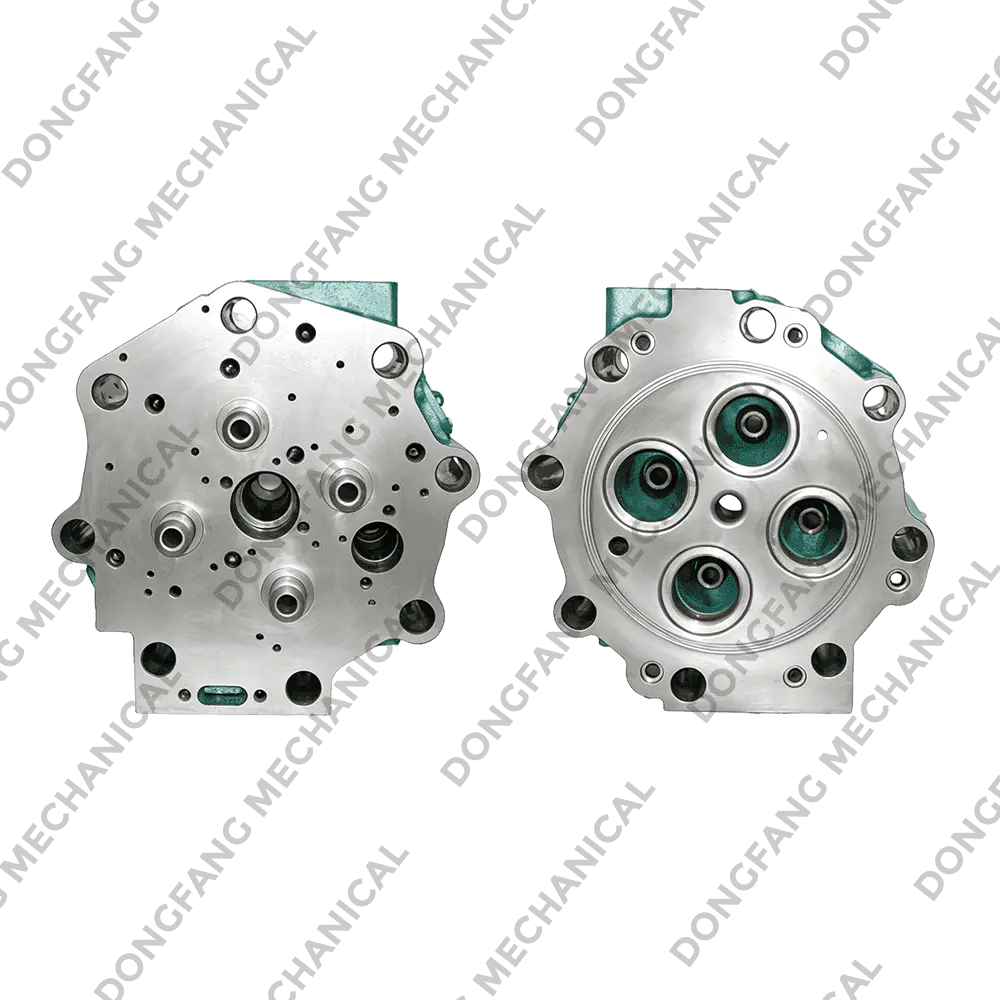
WX-G300
Understanding the Function of a Diesel Engine Cylinder Head
The cylinder head performs several functions at the same time. First, it seals the upper end of the cylinder liner or cylinder block. Together with the piston and liner, it creates the combustion chamber in which fuel is injected and burned. Second, it contains or supports the passages required for intake air and exhaust gas. Third, it accommodates valves, valve seats, valve guides, fuel injector components, and other related parts depending on the engine design. Fourth, it incorporates cooling passages that remove heat from the combustion area and transfer it to the engine cooling system.
These functions make the cylinder head a highly engineered component rather than a simple cover. The geometry of the combustion chamber affects the compression ratio, fuel-air mixing, and combustion process. The size and shape of the intake and exhaust passages influence gas flow. The location and finish of valve-seat surfaces affect sealing. Cooling passage design influences temperature distribution and resistance to thermal cracking. Even a small dimensional error may produce leakage, abnormal wear, poor combustion, or difficult assembly.
In marine service, the operating conditions can be especially severe. Engines may run for long periods at a relatively constant load, often in humid and salty environments. Maintenance opportunities can be limited by vessel schedules. A cylinder head failure may result in expensive downtime, emergency repair work, delayed cargo operations, or loss of propulsion and auxiliary power. For these reasons, shipowners generally require replacement parts that offer predictable quality and dependable availability.
A replacement cylinder head should therefore be evaluated according to more than its purchase price. Important factors include the supplier’s engineering experience, manufacturing equipment, process controls, inspection capability, component compatibility, surface quality, dimensional stability, after-sales communication, and ability to provide related parts. The WX-G300 is positioned within this broader maintenance solution.
Product Overview of the WX-G300 Cylinder Head
The WX-G300 is listed as a cylinder head replacement spare part for domestic diesel engines. Its product alias is G300. The component is supplied by Zhoushan Putuo Dongfang Machinery Co., Ltd., which specializes in diesel engine components for marine and industrial applications. Because the available product information does not specify every dimensional parameter, engine serial number, alloy designation, or test value, buyers should confirm technical drawings, reference numbers, mating dimensions, and application details before placing an order.
The product is intended for professional maintenance and replacement use. It can be considered when an existing cylinder head has developed cracks, sealing problems, excessive valve-seat wear, corrosion damage, distortion, or other defects that make continued service unsafe or uneconomical. It may also be considered during planned overhauls when the maintenance team wants to replace a worn head instead of rebuilding the original component.
A replacement cylinder head can reduce the time required to return an engine to service. If the existing component must be repaired, the workshop may need to remove damaged material, weld or repair cracks, re-machine critical surfaces, replace valve seats, inspect cooling passages, and verify dimensional accuracy. These operations can be successful when performed by qualified specialists, but they may also involve uncertain turnaround times. A manufactured replacement component provides another option for maintenance planning, especially when the vessel has a fixed repair window.
The WX-G300 can also be evaluated as part of a broader spare-parts strategy. Shipowners may keep replacement cylinder heads in regional warehouses, while distributors may include them in planned inventory for domestic diesel engines. Maintaining access to critical components can reduce the impact of unexpected failures and improve the predictability of scheduled overhauls.
Key Advantages of the Replacement Cylinder Head
Cost-effective alternative to original equipment replacement
One of the primary advantages of a professionally manufactured aftermarket cylinder head is cost control. Original equipment replacement parts can be expensive, particularly when they are sourced through multiple distribution layers or when the engine manufacturer has limited production capacity for older models. An aftermarket solution can provide a practical alternative while still focusing on essential dimensions, sealing surfaces, material integrity, and functional performance.
Cost effectiveness does not mean selecting the least expensive component without verification. The true cost of a cylinder head includes purchase price, freight, installation labor, testing, downtime, and the consequences of premature failure. A stable aftermarket product supplied by an experienced manufacturer may offer a better total-cost result when it reduces rework and shortens the maintenance process.
Experience with marine diesel engine components
The manufacturer has been engaged in the production and supply of imported and domestic marine diesel engine components since 1996. More than twenty years of specialized experience provide a foundation for understanding the practical requirements of marine maintenance. This includes the importance of accurate mating surfaces, repeatable machining, reliable valve-related components, correct cooling passage design, and consistent inspection.
A company that manufactures several related engine components can also understand how the cylinder head interacts with the cylinder liner, valves, valve seats, valve guides, piston assembly, and connecting rod system. This broader product knowledge is valuable when a customer needs to investigate a recurring failure or assemble a complete overhaul package.
Support for maintenance and overhaul planning
The WX-G300 can be used as part of preventive maintenance or corrective repair work. During a major overhaul, the maintenance team can inspect the original cylinder head and compare the cost and expected service life of repair against replacement. If the original part is close to its dimensional limits, replacement may provide greater confidence than repeated machining.
For ship repair yards and distributors, access to a replacement cylinder head can also help improve scheduling. Instead of waiting for an original head to be repaired or imported, the maintenance team may be able to plan installation of an available aftermarket component, subject to technical confirmation and inspection.
Manufacturing consistency
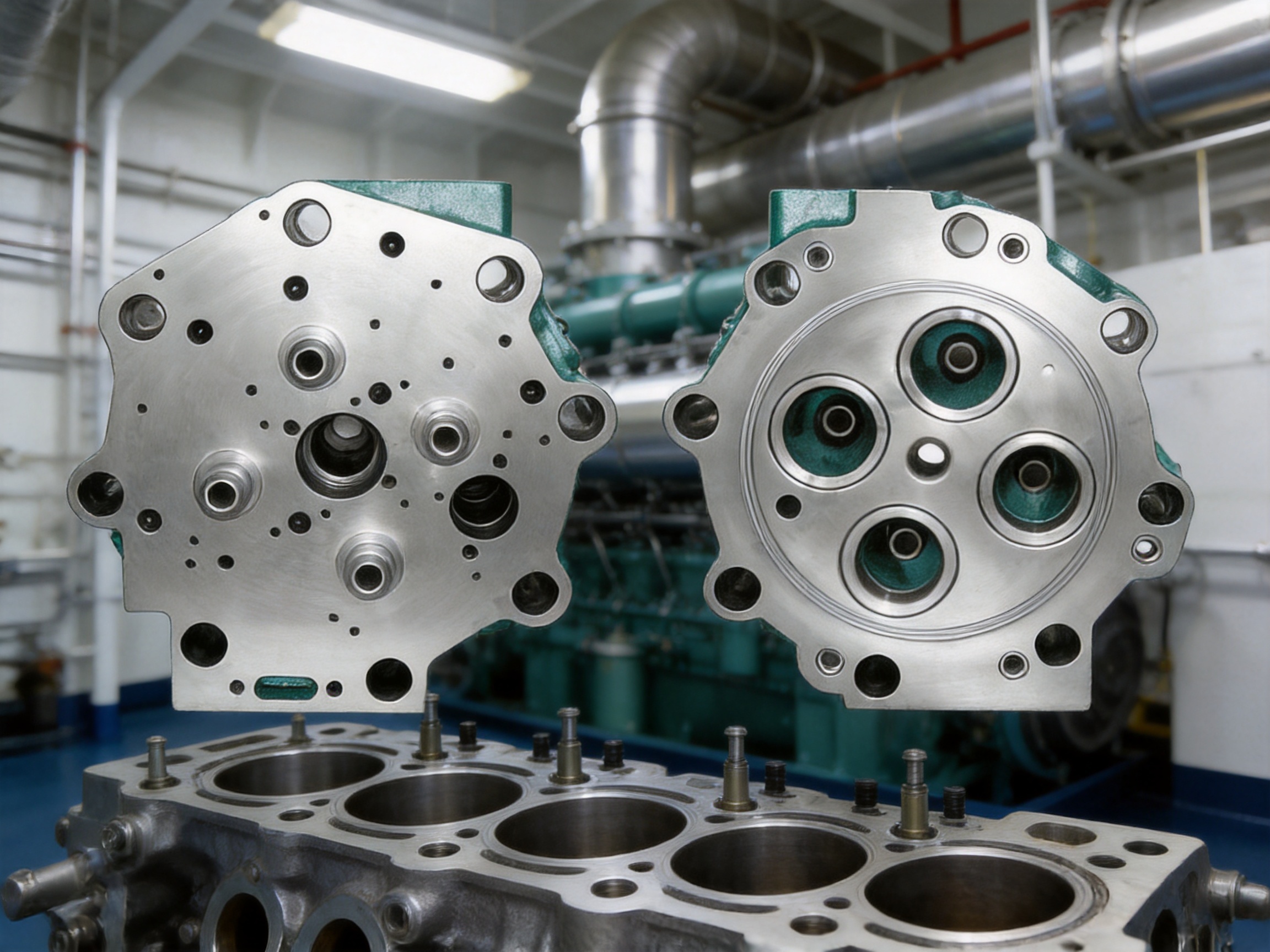
Consistent manufacturing is essential for interchangeable replacement parts. The component must maintain the required geometry from one production batch to another. Critical areas may include the cylinder sealing face, valve-seat bores, valve-guide locations, injector mounting areas, bolt holes, cooling passages, and interfaces with the cylinder liner or block.
The company’s ISO 9001 certification, obtained in 2001, reflects the use of a documented quality-management framework. Certification alone does not replace product inspection, but it indicates a structured approach to processes, responsibilities, records, corrective action, and continual improvement. When combined with experienced personnel and suitable equipment, this approach can support stable aftermarket production.
Suitable for demanding marine environments
Marine engines are exposed to thermal cycling, vibration, moisture, salt-laden air, and long operating periods. A replacement cylinder head must therefore be manufactured with attention to material integrity and surface condition. Cooling passages should be free from manufacturing defects that could restrict flow. Combustion-side surfaces should be capable of withstanding repeated pressure and temperature changes. Valve-related locations must maintain alignment and sealing during operation.
The manufacturer’s long-term focus on marine diesel engine components is relevant because marine parts require different practical considerations from components used only in light-duty equipment. A cylinder head for a vessel must support dependable operation over extended duty cycles and must be compatible with the maintenance practices of shipowners and marine workshops.
Manufacturing Strengths Behind the Product
Integrated development and production experience
Zhoushan Putuo Dongfang Machinery Co., Ltd. specializes in the development, research, manufacturing, and import of diesel engine components. This combination of activities supports communication between product design, production, inspection, and customer service. Manufacturing experience can help identify common machining difficulties, recurring field issues, and practical improvements in production methods.
Development and research capability are particularly important for aftermarket components because the supplier may need to work from drawings, physical samples, reference numbers, or customer measurements. In some cases, original documentation may be incomplete, or an engine may have undergone previous repairs. An experienced supplier can help clarify the required information and determine whether a proposed cylinder head is appropriate for the application.
Factory scale and production capacity
The company covers more than 8,000 square meters and operates a workshop of over 5,000 square meters. It reports annual production of more than 5,000 sets. This scale indicates a manufacturing operation capable of supporting both regular production and recurring customer demand. Production capacity is important for shipowners and distributors because a supplier must be able to deliver not only one emergency component but also repeated orders for fleet maintenance.
A dedicated workshop also provides space for machining, assembly, inspection, storage, and production management. Adequate working space can contribute to orderly material flow and reduce the risk of mixing components from different specifications. For replacement parts, traceability and organized handling are valuable because product identification must remain clear from manufacturing through delivery.
Experienced technical personnel
Experienced professionals are one of the company’s stated strengths. Skilled workers and technicians contribute to the control of casting quality, machining accuracy, valve-seat installation, surface finishing, measurement, and final inspection. Their knowledge is also important when unusual conditions appear, such as difficult-to-machine materials, repaired castings, dimensional variation, or customer requests for non-standard packaging and documentation.
Technical experience should be applied at each stage rather than only during final inspection. Preventing defects during production is generally more effective than discovering them after completion. Process knowledge allows operators to monitor critical dimensions, select suitable tooling, recognize abnormal surface conditions, and respond to deviations before they affect an entire batch.
Quality-management foundation
The company obtained ISO 9001 certification in 2001 and has been rated as an AAA-level enterprise. An ISO 9001-based quality system normally emphasizes controlled procedures, documented responsibilities, inspection records, handling of nonconforming products, corrective action, and customer feedback. For a cylinder head manufacturer, such a system can help establish repeatable production and support communication with international customers.
Quality management is most effective when it is connected to actual product requirements. For cylinder heads, this may include verification of raw material or casting condition, inspection of machined surfaces, dimensional checks, testing of pressure-containing areas, evaluation of valve-seat and guide installation, and final visual examination. Customers may request inspection reports or additional testing depending on the engine application and classification requirements.
Important Manufacturing Processes for Cylinder Heads
Engineering review and application confirmation
Before production begins, the supplier should confirm the application of the cylinder head. Relevant information may include the engine manufacturer, engine model, cylinder number, part number, drawing number, revision level, dimensions, mounting arrangement, valve configuration, injector position, and cooling-system details. If the customer provides an existing sample, measurements and visual comparisons can help identify the correct replacement.
Application confirmation is a critical step because cylinder heads that appear similar may not be interchangeable. Differences may exist in bolt-hole spacing, valve arrangement, injector angle, cooling passage location, combustion-chamber shape, gasket interface, or cylinder-liner contact surface. Accurate identification reduces the risk of ordering an incorrect component and helps the manufacturer plan the correct production route.
Material and casting control
The cylinder head must withstand combustion pressure, thermal stress, vibration, and repeated temperature changes. The material and casting process therefore have a direct effect on service performance. A suitable manufacturing process aims to produce a sound casting with controlled geometry, adequate density, and minimal internal defects.
After casting, the component may require cleaning, removal of excess material, surface preparation, and inspection. Foundry-related defects such as shrinkage, inclusions, porosity, or cracks must be identified and evaluated. Depending on the design and customer requirements, inspection may involve visual examination, dimensional checks, pressure testing, or non-destructive examination of critical areas.
Precision machining
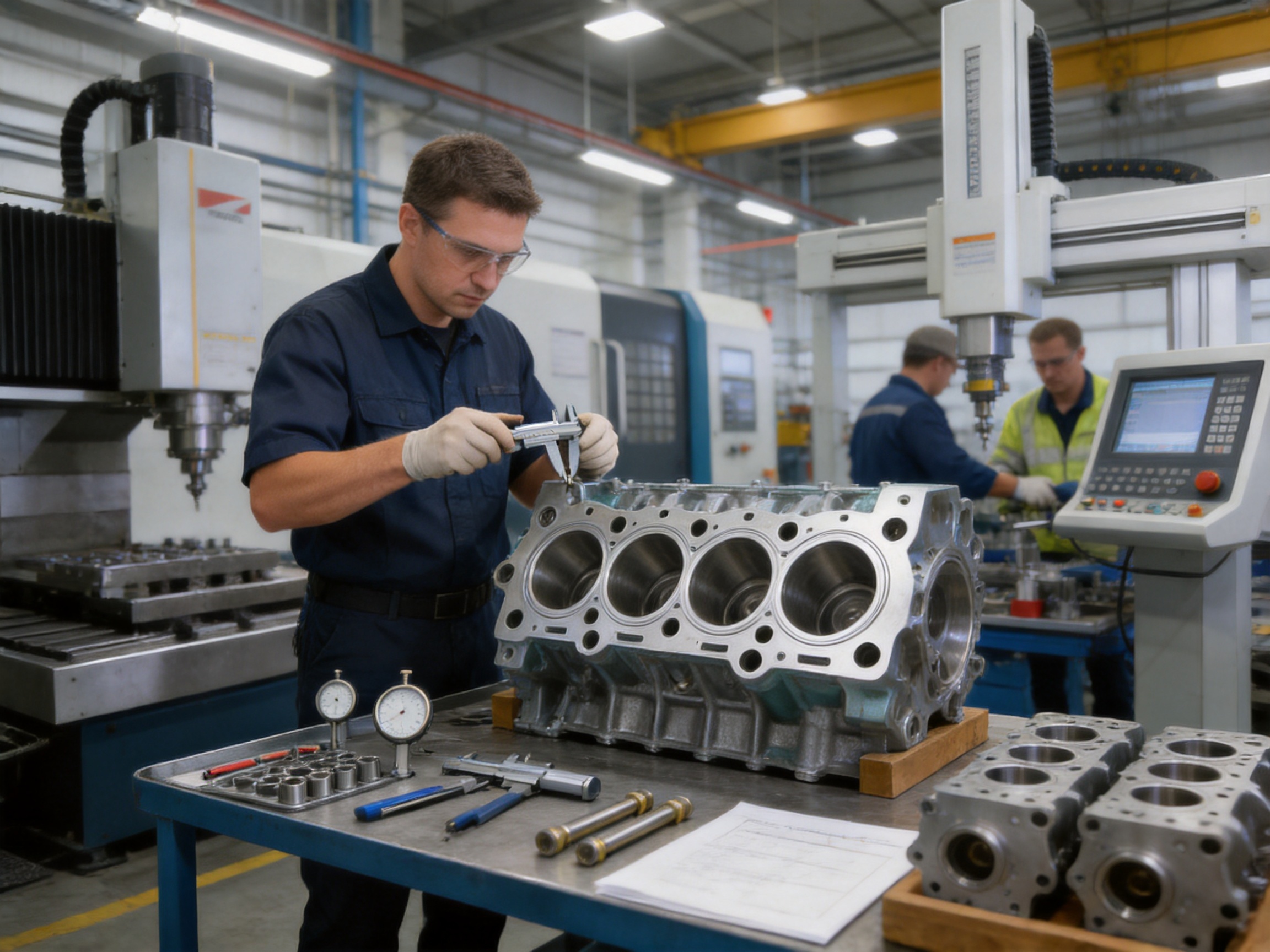
Machining transforms the cast or forged blank into a component with the required interfaces and functional surfaces. The sealing face must be flat and correctly positioned. Bolt holes must match the engine block or liner arrangement. Valve-seat and valve-guide locations must be accurately aligned. Injector mounting areas must provide the correct seating condition. Cooling and gas passages must retain their intended geometry.
Modern machining equipment can improve repeatability, but equipment alone does not guarantee quality. Tool selection, fixture design, datum control, cutting parameters, coolant management, tool wear monitoring, and operator skill all influence results. A competent manufacturer controls these factors through work instructions and in-process measurement.
Valve-seat and guide preparation
Valve seats and guides are essential to cylinder-head function. The valve seat must provide a reliable gas-tight seal while transferring heat from the valve into the cylinder head. The valve guide must maintain valve alignment and support stable movement. Incorrect positioning, poor surface finish, or excessive clearance can lead to leakage, accelerated wear, overheating, or valve damage.
For this reason, valve-seat bores and guide locations should be machined and inspected with suitable precision. If the cylinder head is supplied with seats and guides installed, the customer should confirm whether final lapping or seat finishing is required after assembly. Installation procedures should follow the relevant engine maintenance instructions.
Cooling-passage inspection
Cooling passages protect the cylinder head from excessive temperature. Restricted flow, blocked passages, casting debris, corrosion, or leakage can create local hot spots. These hot spots may lead to distortion, cracks, gasket failure, or premature valve and injector problems.
A responsible manufacturing process includes cleaning and inspecting cooling passages. Pressure testing may be used to identify leakage between water passages and combustion or oil areas. Customers operating in corrosive marine conditions should also maintain appropriate cooling-water treatment and inspection procedures after installation.
Surface finishing and final inspection
After machining, the cylinder head should be cleaned thoroughly to remove chips, abrasive particles, oil, and other contaminants. Final inspection may include dimensional verification, surface-finish checks, visual examination, pressure testing, and confirmation of part identification. Protective treatment and suitable packaging help prevent corrosion during storage and transport.
Final inspection records are useful for professional maintenance departments. They allow the purchaser to verify that the supplied product has passed the manufacturer’s internal requirements and can be stored with the vessel’s maintenance documentation. Additional inspection certificates may be available by request depending on the order and application.
Advantages Compared with Less Specialized Aftermarket Sources
Not all aftermarket cylinder heads are manufactured to the same standard. Some low-cost sources focus primarily on copying external dimensions, without sufficient attention to casting quality, cooling passages, valve alignment, or process repeatability. Such products may appear acceptable during visual inspection but develop problems after installation and operation.
A specialized manufacturer offers several advantages. First, it understands the operating environment of marine diesel engines. Second, it can evaluate the cylinder head together with related parts such as liners, valves, guides, seats, and pistons. Third, it has established production and inspection procedures rather than relying only on one-off workshop repairs. Fourth, its experience supports better communication when the customer needs technical clarification or a customized supply arrangement.
The reported production capacity of more than 5,000 sets annually provides another advantage over very small workshops. Larger and more organized production can support repeat orders, more consistent documentation, and better availability of replacement parts. It may also make it easier to maintain tooling, inspection equipment, production records, and trained personnel.
Compared with rebuilding a severely damaged cylinder head, a new replacement can reduce uncertainty related to hidden cracks, repeated welding repairs, excessive material removal, and dimensional limits. Rebuilding remains appropriate in many cases, but replacement can be the more practical option when the original component is beyond economical repair or when the repair schedule is too long.
Applications and Suitable Customers
The WX-G300 is categorized as a replacement spare part for domestic diesel engines. It can be considered by shipowners operating domestic-engine-powered vessels, marine repair yards, engine overhaul contractors, spare-parts distributors, and maintenance departments responsible for auxiliary or propulsion equipment.
Shipowners may use the component for planned replacement during a major overhaul. Repair yards may source it when an engine arrives with a damaged cylinder head and the vessel has a limited repair window. Distributors may stock it for customers who require domestic diesel engine components. Fleet operators may use replacement parts to standardize maintenance planning across several vessels with similar equipment.
Although the product is listed under the domestic diesel engine category, the supplier also offers replacement components compatible with a variety of marine diesel engine brands and product families, including Akasaka, Daihatsu, Hanshin, Kobe, MaK, Makita, MAN, Niigata, Wartsila, and Yanmar applications. Compatibility must always be confirmed for the specific engine model and part reference. Brand or model similarity alone is not sufficient for safe installation.
Purchasing and Technical Confirmation Checklist
Before ordering a replacement cylinder head, the buyer should provide as much technical information as possible. The most useful information normally includes the engine manufacturer, exact engine model, serial number, cylinder arrangement, original part number, drawing number, and required quantity.
Photographs can help, but they should not replace dimensional information. Clear photographs of the combustion-side face, valve arrangement, injector location, cooling connections, mounting face, and identification marks may assist preliminary evaluation. If the original component is available, key dimensions and interface measurements should be recorded by qualified personnel.
The buyer should also clarify whether the cylinder head is supplied bare or assembled. Important questions include whether valves, valve seats, valve guides, injector sleeves, plugs, studs, and other accessories are included. The customer should confirm the condition of machined surfaces, packaging method, inspection documents, expected lead time, and warranty terms.
For marine applications, it may be necessary to confirm classification-society requirements, onboard inspection procedures, pressure-test expectations, or documentation standards. The supplier should be informed if the part will be installed on a classed vessel or used in a safety-critical propulsion system.
| Confirmation Item | Why It Matters | Recommended Information |
|---|---|---|
| Engine identification | Prevents selection of an incompatible component | Manufacturer, model, serial number, cylinder number |
| Part identification | Supports accurate quotation and production | Original part number, drawing number, revision, photographs |
| Interface dimensions | Confirms physical interchangeability | Bolt pattern, sealing-face dimensions, valve and injector locations |
| Supply condition | Defines the scope of delivery | Bare head, assembled head, seats, guides, valves, plugs, fittings |
| Inspection requirements | Ensures documentation matches the application | Dimensional report, pressure test, material information, certificates |
| Delivery planning | Reduces vessel downtime | Required date, destination, packaging, spare inventory needs |
Installation and Maintenance Considerations
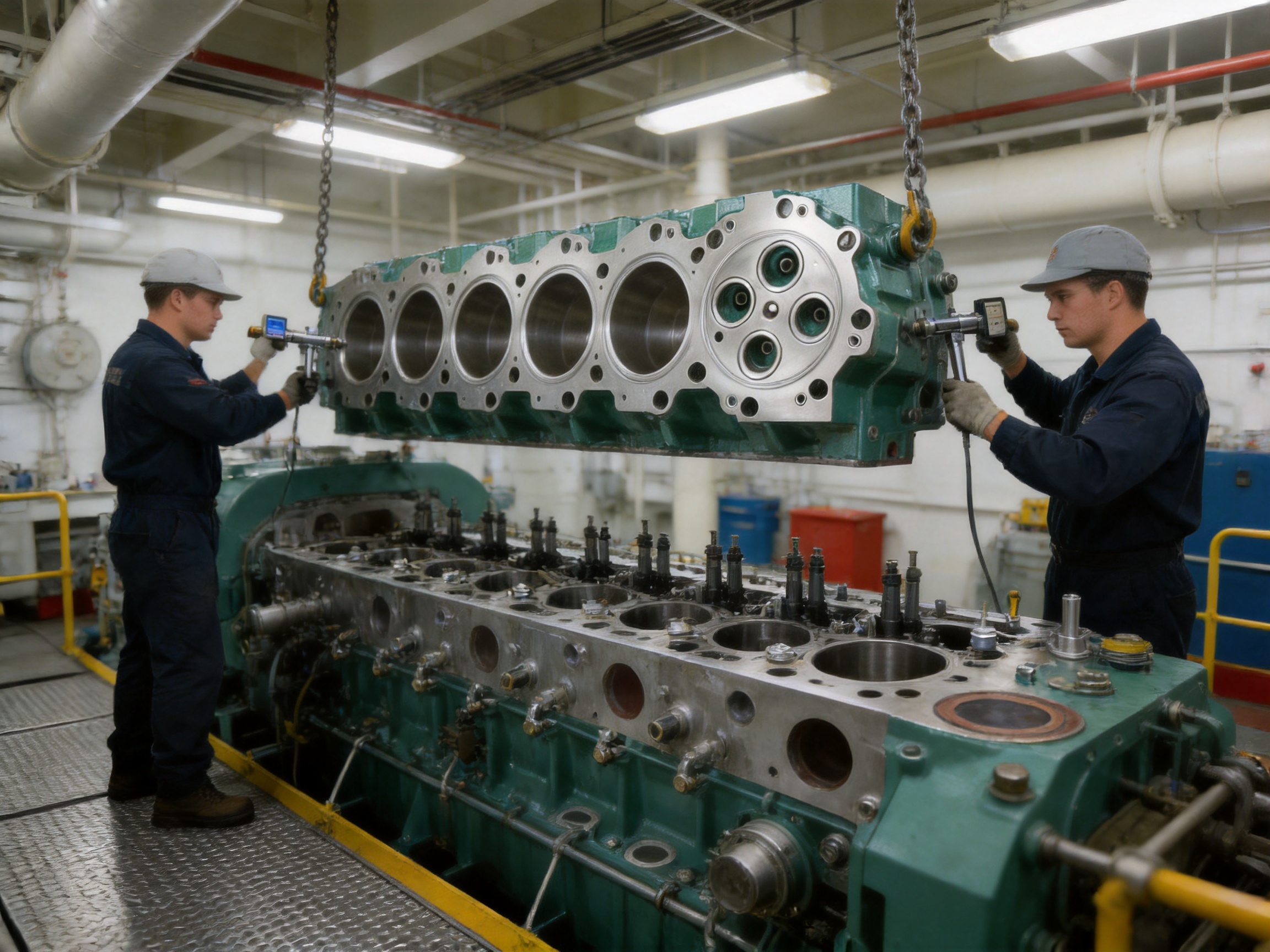
Installation should be performed by qualified marine engine technicians using the relevant engine maintenance manual. The cylinder head, mating surfaces, gasket, fasteners, valves, injectors, and cooling connections should be inspected before assembly. Any debris, corrosion products, or damage on the block or liner interface should be corrected before the new component is installed.
Fasteners should be checked for condition, length, thread quality, and suitability for reuse. Tightening should follow the specified sequence, torque, and angle where applicable. Uneven or excessive tightening may distort the cylinder head or cause gasket failure. The correct gasket and sealing components should be used, and sealants should only be applied where authorized by the engine manufacturer.
Before starting the engine, technicians should verify valve clearances, injector installation, lubrication connections, cooling-water passages, fuel-system connections, and exhaust-system alignment. The cooling system should be filled and properly vented. Where practical, the system should be pressure-tested before operation.
After initial start-up, the engine should be monitored for cooling-water leakage, exhaust-gas leakage, abnormal temperature, unusual noise, oil contamination, and changes in cylinder performance. Fastener checks and valve-clearance inspections should follow the engine manufacturer’s maintenance schedule. Early monitoring can identify installation problems before they develop into major failures.
Long-term cylinder-head life also depends on the condition of the complete engine system. Poor-quality fuel, incorrect injection timing, inadequate cooling-water treatment, excessive lubrication problems, and overloading can all increase thermal and mechanical stress. A high-quality replacement component cannot compensate for an engine that is operated or maintained outside its design conditions.
Service, Supply, and Customer Support
The company’s business philosophy emphasizes integrity, pragmatism, continuous improvement, quality-first standards, reasonable prices, and dedicated service. These principles are relevant to international spare-parts purchasing because customers often require more than a product quotation. They may need help identifying an engine part, comparing repair and replacement options, arranging production, preparing export packaging, or coordinating delivery with a ship-repair schedule.
The company is located in Pingyang Industrial Zone, Shenjiamen, Zhoushan City, Zhejiang Province, China. Zhoushan is an important maritime location, and the company describes itself as benefiting from convenient land, sea, and air transportation. Access to multiple transportation channels can support shipments to shipyards, ports, distributors, and overseas customers.
Direct communication with the manufacturer can help reduce misunderstandings between the purchaser and intermediaries. Customers may contact the company to discuss the WX-G300, related components, technical confirmation, quantity requirements, and delivery arrangements. For professional procurement, all technical details should be confirmed in writing before production begins.
Why Supplier Selection Matters for Cylinder Head Reliability
The cylinder head is a safety- and performance-critical engine part. Supplier selection should therefore consider engineering capability, process control, inspection procedures, product range, manufacturing history, delivery performance, and communication quality. A supplier with a narrow focus on price may not provide sufficient support when the application is complex or the original engine documentation is incomplete.
A reliable supplier should be able to explain what is included in the quoted product, which dimensions are controlled, what inspections are performed, and what information is required from the customer. It should also communicate limitations honestly. If a product’s exact compatibility cannot be established from the available data, the correct approach is to request additional information rather than make an unsupported promise.
The experience of Zhoushan Putuo Dongfang Machinery Co., Ltd. in marine diesel engine components provides a useful foundation for this type of supply relationship. Its product range includes several components that interact directly with the cylinder head. This can make the company a practical source for customers seeking coordinated parts for a larger overhaul rather than a single isolated item.
Quality and Value in Long-Term Fleet Maintenance
For a single emergency repair, delivery speed may be the most important purchasing factor. For a fleet maintenance program, consistency becomes equally important. A shipowner may require several cylinder heads over a period of years. If each order has predictable dimensions, documentation, packaging, and quality, the maintenance department can standardize inspection and installation procedures.
Consistent aftermarket supply can also support inventory planning. Critical components may be stored in a central warehouse or near major operating ports. The decision to hold stock depends on vessel schedules, failure history, lead time, and the cost of downtime. A manufacturer with stable production capacity can help customers evaluate these requirements and plan repeat orders.
Quality should be considered over the entire service cycle. A cylinder head that installs easily, seals correctly, maintains stable cooling, and supports reliable valve operation can reduce labor and operational risk. Even when the initial purchase price is higher than an unverified alternative, the total value may be greater if the product reduces rework and unplanned downtime.
Frequently Asked Questions
What is the WX-G300?
The WX-G300 is a replacement cylinder head spare part listed for domestic diesel engines. It is intended for professional engine maintenance and replacement applications. Customers should confirm the exact engine model and technical reference before ordering.
Who manufactures the WX-G300?
The product is manufactured and supplied by Zhoushan Putuo Dongfang Machinery Co., Ltd., a Chinese producer of marine diesel engine components. The company has operated since 1996 and specializes in cylinder heads, cylinder liners, valves, valve seats, valve cages and guides, connecting rods, piston pins, and piston heads.
Is the WX-G300 compatible with every domestic diesel engine?
No. The product category identifies it as a replacement part for domestic diesel engines, but compatibility depends on the exact engine model, dimensions, configuration, and part reference. Buyers should provide complete engine and component information for confirmation.
Can the cylinder head be supplied as a complete assembly?
The supply condition should be confirmed with the manufacturer before ordering. Customers should specify whether they need a bare cylinder head or a head supplied with valves, valve seats, valve guides, injector-related components, plugs, studs, and other accessories.
What are the main advantages of using an aftermarket cylinder head?
An aftermarket cylinder head can provide a cost-effective alternative to an original equipment component, reduce dependence on limited supply channels, support faster maintenance planning, and help restore an engine without replacing the complete engine assembly. The value depends on verified compatibility and manufacturing quality.
Why is manufacturing experience important for cylinder heads?
Cylinder heads require accurate casting, machining, sealing, valve-seat positioning, cooling-passage control, and inspection. Experienced manufacturers are more likely to have established procedures, trained personnel, suitable equipment, and practical knowledge of marine engine operating conditions.
What quality credentials does the manufacturer report?
The company reports that it obtained ISO 9001 certification in 2001 and has been rated as an AAA-level enterprise. It also reports more than 8,000 square meters of total area, a workshop of over 5,000 square meters, and annual production of more than 5,000 sets.
Can the supplier provide parts for other marine diesel engines?
The company’s product categories include replacement parts compatible with Akasaka, Daihatsu, Hanshin, Kobe, MaK, Makita, MAN, Niigata, Wartsila, and Yanmar marine diesel engines, in addition to parts for domestic engines. Each application must be confirmed individually.
What information should be sent when requesting a quotation?
The customer should provide the engine manufacturer, model, serial number, cylinder number, original part number, drawing or reference number, required quantity, photographs, key dimensions, desired supply condition, inspection requirements, delivery destination, and required delivery date.
Does a new cylinder head eliminate the need for engine inspection?
No. The mating block or liner, gasket, fasteners, valves, injectors, cooling system, lubrication system, and fuel system should all be inspected. Installation and commissioning should follow the relevant engine manual and be completed by qualified technicians.
How can a cylinder head’s service life be supported?
Correct installation, proper tightening, suitable cooling-water treatment, accurate fuel-injection adjustment, correct valve clearance, regular inspection, appropriate lubrication, and operation within the engine’s designed load range can all support service life.
Where is the manufacturer located?
The manufacturer is located in Pingyang Industrial Zone, Shenjiamen, Zhoushan City, Zhejiang Province, China. Customers can contact the company directly for technical and commercial information about the WX-G300 and related diesel engine components.
Conclusion
The WX-G300 cylinder head represents a practical aftermarket option for domestic diesel engine maintenance. Its value is based on the combination of a specialized product focus, long-term experience in marine diesel engine components, organized production capacity, quality-management practices, experienced personnel, and support for professional spare-parts purchasing.
A dependable cylinder head must do more than match the general appearance of an original component. It must provide sound material quality, accurate machining, reliable sealing, correct valve-related geometry, effective cooling-passage integrity, and repeatable inspection results. The manufacturing background of Zhoushan Putuo Dongfang Machinery Co., Ltd. is relevant because the company has focused on these types of components since 1996 and supplies a broad range of parts for imported and domestic marine diesel engines.
For shipowners, repair yards, distributors, and fleet maintenance teams, the most effective purchasing process begins with accurate application confirmation. Engine model, part number, drawings, dimensions, photographs, supply condition, inspection requirements, and delivery expectations should be clarified before production. When these details are properly controlled, the WX-G300 can support planned overhauls, emergency repairs, inventory programs, and cost-conscious maintenance strategies.
In demanding marine service, product quality and supplier reliability are closely connected. A professionally manufactured replacement cylinder head can help reduce downtime, improve maintenance predictability, and deliver a practical balance between performance, availability, and cost.
References
1. Manufacturer product information for the WX-G300 replacement cylinder head.
2. Zhoushan Putuo Dongfang Machinery Co., Ltd. company profile and manufacturing information.
3. ISO 9001 quality-management principles for manufacturing organizations.
4. General marine diesel engine maintenance practices for cylinder heads, valves, valve seats, guides, and cooling systems.
5. Standard engineering guidance for diesel engine combustion-chamber sealing, valve-train alignment, thermal management, and component inspection.
6. General shipboard machinery overhaul and spare-parts planning practices.