عربى

Content
- 1 Product Overview
- 2 Why the Cylinder Head Matters in a Marine Diesel Engine
- 3 Key Advantages of the L16/24 Replacement Cylinder Head
- 4 Manufacturing Process and Quality Control
- 5 Quality Management and Manufacturing Strengths
- 6 Advantages Compared with Less Specialized Alternatives
- 7 Maintenance Benefits for Shipowners and Repair Companies
- 8 Inspection Considerations Before Ordering
- 9 Packaging, Storage, and Handling
- 10 Application Across the Marine Spare-Parts Market
- 11 Supplier Service and Communication
- 12 Recommended Evaluation Criteria for Procurement Teams
- 13 Q&A
- 13.1 What is the L16/24 cylinder head used for?
- 13.2 Why is the cylinder head important?
- 13.3 Is this product an original branded component?
- 13.4 What advantages does an aftermarket cylinder head offer?
- 13.5 What manufacturing experience does the supplier have?
- 13.6 Does the manufacturer have a quality-management certification?
- 13.7 Can the supplier provide related engine components?
- 13.8 What information should be provided when requesting a quotation?
- 13.9 How should the cylinder head be stored before installation?
- 13.10 What should be checked before installation?
- 13.11 Can the cylinder head support fleet maintenance programs?
- 13.12 Where is the manufacturer located?
- 14 Conclusion
- 15 References
- 16 Product: L16/24
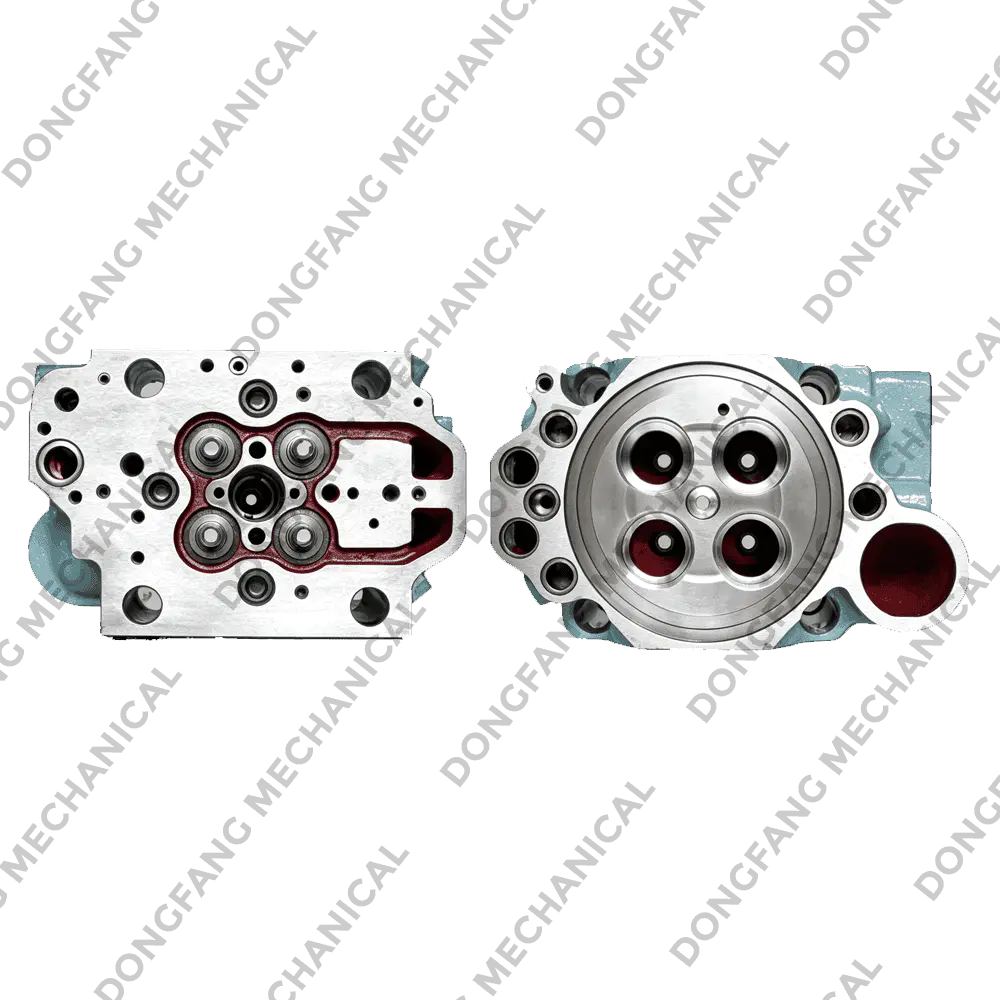
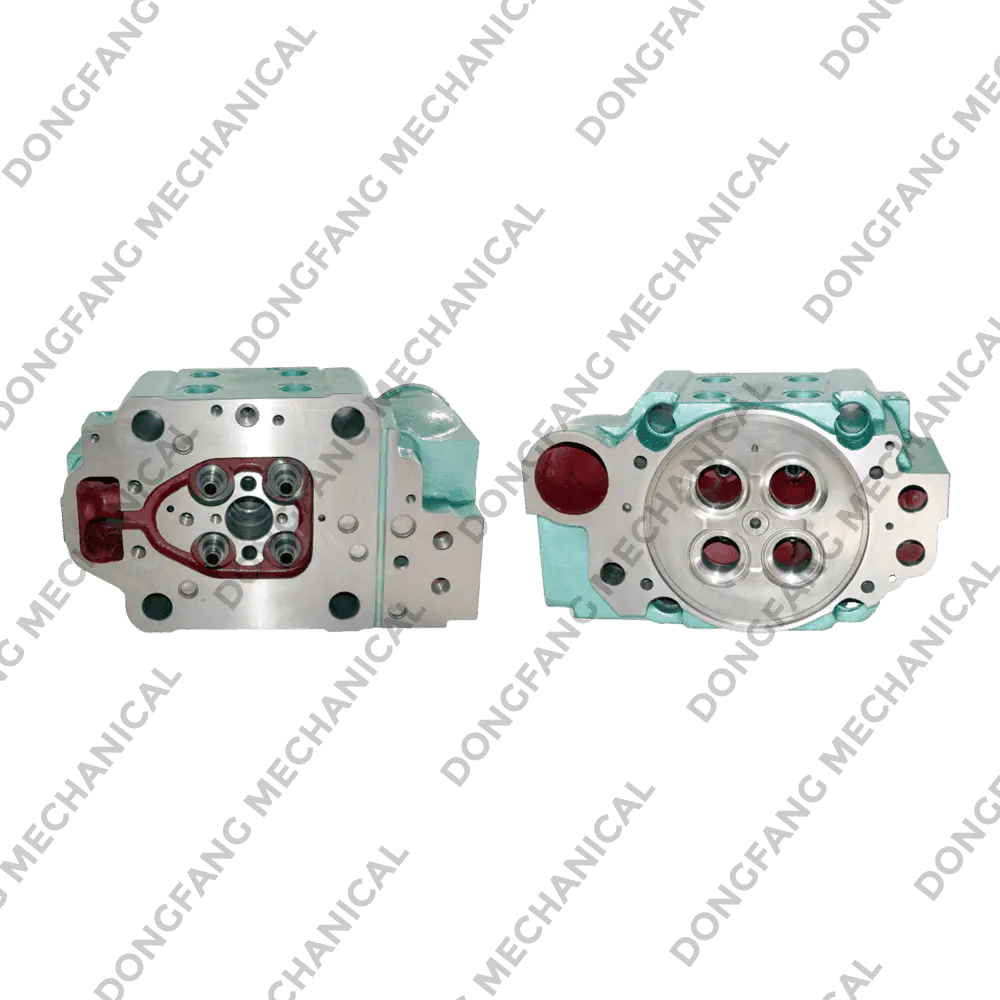
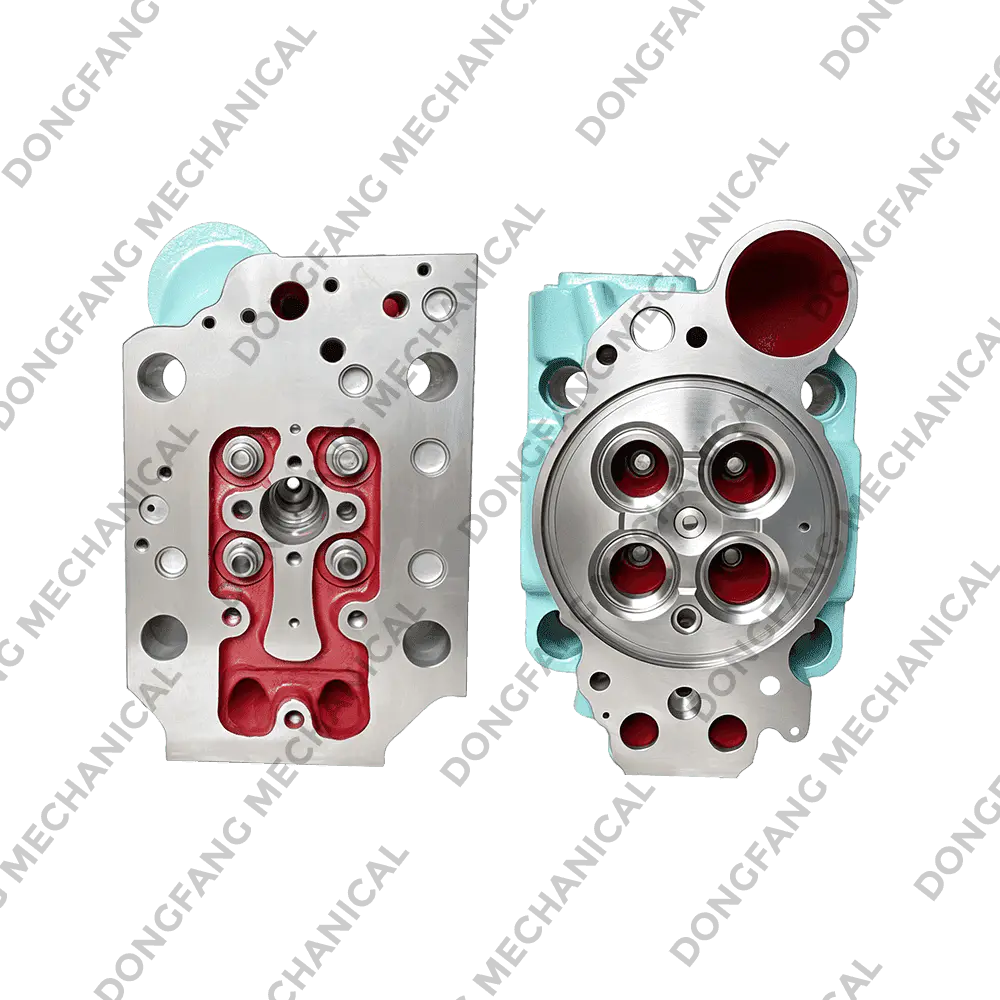
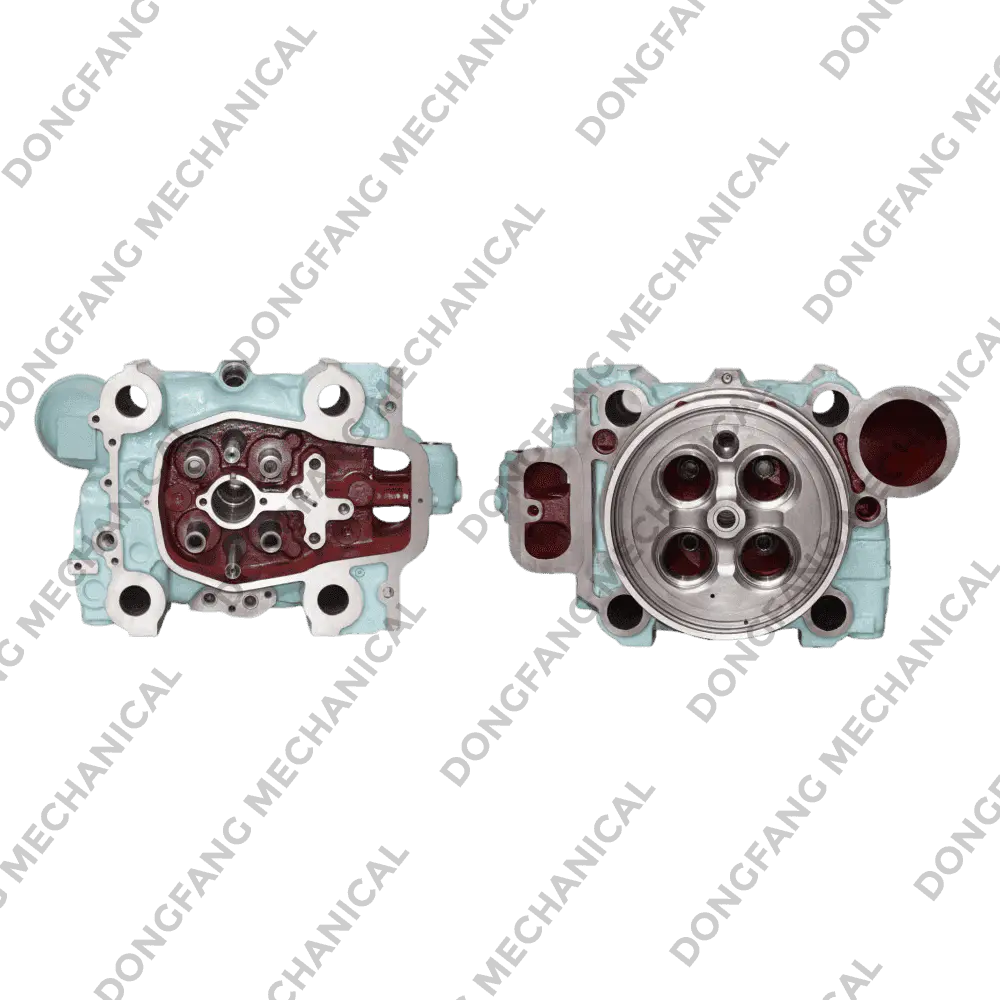
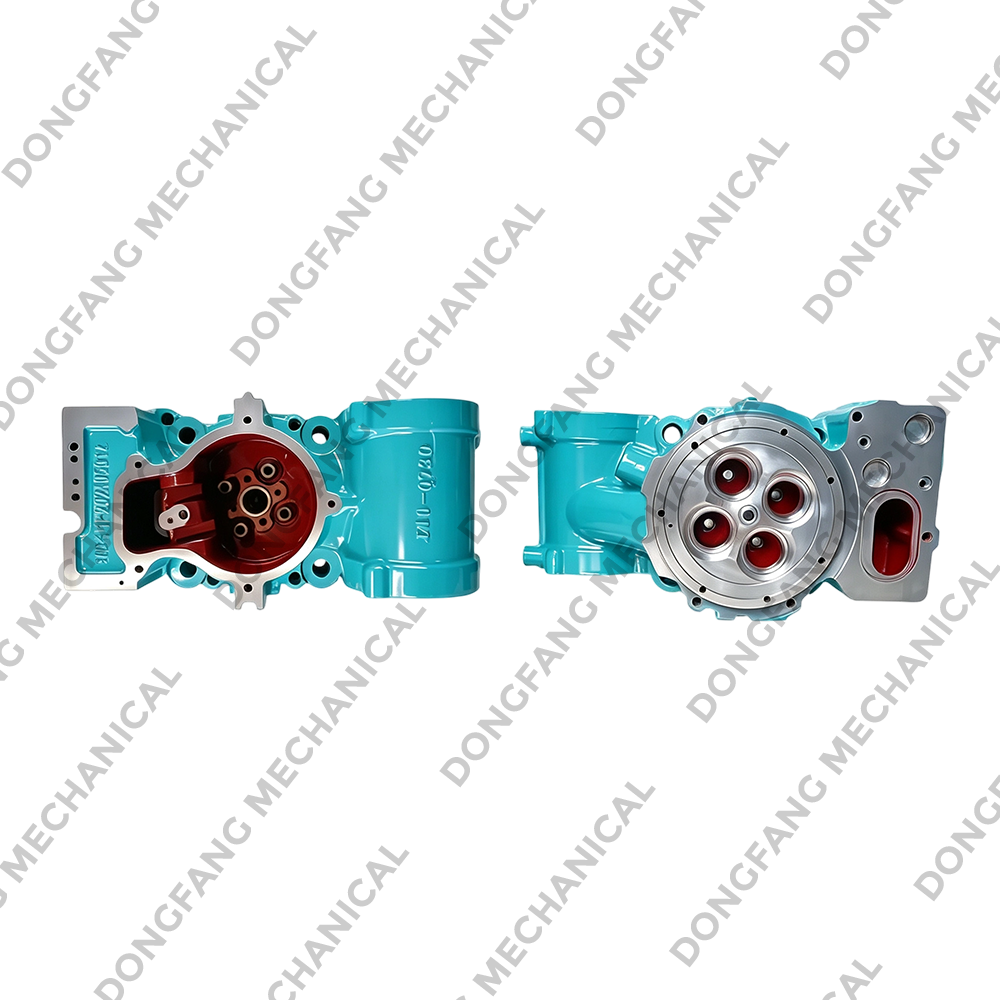
In a marine diesel engine, the cylinder head is one of the most important components for maintaining controlled combustion, gas sealing, cooling performance, and dependable engine operation. The L16/24 cylinder head is designed as a replacement component for MAN marine diesel engines, providing shipowners, maintenance contractors, engine service companies, and spare-parts distributors with a practical aftermarket solution for scheduled maintenance and repair work.
A cylinder head must perform under demanding conditions. It is exposed to high combustion temperatures, repeated pressure cycles, thermal expansion, cooling-water circulation, valve movement, and vibration. Any weakness in material quality, machining accuracy, sealing surfaces, valve-seat installation, or dimensional consistency can affect engine efficiency and service life. For this reason, selecting a reliable replacement cylinder head is essential for reducing downtime and protecting the performance of the complete diesel engine.
The L16/24 replacement cylinder head is manufactured by Zhoushan Putuo Dongfang Machinery Co., Ltd., a Chinese manufacturer and OEM supplier specializing in cylinder heads, cylinder liners, valves, valve seats, valve cages and guides, connecting rods, piston pins, and piston heads for imported and domestic marine diesel engines. With a production history beginning in 1996, the company combines long-term marine-engine experience, specialized production equipment, quality management, and a broad understanding of replacement-part requirements.
This article explains the role of the L16/24 cylinder head, its principal advantages, the manufacturing strengths behind the product, its application in marine diesel-engine maintenance, and the reasons it can be considered by buyers seeking a dependable alternative to higher-cost or less specialized supply sources.
L16/24
Product Overview
The L16/24 cylinder head is a replacement spare part compatible with MAN marine diesel engine applications. It is intended for maintenance, overhaul, repair, and component replacement programs in which the original cylinder head has reached the end of its service life or no longer meets operational requirements.
The cylinder head forms the upper closure of the combustion chamber. It works together with the cylinder liner, piston, piston rings, valves, valve seats, valve guides, fuel-injection components, sealing elements, and cooling passages. Its geometry and condition have a direct influence on compression, combustion quality, exhaust-gas control, lubrication protection, cooling performance, and the engine’s ability to deliver stable power.
A replacement cylinder head is not simply a metal casting. It must be produced with suitable materials, controlled dimensions, accurate internal passages, correctly positioned valve components, carefully finished sealing surfaces, and adequate inspection procedures. The component must also be suitable for the operating environment of marine engines, where access for repair may be limited and unplanned downtime can result in significant commercial losses.
| Item | Specification or Description |
|---|---|
| Product | L16/24 replacement cylinder head |
| Application | MAN marine diesel engine maintenance and replacement |
| Product category | Aftermarket marine diesel engine spare part |
| Manufacturer | Zhoushan Putuo Dongfang Machinery Co., Ltd. |
| Related product range | Cylinder heads, cylinder liners, valves, valve seats, valve cages and guides, connecting rods, piston pins, and piston heads |
| Manufacturing location | Zhoushan, Zhejiang Province, China |
| Quality system | ISO 9001 certified since 2001 |
| Production background | Marine diesel component manufacturing since 1996 |
Why the Cylinder Head Matters in a Marine Diesel Engine
The cylinder head contains or supports several critical engine functions. It provides the upper surface of the combustion chamber and helps create the compression space required for ignition and power generation. It also accommodates the movement and sealing of intake and exhaust valves, supports valve guides and seats, and incorporates passages for cooling water and, depending on the engine design, lubrication and fuel-injection arrangements.
During every operating cycle, the cylinder head experiences rapid changes in pressure and temperature. Combustion produces intense heat, while cooling water removes heat from selected areas around the combustion chamber and valve regions. The repeated transition between high and lower temperatures creates thermal stress. In addition, the head is exposed to mechanical loading from the cylinder-head fastening system, gas pressure, valve-spring forces, and engine vibration.
If a cylinder head is distorted, cracked, poorly machined, or incorrectly sealed, the result may include compression loss, coolant leakage, combustion-gas leakage, abnormal exhaust temperature, poor fuel economy, valve damage, lubricant contamination, or reduced engine output. In severe cases, a defective cylinder head can contribute to extensive damage involving the piston, liner, valves, turbocharging system, or exhaust components.
For this reason, the cylinder head must be selected and installed as part of a complete maintenance strategy. Buyers should consider dimensional compatibility, material suitability, valve-train condition, sealing-surface finish, cooling-passage integrity, inspection records, and supplier capability. A specialized manufacturer with experience across multiple marine diesel engine families is better positioned to understand these requirements than a general-purpose metalworking supplier.
Key Advantages of the L16/24 Replacement Cylinder Head
Application-Focused Compatibility
The L16/24 product is developed for compatibility with MAN marine diesel engine applications. Application focus is important because marine engine components are designed around specific dimensional relationships, combustion requirements, valve arrangements, cooling systems, and installation procedures. A replacement cylinder head must match the relevant engine configuration rather than merely resemble the external shape of the original component.
By concentrating on marine diesel spare parts, the manufacturer can build experience with the practical requirements of shipboard maintenance. This includes the need for dependable fit, consistent production, manageable delivery arrangements, and product support for distributors and service personnel. Buyers can therefore approach the product as a dedicated marine replacement component rather than as a generic industrial casting.
Aftermarket Value
One of the main reasons to consider a high-quality aftermarket cylinder head is cost control. Original branded components may be appropriate for many maintenance programs, but their cost, lead time, or supply conditions may not always match the needs of every shipowner or repair organization. A qualified aftermarket manufacturer can provide an alternative that balances performance requirements with a more practical purchasing budget.
Cost savings are most valuable when they do not compromise dimensional accuracy, material control, inspection, or service reliability. The L16/24 cylinder head is produced by a company whose core business is the manufacture of marine diesel engine components. This specialization supports a more focused aftermarket value proposition than products sourced from suppliers without marine-engine experience.
Support for Planned Maintenance
Marine operators commonly plan maintenance around vessel schedules, dry-docking periods, classification requirements, engine-hour intervals, and available service crews. A replacement cylinder head that can be sourced through a dedicated supplier helps maintenance teams prepare parts before an overhaul begins. This reduces the risk of waiting for a component after the engine has already been opened.
Planned replacement can also prevent secondary damage. If inspection shows cracking, excessive wear around valve seats, erosion near cooling passages, or distortion at the sealing surface, the cylinder head can be replaced before the defect affects the piston, liner, valves, or fuel-injection system. A dependable replacement source supports this preventive approach.
Manufacturing Experience Across Engine Components
The manufacturer produces a wide range of related engine components, including cylinder liners, valves, valve seats, valve cages and guides, connecting rods, piston pins, and piston heads. This broader product knowledge is an advantage when supplying cylinder heads because these parts operate together as a system.
Understanding the relationship between the cylinder head and its associated valve-train components helps a supplier recognize the importance of valve-seat geometry, guide alignment, combustion-chamber condition, and sealing interfaces. It also provides customers with the possibility of consolidating multiple spare-part requirements through one experienced source.
Stable Production and Supply Capacity
The company operates on a site covering more than 8,000 square meters, including a workshop of more than 5,000 square meters. Its stated annual production exceeds 5,000 sets. This production background indicates the capacity to support regular orders for distributors, ship-repair organizations, shipowners, and maintenance contractors.
Stable production capacity is especially important for fleet operators. A supplier that can support repeat orders and maintain consistent manufacturing practices is more useful than a source that can provide only occasional pieces. Consistency also supports inventory planning, standardization across vessels, and the establishment of approved replacement-part lists.
Manufacturing Process and Quality Control
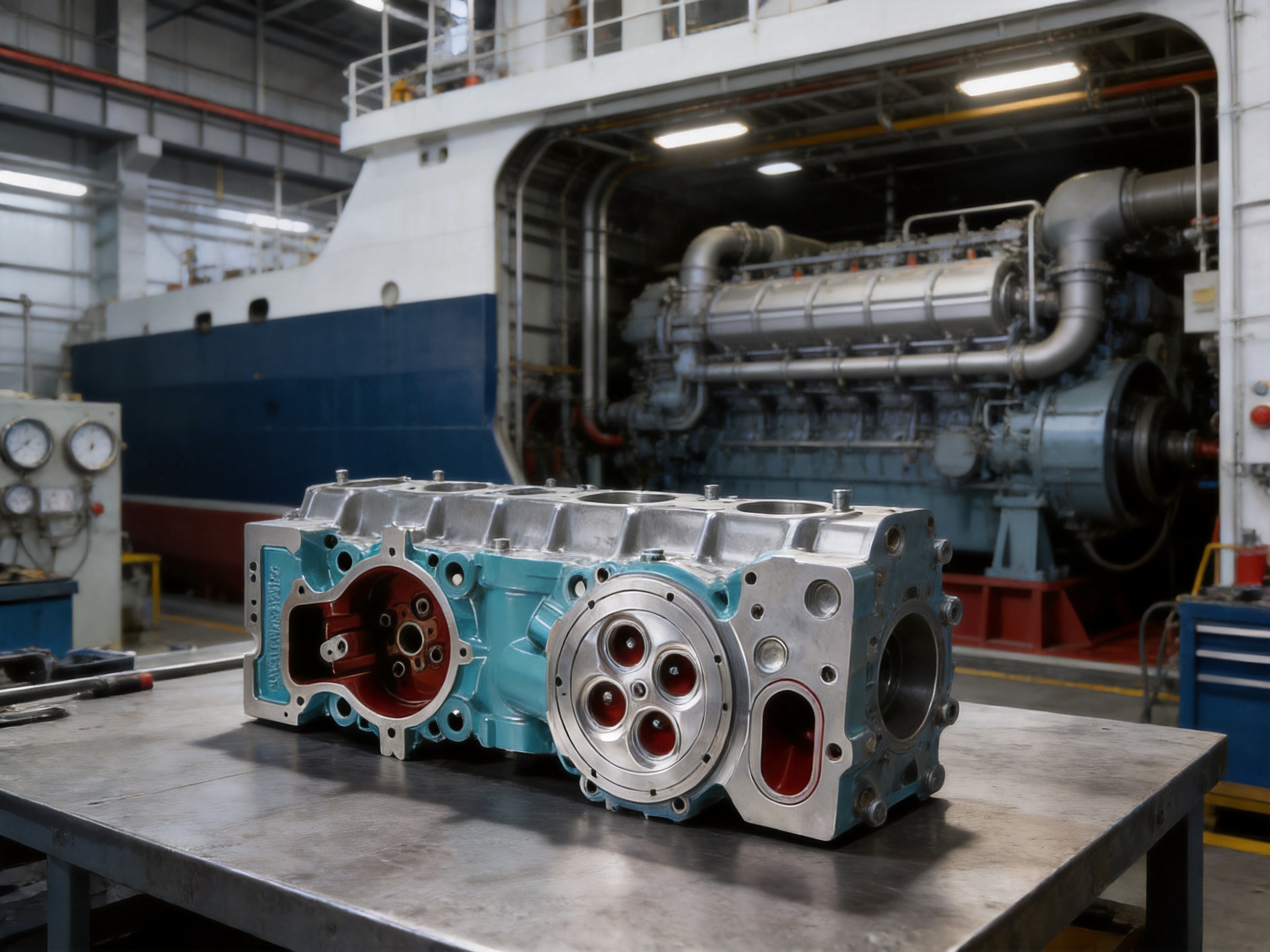
The performance of a replacement cylinder head begins with controlled manufacturing. Although the exact internal production route may vary according to material, engine design, and customer requirements, the manufacture of a marine diesel cylinder head generally involves engineering review, material preparation, forming or casting, machining, installation of valve-related components, inspection, cleaning, preservation, and final documentation.
Engineering and Drawing Review
Before production, the component specification must be reviewed carefully. Relevant information includes overall dimensions, mounting-hole locations, combustion-chamber geometry, valve positions, cooling passages, valve-seat and guide dimensions, sealing faces, threaded features, and allowable tolerances.
A disciplined drawing-review process helps prevent errors that could result from confusing similar engine models or different component revisions. It also allows the manufacturer to identify critical-to-function dimensions and establish suitable inspection points. For aftermarket production, this step is particularly important because product information may come from drawings, samples, technical records, previous production data, or customer inspection requirements.
For the L16/24 cylinder head, application identification should be confirmed before production and shipment. Buyers should provide the engine model, part number where available, quantity, delivery requirement, and any special inspection or documentation needs. This information supports correct product selection and reduces the risk of an unsuitable component being ordered.
Material Preparation
The cylinder head material must be appropriate for high-temperature combustion service, mechanical loading, and repeated thermal cycling. Material selection affects strength, thermal behavior, machinability, resistance to cracking, and long-term dimensional stability.
A professional manufacturing process begins with controlled raw materials and traceable production records. Material preparation may include verification of the supplied material, batch identification, and confirmation that the material is suitable for the intended component. Consistent material control is an important distinction between a specialized replacement part and an unverified low-cost casting.
Material quality also supports the performance of machined sealing faces and valve-component locations. If the underlying material contains unacceptable defects or lacks adequate structural stability, even accurate machining cannot fully correct the problem. This is why material control and machining quality must be considered together.
Forming, Casting, and Initial Inspection
After material preparation, the cylinder-head body is produced through an appropriate forming or casting route. The objective is to achieve a sound component with the required external shape, internal structure, and allowance for later machining.
Initial inspection may focus on visible surface quality, dimensional condition, and the absence of obvious defects. Depending on customer requirements and internal procedures, further inspection may be used to evaluate critical regions of the component. Areas around combustion chambers, valve locations, cooling passages, and fastening points deserve particular attention because they experience high mechanical or thermal stress.
Good production practice also requires careful handling between manufacturing stages. A component can be damaged by impacts, contamination, incorrect storage, or poor identification after it has been formed. Organized production areas and clear process records help preserve quality throughout the manufacturing route.
Precision Machining
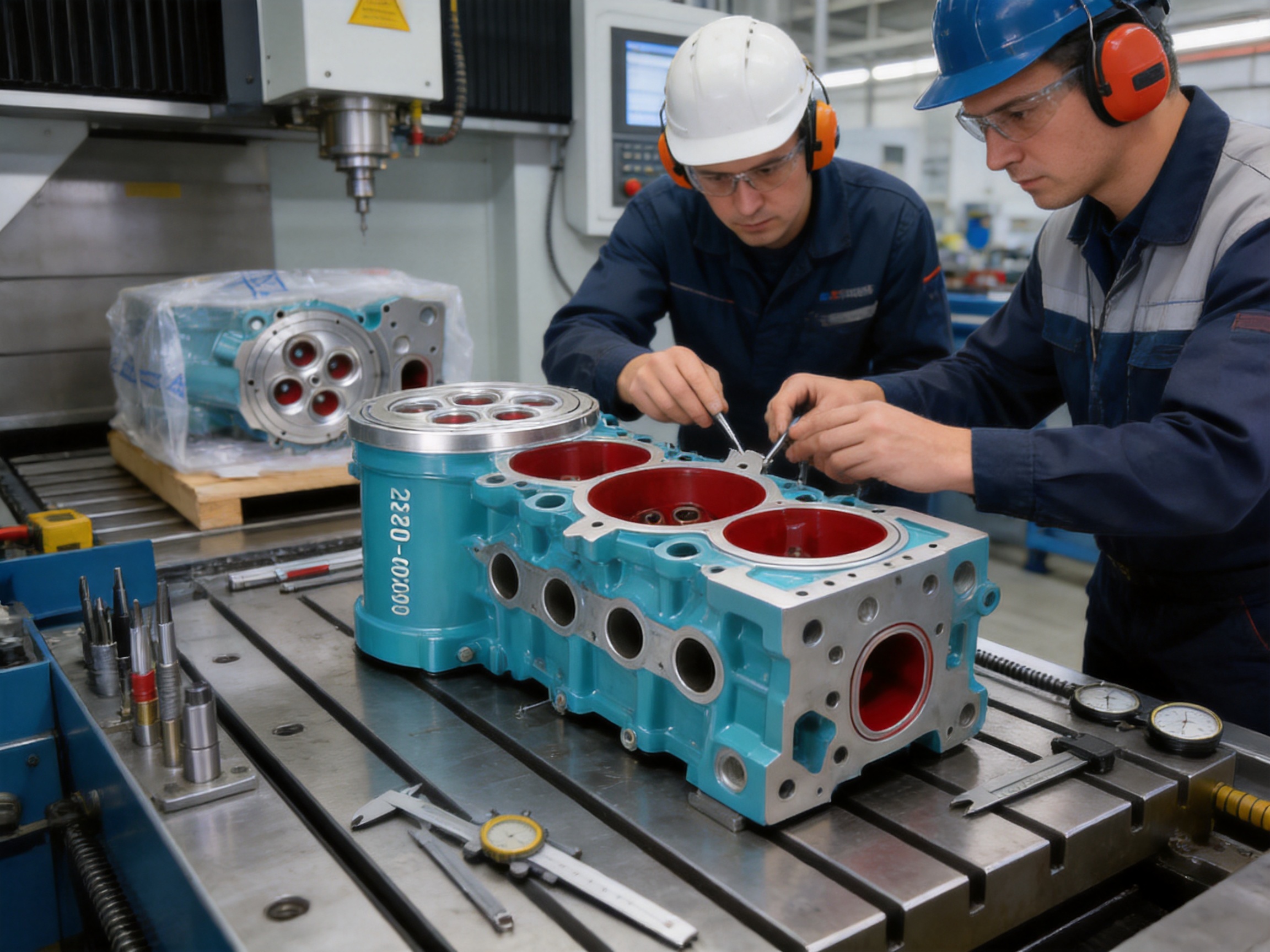
Machining establishes the dimensional accuracy required for installation and operation. Important surfaces may include the cylinder-head mounting face, combustion-chamber area, valve-seat bores, valve-guide bores, threaded holes, cooling connections, and other interfaces.
Advanced production equipment supports repeatable machining and helps maintain consistent results between batches. Experienced operators are also essential because marine diesel components often contain complex relationships between multiple machined features. Accuracy is not limited to individual dimensions; the position, alignment, flatness, concentricity, and surface finish of related features must also be controlled.
The cylinder-head mounting surface must be sufficiently flat and correctly finished to support a reliable gasket or sealing arrangement. Valve-seat and guide locations must be positioned accurately so that the valve can move correctly and close with an appropriate contact pattern. Incorrect alignment can lead to valve leakage, uneven wear, localized overheating, and reduced combustion efficiency.
Valve-Seat and Guide Component Installation
Valve seats and valve guides are essential to cylinder-head function. The valve seat provides the contact surface required for gas sealing and heat transfer from the valve into the cylinder head. The guide controls valve movement and helps maintain alignment during repeated opening and closing cycles.
Installation requires attention to dimensions, interference conditions, alignment, and final machining. The seat must remain secure during thermal cycling, while the guide must support the valve without excessive clearance or binding. After installation, the relevant surfaces may require precision finishing to establish the correct contact relationship.
Because the manufacturer also supplies valves, valve seats, valve cages, and guides, it has direct experience with these related components. This integrated product knowledge can be helpful when customers require a complete valve-train solution or need assistance identifying associated replacement parts.
Cleaning and Passage Verification
After machining, the cylinder head must be cleaned thoroughly. Metal chips, abrasive particles, machining residue, and other contaminants must be removed from internal passages, threaded holes, valve areas, and sealing surfaces. Residual contamination can cause rapid wear or blockage after installation.
Cooling passages should receive particular attention. Restricted or contaminated passages can reduce heat transfer and contribute to abnormal temperature distribution. Verification of passage condition, where applicable, supports the reliability of the completed component.
Dimensional and Functional Inspection
Inspection helps confirm that the finished cylinder head meets the required specification. Typical inspection categories include overall dimensions, mounting-face flatness, hole locations, critical bore sizes, valve-seat and guide relationships, thread condition, surface quality, and visible defects.
Functional checks may also be performed according to the product specification and customer requirements. These can include pressure-related checks for suitable passages, examination of sealing surfaces, and confirmation that installed components meet the required fit and alignment conditions.
Inspection results should be reviewed before packing. If customers require inspection reports, material information, dimensional records, or other documentation, these requirements should be agreed during the order stage. Clear documentation supports installation planning and helps maintenance departments maintain traceable records.
Quality Management and Manufacturing Strengths
Zhoushan Putuo Dongfang Machinery Co., Ltd. obtained ISO 9001 certification in 2001. A quality-management system provides a structured framework for controlling production activities, reviewing customer requirements, managing records, and supporting continual improvement.
Certification alone does not replace product inspection, but it indicates that the company has established formal quality-management practices. For an aftermarket marine-engine component, this is valuable because customers need confidence that manufacturing is organized and repeatable rather than dependent only on individual workmanship.
The company has more than two decades of experience in the development, research, manufacturing, and import of components for imported and domestic marine diesel engines. This long operating history gives the manufacturer an understanding of the requirements associated with marine spare parts, including dimensional replacement, component interchange considerations, maintenance schedules, and the importance of dependable delivery.
The company has also been rated as an AAA-level enterprise. Buyers may consider this business standing together with production experience, quality certification, manufacturing capacity, and customer references when evaluating the supplier as part of an approved vendor process.
Another strength is the company’s location in Zhoushan, Zhejiang Province. Zhoushan is a major maritime region with connections to shipowners, shipyards, marine repair businesses, and shipping services. The company’s location in the Shenjiamen Pingyang Industrial Zone provides access to land, sea, and air transportation, supporting the movement of components and raw materials.
Logistics access is an important practical advantage for marine spare parts. A cylinder head may be required for a scheduled repair, an emergency vessel call, or an overhaul at a shipyard. Efficient transportation options can help reduce delays, particularly when combined with accurate order preparation and suitable export packing.
Advantages Compared with Less Specialized Alternatives
More Focused Than General Industrial Suppliers
A general industrial supplier may have casting or machining capability, but marine diesel cylinder heads require application-specific knowledge. The component must function in a high-load engine environment and fit a defined assembly. A company specializing in marine diesel components is more likely to understand the importance of valve-train alignment, cooling passages, combustion surfaces, and maintenance interchange requirements.
The L16/24 cylinder head benefits from being part of a product family centered on marine engine components. This focus can improve communication between the buyer and supplier, especially when the order involves associated parts or when the buyer needs help confirming application details.
More Economical Than Many Original-Brand Options
Aftermarket supply can provide a cost-effective path for shipowners and repair companies that need reliable components without automatically selecting the highest-priced procurement route. The economic advantage can be relevant to older engines, multi-vessel fleets, independent repair workshops, and distributors that need competitive stock.
However, price should be evaluated together with quality controls, production experience, dimensional conformity, and support. The strongest aftermarket value is achieved when the component offers a practical balance of cost, performance, availability, and service life.
Better Suited to Repeat and Fleet Orders
Fleet operators often need a consistent source for repeated maintenance requirements. Variability between suppliers can create difficulties in inspection, installation, and inventory management. A manufacturer with established production capacity and a broad marine component range can support standardization across purchasing programs.
Repeat supply also allows customers to develop a working relationship with the manufacturer. Over time, technical records, preferred packaging, documentation requirements, delivery schedules, and inspection expectations can be established more efficiently.
Broader Component Support
In many maintenance situations, replacing the cylinder head alone is not enough. The condition of valves, seats, guides, cages, piston crowns, liners, and connecting components must also be evaluated. A supplier capable of producing multiple related parts can simplify sourcing and improve coordination.
This broader support can reduce the number of separate purchase orders and lower the risk of receiving components with incompatible dimensions or unclear origin. It can also help maintenance planners organize repair kits for scheduled overhauls.
Maintenance Benefits for Shipowners and Repair Companies
A dependable replacement cylinder head contributes to maintenance efficiency in several ways. First, it provides a planned solution when inspection identifies a damaged or worn original component. Second, it can shorten repair time when the replacement is available before the engine is dismantled. Third, it helps prevent the continued operation of an engine with a known sealing, cooling, or valve-related defect.
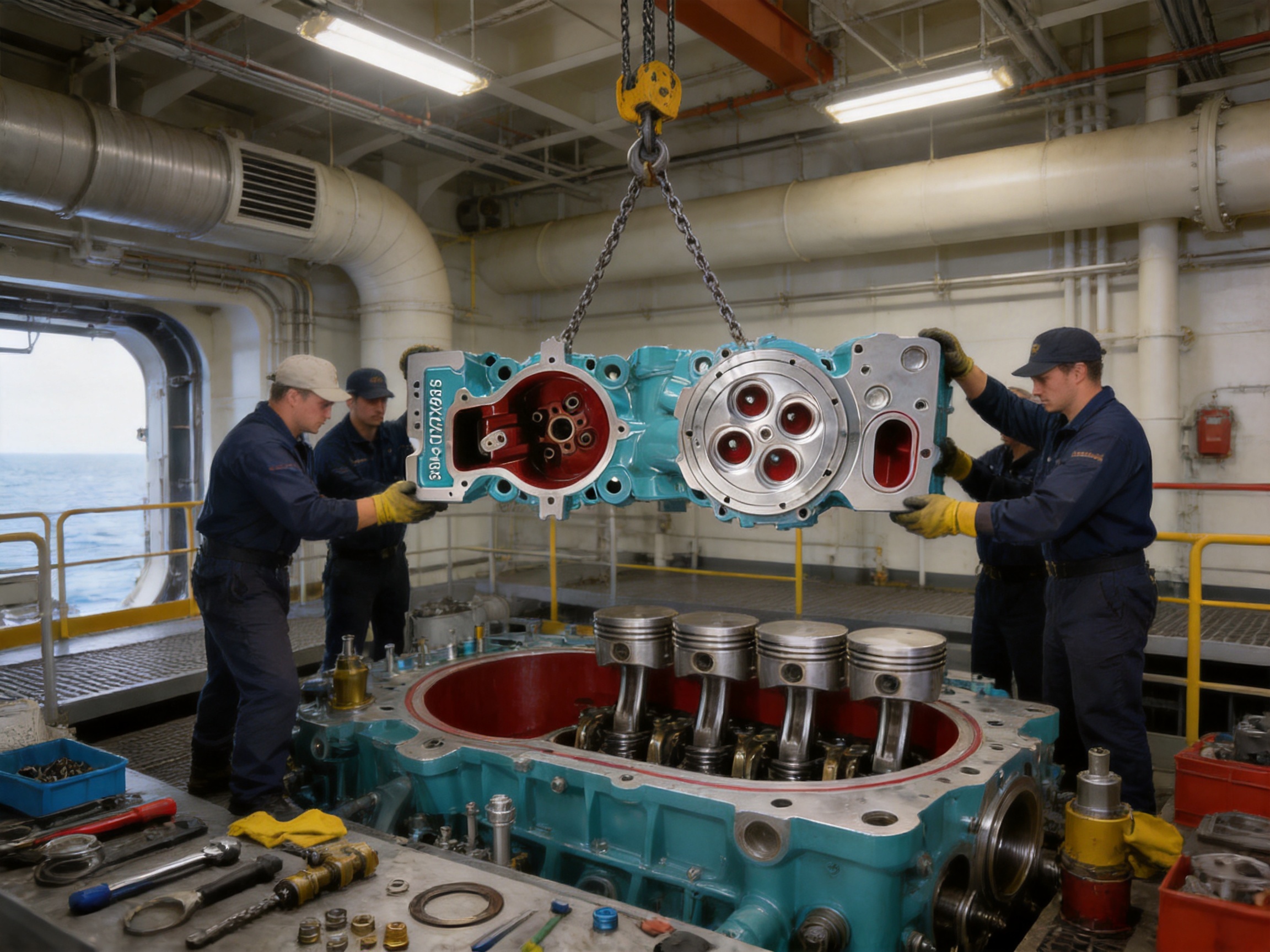
Before installation, the maintenance team should inspect the mating surfaces of the cylinder liner, piston, gasket, valve train, and fastening system. The cylinder head should be compared with the relevant drawing or original component, and all critical dimensions should be confirmed according to the engine maker’s maintenance instructions.
The condition of the cylinder-head studs, nuts, washers, and tightening tools should also be checked. Correct fastening sequence and tightening control are essential because uneven loading can distort the head or create leakage at the sealing interface. The appropriate installation procedure should always be taken from the applicable technical documentation.
After installation, the engine should be monitored during commissioning. Maintenance personnel may observe starting behavior, compression performance, exhaust temperatures, cooling-water behavior, lubrication condition, vibration, and any signs of gas or fluid leakage. Early monitoring helps confirm that the component has been installed correctly and that related engine parts are functioning as expected.
Inspection Considerations Before Ordering
Buyers should collect accurate technical information before requesting a quotation. The engine model, cylinder-head designation, part number, quantity, vessel location, delivery destination, and required delivery date should be stated clearly. If the engine has been modified or rebuilt, this information should also be shared because the installed configuration may differ from the original specification.
Photographs, drawings, previous purchase records, or dimensional information can be useful when confirming the product. The product designation L16/24 identifies the intended application, but buyers should still verify the exact engine configuration and required revision before placing an order.
Customers may also ask about material information, inspection procedures, packaging, certificates, documentation, and available related components. These questions are especially relevant when the part is being purchased for a classification-controlled repair, a fleet maintenance program, or a customer-specific quality plan.
| Buyer Review Point | Why It Matters |
|---|---|
| Engine model and configuration | Confirms that the replacement part is suitable for the intended engine |
| Part number or drawing reference | Helps identify the correct component version |
| Quantity and delivery schedule | Allows production and logistics planning |
| Valve and guide requirements | Supports correct associated-component selection |
| Inspection documentation | Provides records for maintenance and quality departments |
| Packaging and shipping destination | Protects the component and supports timely delivery |
| Related spare parts | May allow a complete repair package to be supplied together |
Packaging, Storage, and Handling
A cylinder head is a precision-machined component and should be protected throughout storage and transport. Machined surfaces should be preserved against corrosion, and openings or passages should be protected from dust, moisture, and impact damage. Suitable packaging should prevent movement inside the shipping container and avoid contact between sensitive surfaces and hard packing materials.
When the component arrives, the receiving team should inspect the external packaging for damage and confirm that the product identification matches the purchase documentation. The cylinder head should be stored in a clean, dry environment with protection from condensation and corrosive materials.
Before installation, preservation materials should be removed from relevant surfaces according to the maintenance procedure. Threads, bores, sealing faces, valve-seat areas, and cooling connections should be cleaned and inspected. Lifting equipment should be selected according to the component weight, and the cylinder head should not be dragged across machined surfaces.
Application Across the Marine Spare-Parts Market
The L16/24 cylinder head can serve several customer groups. Shipowners may purchase it for planned dry-dock maintenance or onboard spare inventory. Ship-management companies may include it in fleet-wide maintenance programs. Marine repair yards may require it for engine overhauls. Spare-parts distributors may stock it for customers operating compatible MAN marine diesel engines.
The product is also relevant to organizations that maintain imported marine diesel engines in regions where original components may involve long lead times or high procurement costs. A dedicated aftermarket supplier can offer a more flexible purchasing channel while retaining a focus on the technical requirements of marine applications.
For distributors, the broad product range of the manufacturer may create opportunities to offer cylinder heads together with cylinder liners, valves, valve seats, valve guides, connecting rods, piston pins, and piston heads. This supports a more complete product portfolio and can improve customer service for repair projects.
Supplier Service and Communication
Technical communication is an important part of a successful spare-parts order. Customers should be able to discuss application information, specifications, quantities, production timing, packaging, and shipment details with the supplier. Clear communication reduces misunderstandings and allows the manufacturer to identify any missing data before production begins.
Zhoushan Putuo Dongfang Machinery Co., Ltd. provides marine-engine component supply from its facility in Zhoushan, China. The company’s stated business philosophy emphasizes integrity, pragmatism, continuous improvement, quality-first standards, reasonable prices, and dedicated service. These principles are relevant to aftermarket purchasing because customers generally require more than a single transaction; they need a supplier capable of supporting recurring maintenance requirements.
For inquiries concerning the L16/24 cylinder head, customers can contact Chancy through the company’s listed telephone number or email address. When making an inquiry, it is recommended to include the engine details, required quantity, destination, requested documentation, and target delivery date.
Recommended Evaluation Criteria for Procurement Teams
Procurement teams should evaluate the L16/24 cylinder head through a combination of technical, commercial, and service criteria. Technical evaluation should cover compatibility, dimensional accuracy, material suitability, valve-component installation, sealing surfaces, and inspection procedures. Commercial evaluation should consider unit price, delivery time, packaging, payment terms, and long-term availability.
Supplier evaluation should include manufacturing history, quality certification, production capacity, product range, customer references where available, and responsiveness to technical questions. A supplier with a long record in marine diesel components may offer stronger practical support than one that provides only a single product without related expertise.
It is also useful to consider total cost rather than purchase price alone. A cylinder head that arrives on time, fits correctly, and performs reliably can reduce labor delays, vessel downtime, repeat shipping, and the risk of damage to associated components. These factors may be more important than a small difference in the initial quotation.
Q&A
What is the L16/24 cylinder head used for?
The L16/24 cylinder head is a replacement spare part for compatible MAN marine diesel engine applications. It is used during engine repair, overhaul, scheduled maintenance, or replacement of a damaged or worn cylinder head.
Why is the cylinder head important?
The cylinder head closes the combustion chamber and supports critical functions involving compression, valve operation, gas sealing, cooling, and combustion control. Its condition directly affects engine reliability, efficiency, exhaust temperature, and service life.
Is this product an original branded component?
The product is presented as a high-quality aftermarket replacement component manufactured by Zhoushan Putuo Dongfang Machinery Co., Ltd. Buyers should confirm the exact specification and application compatibility before ordering.
What advantages does an aftermarket cylinder head offer?
A qualified aftermarket cylinder head may provide a more economical purchasing option, greater sourcing flexibility, and practical support for older engines or maintenance programs. The value depends on manufacturing quality, dimensional conformity, inspection, and supplier experience.
What manufacturing experience does the supplier have?
The supplier was founded in 1996 and specializes in marine diesel engine components. Its product range includes cylinder heads, cylinder liners, valves, valve seats, valve cages and guides, connecting rods, piston pins, and piston heads for imported and domestic marine diesel engines.
Does the manufacturer have a quality-management certification?
The company obtained ISO 9001 certification in 2001. This indicates that it has established a formal quality-management system for controlling relevant business and manufacturing processes.
Yes. In addition to cylinder heads, the company manufactures or supplies several related marine diesel engine components, including cylinder liners, valves, valve seats, valve cages and guides, connecting rods, piston pins, and piston heads.
What information should be provided when requesting a quotation?
Buyers should provide the engine model, component designation or part number, required quantity, delivery destination, requested delivery date, and any documentation or inspection requirements. Drawings, photographs, and previous purchase records may also help confirm the correct product.
How should the cylinder head be stored before installation?
The cylinder head should be kept in a clean, dry environment, protected from moisture, dust, impact, and corrosive substances. Machined surfaces and openings should remain protected until the component is prepared for installation.
What should be checked before installation?
The maintenance team should verify the component identity, dimensions, sealing surfaces, valve seats, valve guides, threads, cooling passages, and associated hardware. The mating cylinder-liner surface, gasket, fastening system, and valve-train components should also be inspected.
Can the cylinder head support fleet maintenance programs?
Yes. The manufacturer’s production capacity, marine-component specialization, and broad product range can support repeat orders and fleet maintenance programs. Specific supply arrangements should be discussed according to quantity, schedule, and documentation requirements.
Where is the manufacturer located?
Zhoushan Putuo Dongfang Machinery Co., Ltd. is located in the Shenjiamen Pingyang Industrial Zone of Zhoushan, Zhejiang Province, China. The location benefits from land, sea, and air transportation connections.
Conclusion
The L16/24 marine diesel engine cylinder head is a practical aftermarket replacement solution for compatible MAN marine diesel engine applications. Its importance extends beyond the basic function of closing the combustion chamber. The component must support reliable compression, valve sealing, cooling, heat transfer, and long-term operation under demanding marine conditions.
The main strengths of this product are its application-focused design, aftermarket value, suitability for planned maintenance, connection to a broad range of related engine components, and supply from a manufacturer with long-term experience in marine diesel parts. Zhoushan Putuo Dongfang Machinery Co., Ltd. has operated since 1996, obtained ISO 9001 certification in 2001, developed a substantial production facility, and established experience in the manufacture of cylinder heads, cylinder liners, valves, valve seats, guides, connecting rods, piston pins, and piston heads.
For shipowners, repair yards, distributors, and maintenance contractors, the product offers a way to balance technical requirements, procurement cost, delivery planning, and long-term supplier support. Before ordering, buyers should confirm engine compatibility, dimensional requirements, documentation, inspection expectations, packaging, and delivery details. When these factors are managed carefully, a high-quality replacement cylinder head can contribute to stable engine performance, reduced maintenance risk, and more efficient marine operations.
References
1. ISO 9001: Quality Management Systems—Requirements.
2. Marine Diesel Engine Maintenance Principles, including cylinder-head inspection, valve-train servicing, cooling-system control, and combustion-chamber maintenance.
3. General Marine Engineering Practice for Cylinder Heads, Cylinder Liners, Valves, Valve Seats, and Valve Guides.
4. Manufacturer-provided product information for the L16/24 replacement cylinder head.
5. Manufacturer-provided company information concerning production history, facilities, product range, quality certification, and transportation access.
6. Standard Shipboard Machinery Maintenance Procedures for inspection, installation, storage, and commissioning of diesel-engine components.