عربى

Content
- 1 1. The Function of a Cylinder Head in a Diesel Engine
- 2 2. Product Overview of the GC-320 Cylinder Head
- 3 3. Material and Structural Requirements
- 4 4. Manufacturing Strengths of the Supplier
- 5 5. Advanced Manufacturing Processes for Cylinder Heads
- 6 6. Quality Control and Inspection Considerations
- 7 7. Advantages Compared with General Aftermarket Alternatives
- 8 8. Installation and Overhaul Recommendations
- 9 9. Maintenance Practices for Longer Service Life
- 10 10. Procurement Guidance for International Buyers
- 11 11. Environmental and Operational Value
- 12 12. Frequently Asked Questions
- 12.1 Q1: What is the GC-320?
- 12.2 Q2: Is the GC-320 suitable for every domestic diesel engine?
- 12.3 Q3: What information should be provided when requesting a quotation?
- 12.4 Q4: What are the main advantages of purchasing from a specialized manufacturer?
- 12.5 Q5: Does ISO 9001 certification guarantee that the component fits my engine?
- 12.6 Q6: Can a damaged cylinder head always be repaired instead of replaced?
- 12.7 Q7: What should be inspected before installing the replacement?
- 12.8 Q8: How can overheating be prevented after installation?
- 12.9 Q9: Is the product supplied with valves and valve seats?
- 12.10 Q10: Can the manufacturer support repeat orders?
- 13 13. Conclusion
- 14 References
- 15 Product: GC-320
A cylinder head is one of the most important structural and thermal components in a diesel engine. It closes the upper section of the cylinder, forms the combustion chamber together with the piston and cylinder liner, and supports or accommodates essential parts such as valves, valve guides, valve seats, fuel-injection components, cooling passages, and fastening interfaces. Because it operates under repeated combustion pressure, high temperature, vibration, and rapid thermal cycling, the cylinder head must combine dimensional accuracy, mechanical strength, thermal stability, and long-term resistance to wear and corrosion.
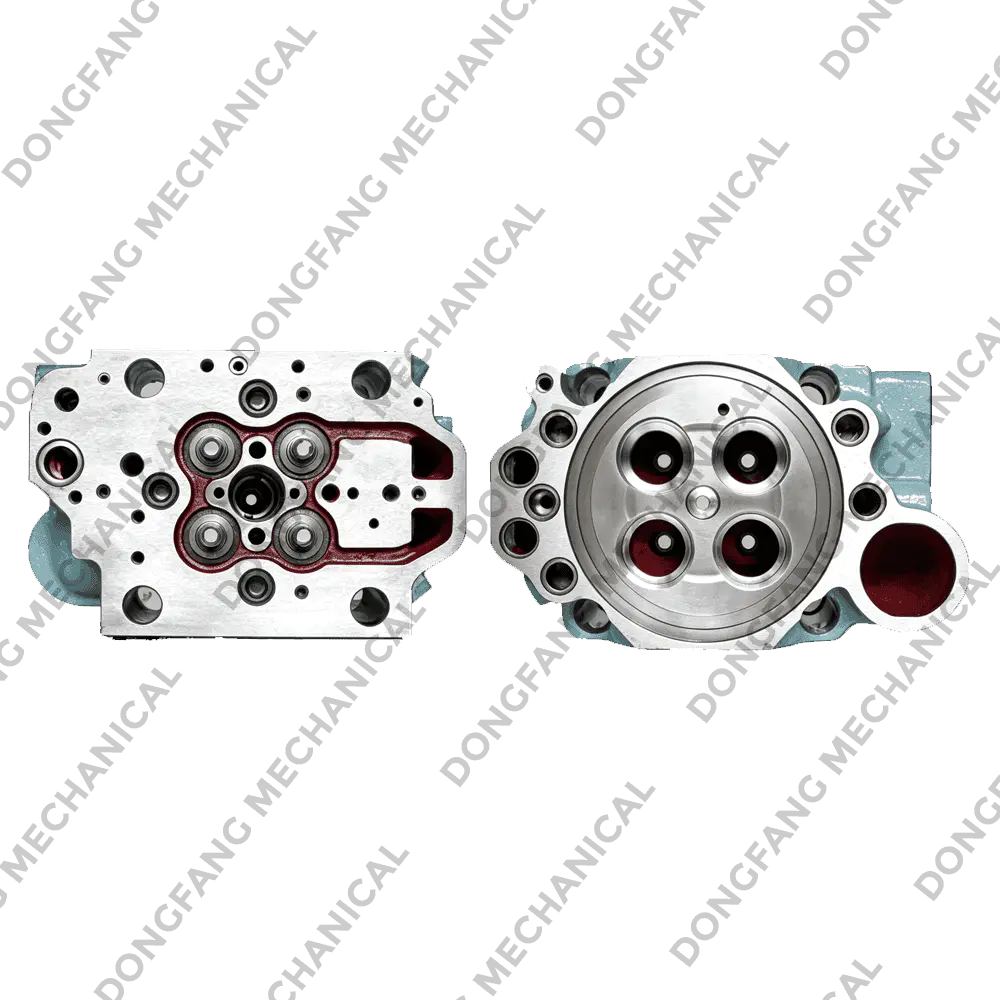
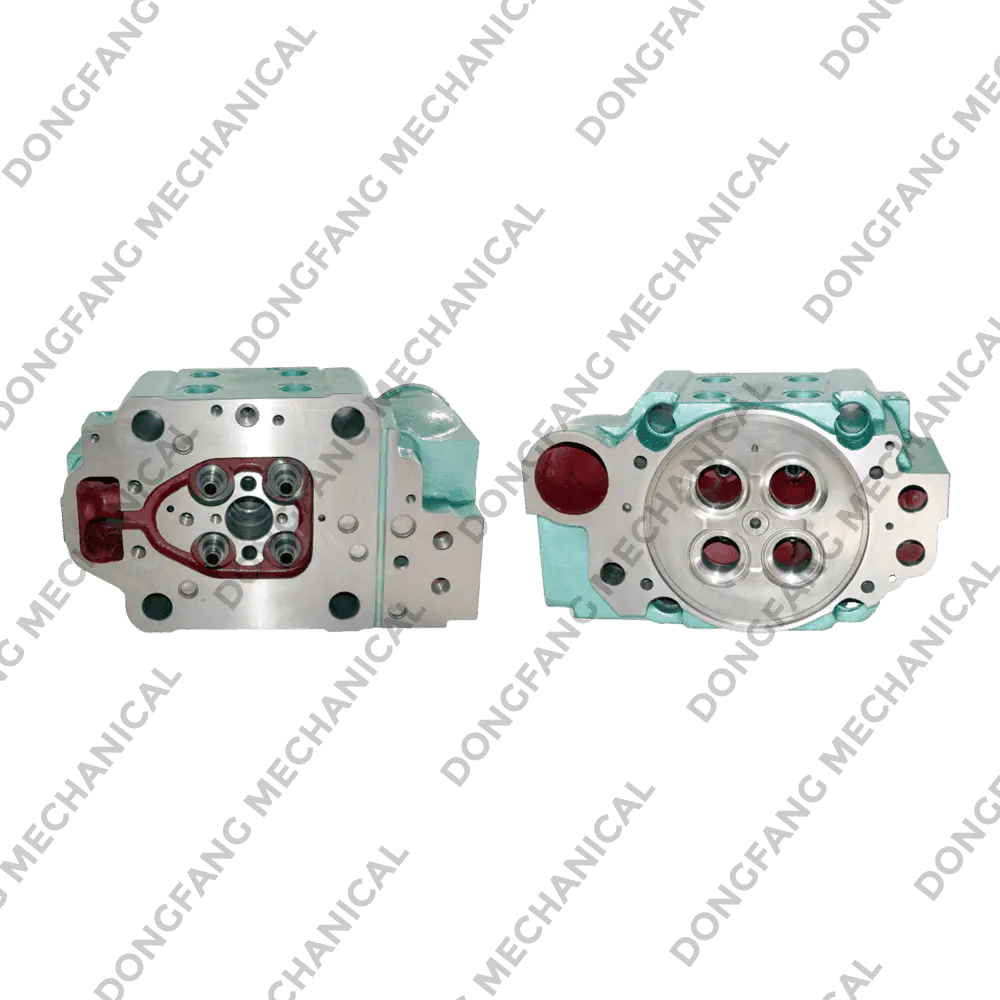
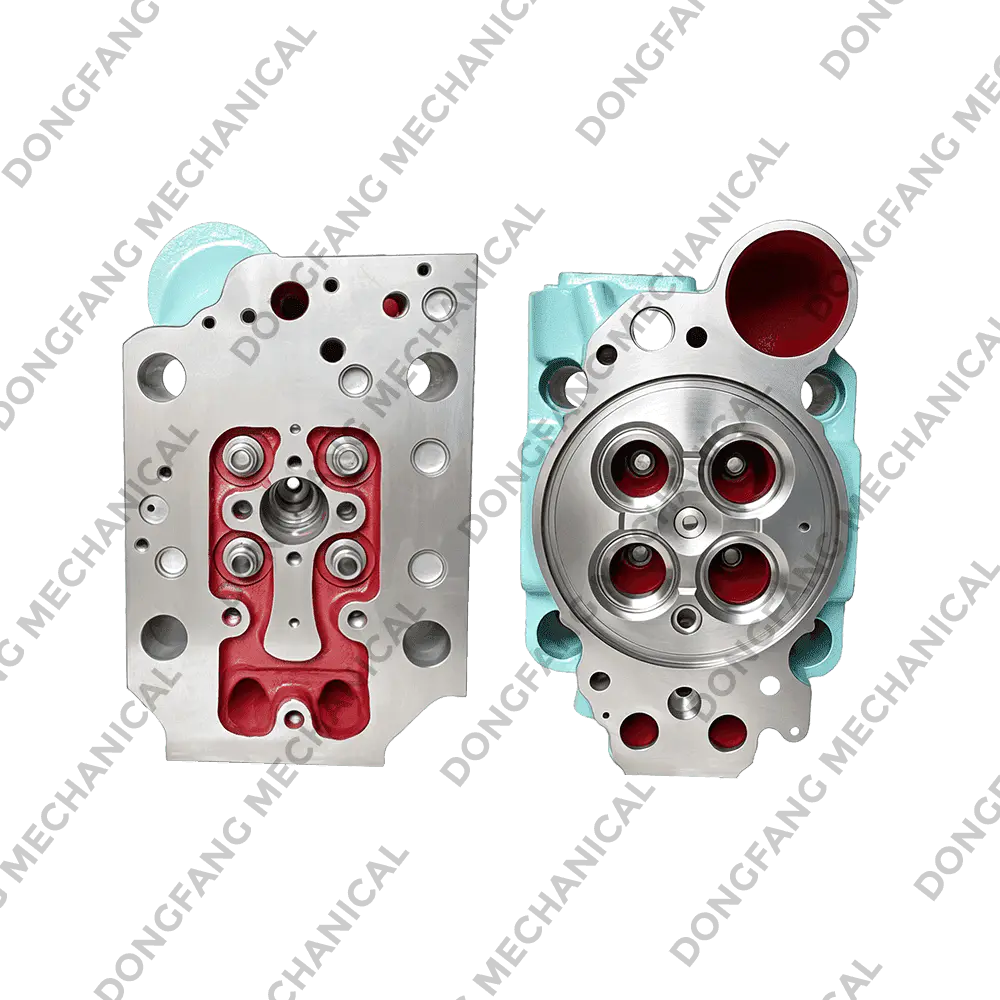
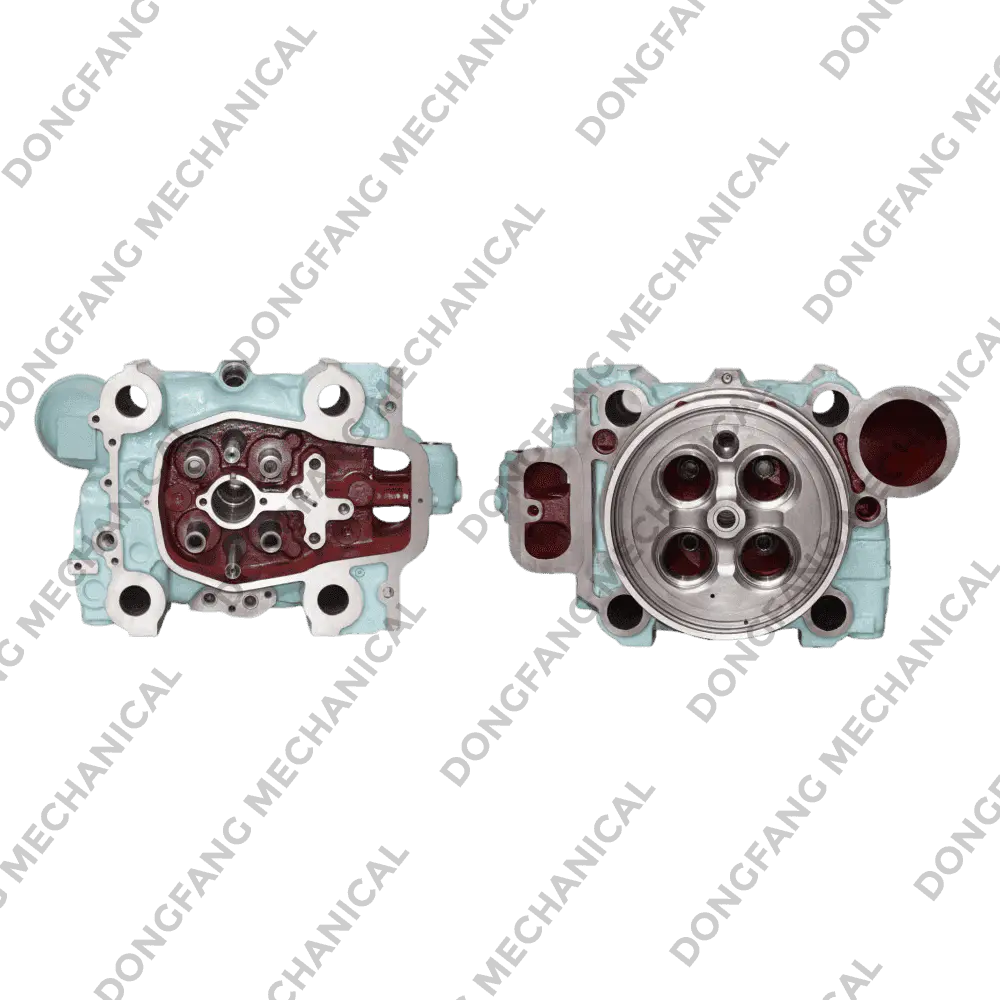
The GC-320 cylinder head is an aftermarket replacement component developed for domestic diesel engine applications. It is produced by Zhoushan Putuo Dongfang Machinery Co., Ltd., a specialist manufacturer of cylinder heads and other diesel engine components. The product is identified by the model designation GC-320 and is supplied as a replacement spare part for maintenance, repair, overhaul, and component renewal programs.
For shipowners, marine engine repair companies, equipment distributors, and professional maintenance teams, the value of an aftermarket cylinder head is determined by more than its purchase price. A suitable replacement must offer reliable compatibility, accurate manufacturing, controlled material quality, dependable sealing performance, and practical availability. It should also help reduce vessel downtime and simplify the management of spare parts. The GC-320 is positioned to meet these requirements through focused production experience, established quality procedures, and a manufacturing system designed for diesel engine component applications.
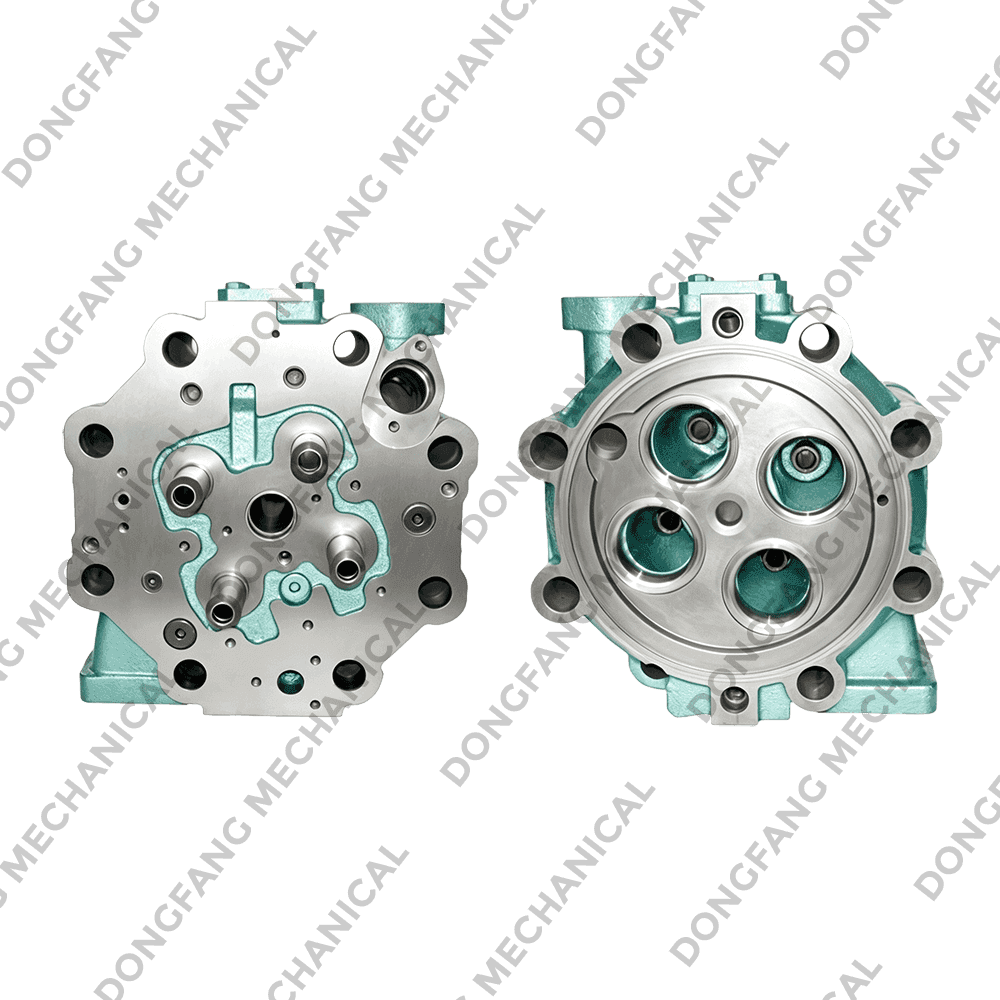
GC-320
1. The Function of a Cylinder Head in a Diesel Engine
The cylinder head performs several functions simultaneously. First, it seals the top of the cylinder so that combustion gases remain inside the combustion chamber. Second, it creates the upper geometry of the combustion space, influencing compression, gas movement, combustion efficiency, and heat transfer. Third, it provides mounting and locating surfaces for valve train components, fuel equipment, exhaust connections, cooling connections, and other engine parts.
During operation, the head is exposed to alternating mechanical and thermal loads. Combustion pressure pushes against the fire deck and surrounding structure. The valve areas experience concentrated heat, especially around the exhaust valve seat and exhaust port. Cooling water or coolant removes heat through internal passages, creating temperature differences between the combustion-side surface and the cooled outer structure. These repeated changes can cause distortion, fatigue, cracking, leakage, or loss of sealing force when the component is poorly designed or incorrectly manufactured.
A replacement cylinder head must therefore be treated as a precision engine component rather than as a simple cast or machined metal part. The position of each valve seat, guide bore, threaded hole, cooling passage, sealing surface, and mounting face contributes to the performance of the complete engine. Even a small dimensional error can affect valve contact, fuel system alignment, gasket compression, piston clearance, or the distribution of mechanical loads.
1.1 Combustion sealing
Combustion sealing is the primary responsibility of the cylinder head. The head gasket or specified sealing arrangement must remain compressed under high combustion pressure without allowing gas, coolant, or lubricating oil to pass between adjacent areas. The fire deck, gasket contact surface, bolt or stud locations, and overall rigidity all influence sealing reliability.
A properly manufactured replacement head supports uniform gasket compression and stable clamping. Flatness, surface finish, hole location, and the condition of the sealing area should be controlled during production and checked during final inspection. When installed with the correct gasket, tightening sequence, torque, and service procedure, an accurately produced cylinder head can help prevent premature leakage and repeated maintenance.
1.2 Valve and gas-flow support
The cylinder head carries the intake and exhaust valve assemblies or provides the bores and seats required to locate them. Valve guides maintain the movement direction of the valve stem, while valve seats provide the contact surface needed to close the combustion chamber and transfer heat away from the valve. The geometry of the ports and the alignment of the valve components affect air intake, exhaust discharge, combustion stability, and engine response.
Correct guide alignment is particularly important. Excessive clearance may cause oil consumption, poor valve control, and accelerated wear. Insufficient clearance may cause the valve stem to bind when the engine reaches operating temperature. Accurate machining and controlled assembly are therefore essential for achieving a balanced relationship between the guide, valve stem, seat, and spring mechanism.
1.3 Heat transfer and cooling
The cylinder head must transfer heat away from the combustion chamber while maintaining sufficient structural strength. Cooling passages are designed to carry coolant around high-temperature areas, including the fire deck, exhaust valve region, injector area, and other heat-concentrated sections. If a cooling passage is blocked, incorrectly formed, or contaminated, local overheating may occur.
Manufacturing quality influences the internal condition of these passages. Casting integrity, cleaning, machining, pressure inspection, and protection against corrosion all contribute to reliable heat management. A replacement head with sound internal passages can support more stable operating temperatures and reduce the risk of localized thermal damage.
2. Product Overview of the GC-320 Cylinder Head
The GC-320 is a replacement cylinder head intended for domestic diesel engine service. It is listed under the product category of replacement spare parts for domestic diesel engines and is suitable for consideration in engine repair and overhaul projects where the corresponding engine model, part number, dimensions, and configuration have been verified.
The product is supplied under the alias 320, while GC-320 is the stated product title. This model reference helps customers organize inquiries, quotations, purchasing records, and spare-parts inventories. However, model identification alone should not replace technical verification. Before ordering, the buyer should provide the engine maker, engine model, serial number, existing component number, drawing information, or dimensional data whenever available.
The GC-320 can be considered for applications in which the original cylinder head is cracked, distorted, worn beyond service limits, damaged by overheating, affected by corrosion, or unsuitable for economical repair. It may also be considered during scheduled overhaul when the maintenance team determines that replacing the existing head is more practical than restoring it.
Because diesel engines differ in valve arrangement, injector location, cooling layout, bolt pattern, and combustion chamber geometry, compatibility must be confirmed before installation. The manufacturer and distributor can assist with product identification when the customer supplies complete engine information. This verification process helps reduce the risk of purchasing a component that appears similar but does not match the required engine configuration.
2.1 Intended maintenance situations
The GC-320 may be used in several common maintenance situations. A repair workshop may require a replacement head after detecting a combustion-gas leak, a coolant leak, or a crack around a valve seat. A ship operator may replace a head during a planned overhaul to avoid future downtime. A spare-parts distributor may stock the component for customers operating domestic marine diesel engines. An engine service contractor may use it as part of a complete top-end renewal package.
In each situation, the main objective is to restore the engine’s sealing, valve, cooling, and combustion functions. The replacement must be installed as part of a complete inspection program. Related components, including valves, seats, guides, springs, fasteners, gaskets, injector parts, and cooling connections, should be examined at the same time.
2.2 Product identification and purchasing information
| Item | Information | Purchasing significance |
|---|---|---|
| Product title | GC-320 | Primary product designation for inquiry and quotation |
| Product alias | 320 | Alternative reference used for product organization |
| Product type | Aftermarket diesel engine cylinder head | Replacement component for repair and overhaul work |
| Application category | Domestic diesel engine spare parts | Confirms the intended product classification |
| Verification basis | Engine model, serial number, part number, drawing, and dimensions | Recommended before order confirmation |
| Supplier capability | Manufacturer and OEM supplier of diesel engine components | Supports technical communication and repeat supply |
The information in this table provides a practical starting point for procurement, but the final selection should always be based on a confirmed technical match. Customers should not rely solely on visual similarity, a general engine family name, or an incomplete model reference.
3. Material and Structural Requirements
The cylinder head material must withstand combustion pressure, thermal cycling, vibration, corrosion, and the mechanical loads transmitted by the valve train and fastening system. The exact material specification should be confirmed with the supplier according to the relevant engine application and production drawing. Regardless of the selected alloy or casting grade, material consistency is essential for dependable service.
Important material characteristics include strength at operating temperature, resistance to thermal fatigue, machinability, dimensional stability, and compatibility with the engine’s cooling medium. The material must also accept accurate machining of valve seats, guide bores, gasket surfaces, threaded holes, and other functional features.
Structural design is equally important. The head must have sufficient rigidity to limit deformation under clamping and combustion loads. At the same time, the structure must permit effective cooling and maintain appropriate wall thickness around ports, seats, bolt holes, and water passages. Concentrated stress areas require careful attention during casting, machining, inspection, and service evaluation.
3.1 Resistance to thermal fatigue
Thermal fatigue occurs when repeated heating and cooling produce expansion and contraction within the component. Different areas of a cylinder head heat at different rates. The fire deck may reach a high temperature quickly, while outer surfaces and coolant passages remain cooler. This difference creates internal stress. Over many operating cycles, the stress may contribute to cracking or distortion if the material and design are unsuitable.
A quality replacement head should be produced with attention to casting integrity, wall consistency, cooling layout, and stress-sensitive geometry. Controlled processing can reduce the likelihood of internal defects that later develop into cracks. Proper engine operation, coolant maintenance, and correct installation remain necessary because even a well-manufactured head can be damaged by severe overheating or inadequate cooling.
3.2 Valve seat and guide areas
The valve seat and guide regions are among the most highly functional areas of the cylinder head. The seat must provide an even sealing ring and transfer heat from the valve into the head. The guide must maintain accurate valve movement and withstand repeated sliding contact. Their relative alignment determines whether the valve contacts the seat evenly.
Machining accuracy in these areas has a direct effect on service life. Poor alignment can create localized contact, uneven heat transfer, leakage, and accelerated wear. For this reason, a replacement cylinder head should be inspected with suitable gauges and assembly procedures before being released for installation.
4. Manufacturing Strengths of the Supplier
Zhoushan Putuo Dongfang Machinery Co., Ltd. was founded in 1996 and specializes in the development, research, manufacturing, and import of components for imported and domestic marine diesel engines. Its product range includes cylinder heads, cylinder liners, valves, valve seats, valve cages and guides, connecting rods, piston pins, and piston heads.
This product specialization is significant because a cylinder head is not an isolated component. Its performance is connected to the condition and geometry of other engine parts. A manufacturer familiar with valve components, cylinder liners, pistons, and connecting assemblies can better understand the relationships that influence diesel engine operation. Such experience supports practical communication with repair workshops and marine maintenance personnel.
The company operates on a site covering more than 8,000 square meters, with a workshop of more than 5,000 square meters. Its reported annual production exceeds 5,000 sets. This scale provides a foundation for organized production, equipment investment, process control, inventory planning, and repeat-order management.
The company obtained ISO 9001 certification in 2001 and has been rated as an AAA-level enterprise. Certification does not remove the need for product-specific inspection, but it indicates that the organization has established a formal quality management framework. A documented management system can help control purchasing, production records, inspection procedures, nonconformity handling, and customer feedback.
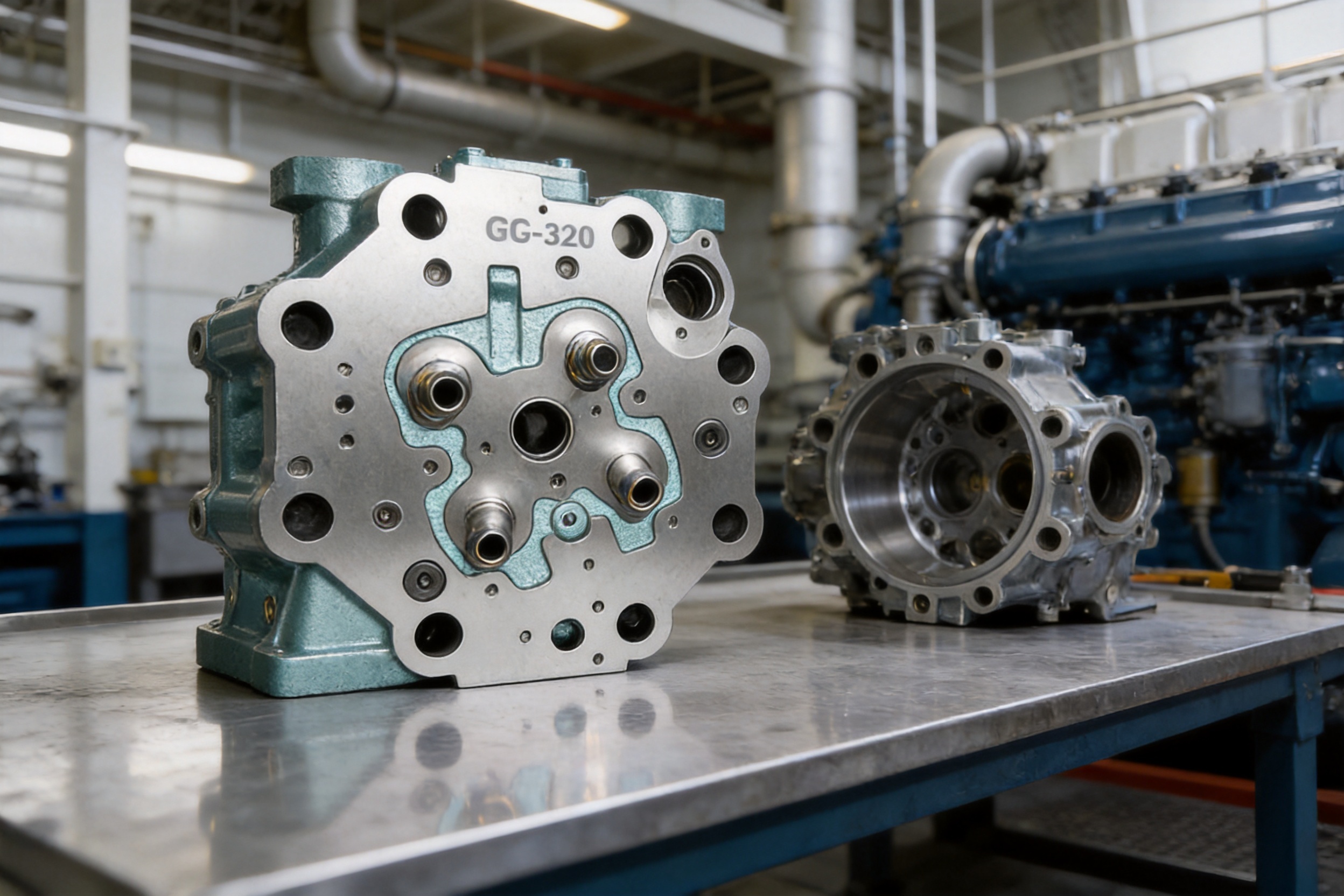
5. Advanced Manufacturing Processes for Cylinder Heads
The manufacturing process for a replacement cylinder head generally combines material preparation, forming or casting, cleaning, heat treatment where specified, rough machining, precision machining, inspection, assembly preparation, surface protection, and final packaging. The exact sequence depends on the product design and production method, but every stage influences the finished component.
5.1 Pattern and forming control
At the beginning of production, the forming method must reproduce the required external shape and internal cavity arrangement. Pattern accuracy affects machining allowance, wall thickness, port geometry, and the position of areas that will later receive precision machining. Stable tooling helps maintain consistency between production batches.
Internal cores or equivalent forming elements must be located accurately so that cooling passages and internal cavities remain in the correct relationship to the combustion chamber and external mounting surfaces. Incorrect core positioning can reduce wall thickness, obstruct coolant movement, or create excessive machining allowance in critical areas.
5.2 Casting integrity and cleaning
When a cast construction is used, metal filling, solidification, shrinkage control, and cooling behavior must be managed to reduce porosity, inclusions, cold shuts, and other defects. Proper feeding and process control support a denser and more consistent structure.
After forming, the component must be cleaned thoroughly. Residual sand, scale, flash, and loose material can contaminate machining equipment or remain inside cooling passages. Effective cleaning is especially important for diesel engine components because small particles may later enter the lubrication or cooling system and cause secondary damage.
5.3 Heat treatment and stabilization
Where required by the material and product specification, heat treatment can improve mechanical properties, relieve internal stress, and promote dimensional stability. The selected cycle must be controlled in terms of temperature, holding time, cooling method, and traceability.
Stress relief and stabilization are important for a cylinder head because large variations in section thickness can cause internal stress during cooling. If these stresses are not managed, machining may release them and cause later distortion. A controlled production route helps maintain the relationship between the machined surfaces during service.
5.4 Rough machining
Rough machining establishes the main reference surfaces and removes excess material. These operations may include preparation of mounting faces, gasket areas, bolt holes, valve pockets, guide bores, seat locations, and other functional features. Reference selection is critical because all later dimensions depend on the initial datum system.
Properly planned rough machining leaves a controlled allowance for finishing. Too little allowance can prevent the removal of surface defects or distortion. Too much allowance can increase machining time and create unnecessary dimensional variation. A balanced allowance supports both efficiency and accuracy.
5.5 Precision machining
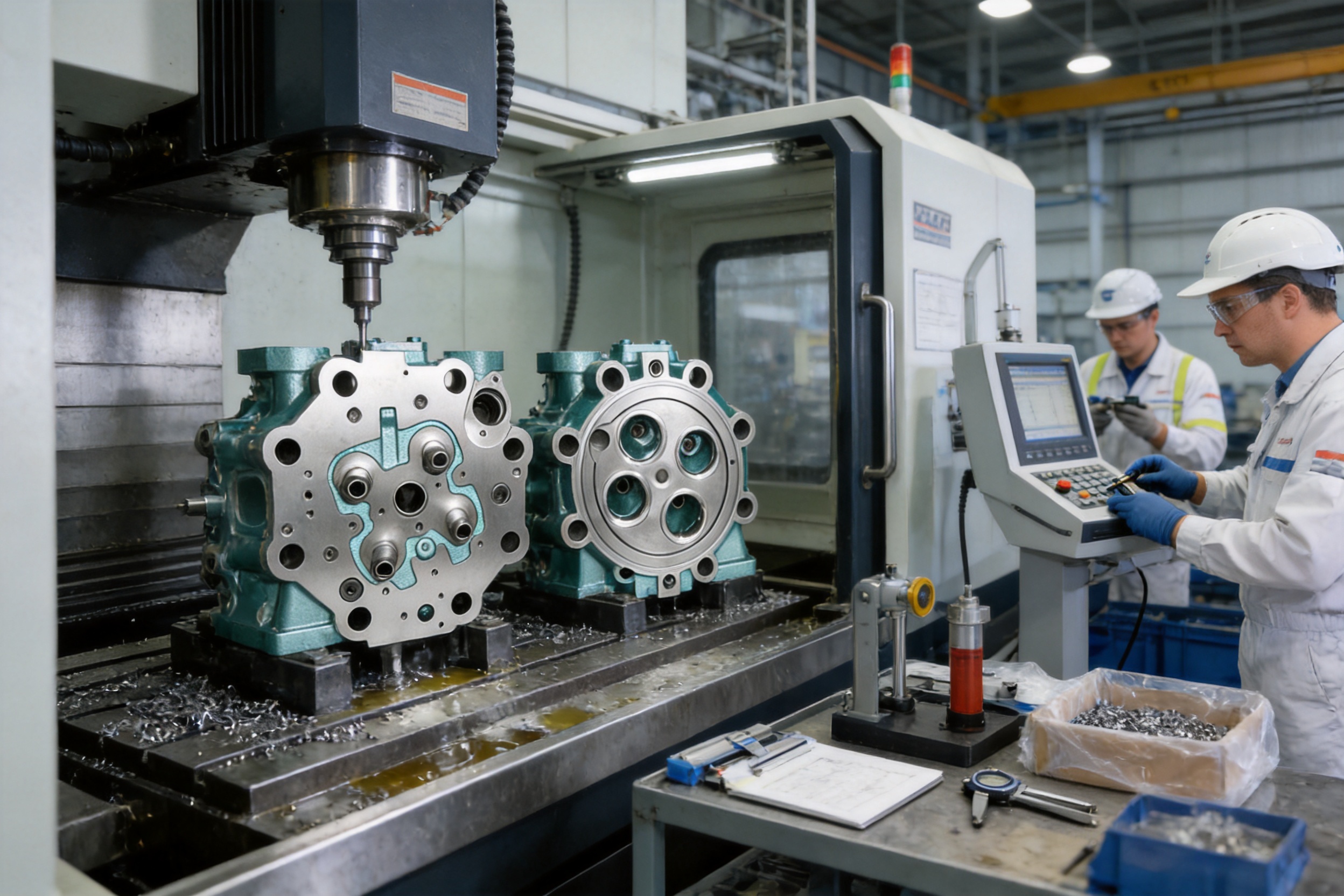
Precision machining creates the final dimensions and surface conditions required for installation. CNC machining centers, boring equipment, drilling machines, reaming tools, grinding equipment, and dedicated fixtures may be used according to the product design. The objective is not simply to achieve isolated dimensions but to maintain the correct relationship among all functional surfaces.
Typical precision requirements may include gasket-face flatness, guide-bore diameter, valve-seat position, hole location, thread quality, port geometry, and mounting-face alignment. The specific values must be taken from the approved drawing or technical specification for the GC-320 application.
Dedicated fixtures can improve repeatability by locating the component consistently during machining. Stable workholding reduces setup variation and helps maintain the relationship between the combustion chamber, valve train, and mounting holes. Tool condition monitoring and scheduled replacement also help control surface finish and dimensional drift.
5.6 Valve seat and guide machining
Machining of valve seat and guide areas requires careful coordination. The guide bore establishes the axis of valve movement, while the seat must be machined relative to that axis. If the seat is not concentric with the guide, the valve may contact unevenly, resulting in poor sealing and localized heat transfer.
Inspection may include bore measurement, concentricity checks, seat contact verification, surface-finish evaluation, and dimensional comparison with the approved specification. When replacement seats or guides are installed, interference, insertion depth, alignment, and final finishing should be controlled carefully.
5.7 Cleaning and internal passage verification
After machining, the cylinder head should be cleaned again to remove chips, abrasive residue, cutting fluid, and loose particles. Internal passages require particular attention because contamination can be difficult to see from the outside. Cleaning methods may include washing, flushing, brushing, compressed-air drying, and visual or dimensional checks.
Cooling passages should be checked for obstruction and unacceptable leakage. A pressure test may be used to identify leaks between water spaces and other areas. The test conditions should follow the applicable product specification or quality procedure rather than an arbitrary value.
6. Quality Control and Inspection Considerations
A reliable cylinder head is supported by multiple inspection stages rather than by one final visual check. Quality control should begin with material and process verification and continue through machining, cleaning, testing, and packaging. This layered approach helps identify problems before the product reaches the customer.
6.1 Incoming material control
Material used for the cylinder head and related components should be identified and traceable. Depending on the production specification, inspection may include chemical composition, mechanical properties, hardness, visual condition, and documentation from the material supplier. Traceability supports investigation if a problem is reported during service.
6.2 Dimensional inspection
Dimensional inspection verifies that the head conforms to the approved drawing or measurement standard. Important dimensions may include overall height and width, bolt-hole spacing, mounting-face position, valve-guide bore size, valve-seat location, gasket-face flatness, port dimensions, and threaded-hole condition.
Inspection equipment should be suitable for the required accuracy. Depending on the feature, this may include coordinate measuring equipment, precision gauges, bore gauges, micrometers, height gauges, plug gauges, thread gauges, and surface plates. Measurement results should be recorded in a controlled format when required by the customer or quality system.
6.3 Surface and visual inspection
Visual inspection can identify casting irregularities, machining marks, burrs, cracks, corrosion, damaged threads, and incomplete cleaning. It should be performed under sufficient lighting and after the component has been cleaned. Critical areas may require magnification or additional non-destructive inspection according to the product specification.
6.4 Pressure and leakage testing
Pressure testing is commonly used to evaluate the integrity of internal cooling passages and water-jacket areas. The test helps identify leaks that may not be visible during a normal visual inspection. The cylinder head should be stabilized, sealed correctly, and tested using controlled equipment.
A failed pressure test must be investigated rather than concealed through temporary sealing or unapproved repair. Depending on the nature and location of the defect, the component may be rejected, reworked under an approved procedure, or subjected to additional examination.
6.5 Final release inspection
Before shipment, the cylinder head should be checked for cleanliness, protective treatment, identification markings, packaging condition, and document completeness. Functional surfaces should be protected from impact and corrosion. Openings may need temporary covers to prevent dust and moisture from entering during transportation.
Final inspection is also an opportunity to confirm that the supplied product matches the customer’s order. Product designation, quantity, accessories, inspection records, and shipping marks should be compared with the purchase documentation.
7. Advantages Compared with General Aftermarket Alternatives
Aftermarket cylinder heads vary considerably in design control, material consistency, inspection depth, and technical support. The main advantages of the GC-320 are associated with focused engine-component specialization, manufacturing experience, production scale, and the supplier’s ability to support technical communication.
7.1 Specialized product knowledge
A supplier focused on diesel engine components is more familiar with the practical requirements of marine and industrial engine maintenance than a general metalworking supplier. This specialization supports better understanding of valve train geometry, combustion sealing, cooling passages, cylinder liner relationships, and overhaul requirements.
Such knowledge can be valuable when the buyer is dealing with an old engine, incomplete documentation, or a component that has already been modified during previous repairs. The supplier can review available information and help determine what additional measurements or references are needed before production or shipment.
7.2 Broader component capability
The company’s product range includes cylinder heads, cylinder liners, valves, valve seats, valve cages and guides, connecting rods, piston pins, and piston heads. This broader capability can simplify sourcing for customers who need several related parts during an overhaul.
Consolidated sourcing may reduce communication time, improve order coordination, and support more consistent technical review. It can also help a maintenance team build a spare-parts program around a reliable component supplier instead of purchasing each part from unrelated sources.
7.3 Production experience
Experience accumulated since 1996 provides a practical foundation for handling recurring production issues, customer feedback, inspection requirements, and engine-component applications. Long-term manufacturing experience does not automatically guarantee that every individual product is suitable, but it can contribute to more mature procedures and better problem-solving capability.
7.4 Quality management framework
ISO 9001 certification and a documented quality management approach can support process consistency. Procedures for purchasing, production, inspection, corrective action, and customer service create a structured environment for managing product quality. For professional buyers, this is particularly useful when repeat supply, documentation, and traceability are important.
7.5 Practical production capacity
A workshop exceeding 5,000 square meters and reported annual production of more than 5,000 sets indicates meaningful manufacturing capacity. This may help the supplier manage repeat orders, production scheduling, and spare-parts demand more effectively than a very small workshop with limited equipment and resources.
7.6 Service-oriented cooperation
The company describes its business philosophy as based on integrity, pragmatism, continuous improvement, quality-first standards, reasonable prices, and dedicated service. For international customers, service includes clear product identification, responsive technical communication, accurate quotations, appropriate packaging, and support during installation or inspection discussions.
8. Installation and Overhaul Recommendations
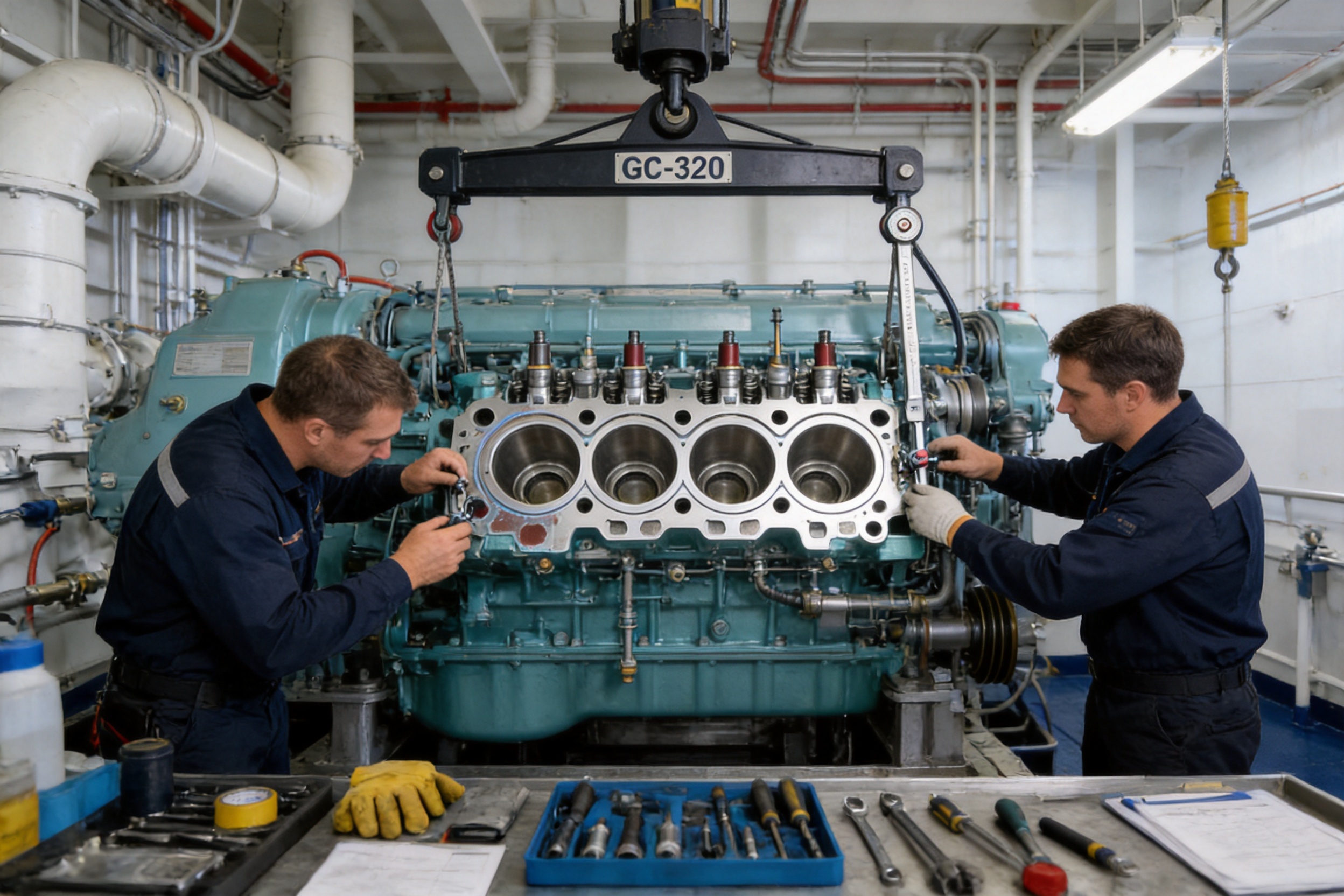
A new cylinder head should not be installed without inspecting the associated engine components. The condition of the cylinder liner, piston crown, connecting rod, valves, valve springs, injector, fasteners, gasket, cooling system, and lubrication system can influence the service life of the replacement head.
8.1 Confirm compatibility before installation
Compare the replacement head with the removed component and the approved engine documentation. Check mounting holes, valve arrangement, injector position, cooling connections, gasket profile, port configuration, and overall dimensions. If any feature differs, stop the installation and request technical clarification.
8.2 Inspect mating surfaces
The cylinder block or liner landing surface must be clean, flat, and free from burrs, corrosion, gasket residue, and embedded particles. Damage on the mating surface can prevent uniform gasket compression and may cause leakage even when the replacement cylinder head is correctly manufactured.
8.3 Use the correct gasket and fasteners
The gasket must match the engine specification and the replacement head configuration. Reusing a compressed or damaged gasket is generally unsuitable. Fasteners should be inspected for stretching, thread damage, corrosion, and loss of clamping capability. The specified tightening sequence and torque or angle procedure should be followed using calibrated tools.
8.4 Check valve train geometry
Before final assembly, inspect valve stem movement, guide clearance, seat contact, spring condition, rocker or actuator alignment, and valve lash requirements. Incorrect valve clearance can increase impact loading, reduce sealing time, cause overheating, or affect engine performance.
8.5 Flush the cooling system
Contamination, scale, oil, and corrosion products in the cooling system can restrict passages and reduce heat transfer. The cooling system should be cleaned according to the engine maker’s maintenance procedure, and the coolant should meet the required specification. Air pockets should be eliminated during filling because trapped air can create localized overheating.
8.6 Conduct a controlled start-up
After installation, the engine should be started and monitored carefully. Check coolant temperature, oil pressure, exhaust condition, combustion-gas leakage, coolant loss, unusual valve noise, and signs of external leakage. A gradual load increase allows the maintenance team to identify problems before full operating conditions are applied.
9. Maintenance Practices for Longer Service Life
The service life of a cylinder head depends on both component quality and engine operating conditions. Preventive maintenance should focus on temperature control, coolant quality, correct fuel injection, lubrication, valve adjustment, and timely inspection.
Overheating is one of the most common threats to cylinder head reliability. It can result from blocked coolers, insufficient coolant flow, defective pumps, fouled passages, low coolant level, poor thermostat operation, or excessive engine load. Temperature alarms should be treated as early warnings rather than ignored until visible damage occurs.
Coolant quality is also important. Incorrect chemical balance can cause corrosion, scale formation, or damage to seals and metallic surfaces. The cooling system should be sampled and maintained according to the engine and coolant supplier’s recommendations.
Fuel injection condition affects combustion temperature and pressure. A defective injector, incorrect injection timing, poor atomization, or an unsuitable fuel system setting can increase thermal stress on the piston, exhaust valve, and cylinder head. Injector inspection should therefore form part of any cylinder head replacement project.
Valve clearance should be checked at the specified intervals. Excessive clearance increases impact and noise, while insufficient clearance may prevent the valve from seating fully. A valve that fails to seat can transfer less heat and may lead to rapid seat, valve, or head damage.
Regular inspection of the gasket area, cooling connections, valve cover, exhaust joint, and injector region can reveal early leakage. Small coolant or combustion-gas leaks should be investigated promptly. Continued operation with a known leak can cause corrosion, overheating, lubrication contamination, and more extensive repair costs.
10. Procurement Guidance for International Buyers
International purchasers should prepare complete information before requesting a quotation for the GC-320. The most useful details include the engine manufacturer, engine model, serial number, cylinder number, existing part number, quantity required, delivery location, and required documents.
Photographs can support communication, but they should not replace dimensional or documentary verification. Clear images of the combustion side, mounting side, valve areas, ports, and identification marks may help identify differences between similar components. Drawings, old inspection reports, and measurements are even more valuable when available.
The buyer should clarify whether the cylinder head is supplied bare or with valves, seats, guides, plugs, fittings, or other installed components. The scope of supply can vary between manufacturers. Packaging requirements, corrosion protection, marking, inspection certificates, and acceptance standards should also be agreed before production.
| Buyer question | Why it matters |
|---|---|
| Which engine model and serial number are involved? | Similar engine families may use different head configurations |
| What is the original part number? | Provides a direct reference for technical comparison |
| Is the head supplied bare or assembled? | Determines installation preparation and total cost |
| Are inspection documents required? | Allows the supplier to prepare records before shipment |
| What quantity and delivery schedule are needed? | Supports production planning and inventory management |
| What packaging and preservation conditions apply? | Protects the component during international transport and storage |
For repeat customers, a framework purchasing arrangement may improve supply stability. The buyer can establish agreed product references, inspection requirements, packaging standards, and communication procedures. This approach is useful for ship management companies, repair yards, and distributors that maintain several engines with recurring spare-parts needs.
11. Environmental and Operational Value
Replacing a damaged cylinder head can restore an engine without requiring complete engine replacement. This may reduce repair duration, conserve usable engine structures, and support the continued operation of equipment that remains economically serviceable. A properly functioning cylinder head also helps the engine maintain stable combustion and cooling performance.
Operational efficiency depends on the complete engine system, not on the cylinder head alone. Nevertheless, poor sealing, incorrect valve seating, coolant leakage, or abnormal combustion caused by a damaged head can increase fuel consumption, emissions, and maintenance requirements. A correctly selected and properly installed replacement component supports the engine’s intended operating condition.
Responsible maintenance also includes correct disposal or recycling of the removed cylinder head, used gasket, contaminated coolant, and cleaning materials. Repair organizations should follow local environmental rules for handling metal components, oils, chemicals, and waste fluids.
12. Frequently Asked Questions
Q1: What is the GC-320?
The GC-320 is an aftermarket replacement cylinder head for domestic diesel engine applications. It is intended for maintenance, repair, overhaul, and spare-parts supply programs where the corresponding engine configuration has been verified.
Q2: Is the GC-320 suitable for every domestic diesel engine?
No. Cylinder heads are application-specific components. Compatibility must be confirmed using the engine model, serial number, original part number, drawings, dimensions, valve arrangement, cooling layout, and mounting configuration.
Q3: What information should be provided when requesting a quotation?
Provide the engine manufacturer, engine model, serial number, cylinder number, original cylinder-head part number, required quantity, delivery destination, and any available photographs or drawings. Also state whether a bare or assembled cylinder head is required.
Q4: What are the main advantages of purchasing from a specialized manufacturer?
A specialized manufacturer typically has deeper knowledge of diesel engine component relationships, production requirements, inspection methods, and overhaul applications. The supplier described here also offers related parts such as cylinder liners, valves, valve seats, guides, connecting rods, piston pins, and piston heads.
Q5: Does ISO 9001 certification guarantee that the component fits my engine?
No. ISO 9001 relates to the quality management system and does not replace application-specific technical verification. The customer must still confirm that the GC-320 matches the intended engine and installation requirements.
Q6: Can a damaged cylinder head always be repaired instead of replaced?
Not always. Repair feasibility depends on the location and size of cracks, distortion, material condition, valve-seat damage, corrosion, remaining machining allowance, and applicable repair standards. A replacement may be more practical when the existing head has extensive or repeated damage.
Q7: What should be inspected before installing the replacement?
Inspect the mating surfaces, gasket, fasteners, valves, guides, seats, springs, injector, cooling system, cylinder liner, piston, and related valve train parts. Confirm that the cooling passages are clean and that the engine’s root cause of failure has been addressed.
Q8: How can overheating be prevented after installation?
Maintain correct coolant level and quality, clean the cooling system, verify pump and cooler performance, remove trapped air, avoid excessive loading during initial operation, and monitor temperature continuously during the first start-up and load test.
Q9: Is the product supplied with valves and valve seats?
The supply configuration should be confirmed before ordering. Some cylinder heads are supplied bare, while others may include selected installed components. The quotation should clearly state the scope of supply.
Q10: Can the manufacturer support repeat orders?
The company reports annual production of more than 5,000 sets and maintains a product range covering multiple diesel engine components. Customers with recurring requirements can discuss product identification, inspection records, packaging, and production scheduling with the supplier.
13. Conclusion
The GC-320 cylinder head is a practical aftermarket replacement option for verified domestic diesel engine applications. Its importance lies in the role it plays in combustion sealing, valve operation, heat transfer, cooling integrity, and overall engine reliability. A suitable replacement must be manufactured with accurate references, consistent material quality, controlled machining, clean internal passages, and dependable inspection.
Zhoushan Putuo Dongfang Machinery Co., Ltd. brings more than two decades of experience in diesel engine component manufacturing, a production facility of meaningful scale, ISO 9001 certification obtained in 2001, and a broad product range covering major engine components. These strengths support the production and supply of replacement cylinder heads for marine and related diesel engine service.
Compared with generic aftermarket options, the GC-320 benefits from a specialized manufacturing background and an understanding of the wider engine systems in which cylinder heads operate. Its final suitability still depends on precise application matching and correct installation. Buyers should provide complete engine information, confirm the scope of supply, review inspection requirements, and follow the engine maker’s procedures for assembly and commissioning.
When these steps are followed, the GC-320 can contribute to efficient overhaul planning, reduced equipment downtime, stable engine operation, and more dependable spare-parts management. For shipowners, repair yards, distributors, and maintenance contractors seeking a professionally manufactured replacement cylinder head, it represents a component worthy of technical evaluation and application-specific quotation.
References
1. ISO 9001: Quality Management Systems — Requirements.
2. General diesel engine maintenance principles for cylinder heads, valve trains, cooling systems, and combustion sealing.
3. Manufacturer-provided product information for the GC-320 aftermarket cylinder head.
4. Manufacturer-provided company profile and production capability information for Zhoushan Putuo Dongfang Machinery Co., Ltd.
5. Standard marine diesel engine overhaul practices for inspection, installation, pressure testing, and commissioning.