عربى

Content
- 1 Product Overview
- 2 Why Cylinder Head Quality Matters in Marine Service
- 3 Key Advantages of the DL-32 Replacement Cylinder Head
- 4 Manufacturing Strengths Behind the Product
- 5 Company Experience and Production Capability
- 6 Comparison with Lower-Quality Alternatives
- 7 Installation and Maintenance Considerations
- 8 Applications in Marine Maintenance
- 9 Purchasing Guidance for Professional Buyers
- 10 Environmental and Economic Benefits of Component Replacement
- 11 Quality, Service, and Long-Term Partnership
- 12 Frequently Asked Questions
- 12.1 What is the DL-32 cylinder head used for?
- 12.2 Is the DL-32 a complete cylinder-head assembly?
- 12.3 Can the product be installed without machining?
- 12.4 What should be checked before installation?
- 12.5 How does the product compare with a low-cost cylinder head?
- 12.6 Why is cylinder-head flatness important?
- 12.7 Can the DL-32 be used for engines from other manufacturers?
- 12.8 What company manufactures the product?
- 12.9 What quality credentials support the manufacturer?
- 12.10 How should the replacement be maintained after installation?
- 13 Conclusion
- 14 References
- 15 Product: DL-32
The cylinder head is one of the most important structural and functional components in a marine diesel engine. It closes the top of the cylinder, forms part of the combustion chamber, supports the valve train, and contains critical passages for fuel combustion, cooling, lubrication, and gas exchange. When a cylinder head becomes cracked, distorted, excessively worn, or otherwise unsuitable for service, the consequences can include compression loss, coolant leakage, poor combustion, increased fuel consumption, unplanned downtime, and extensive secondary damage.
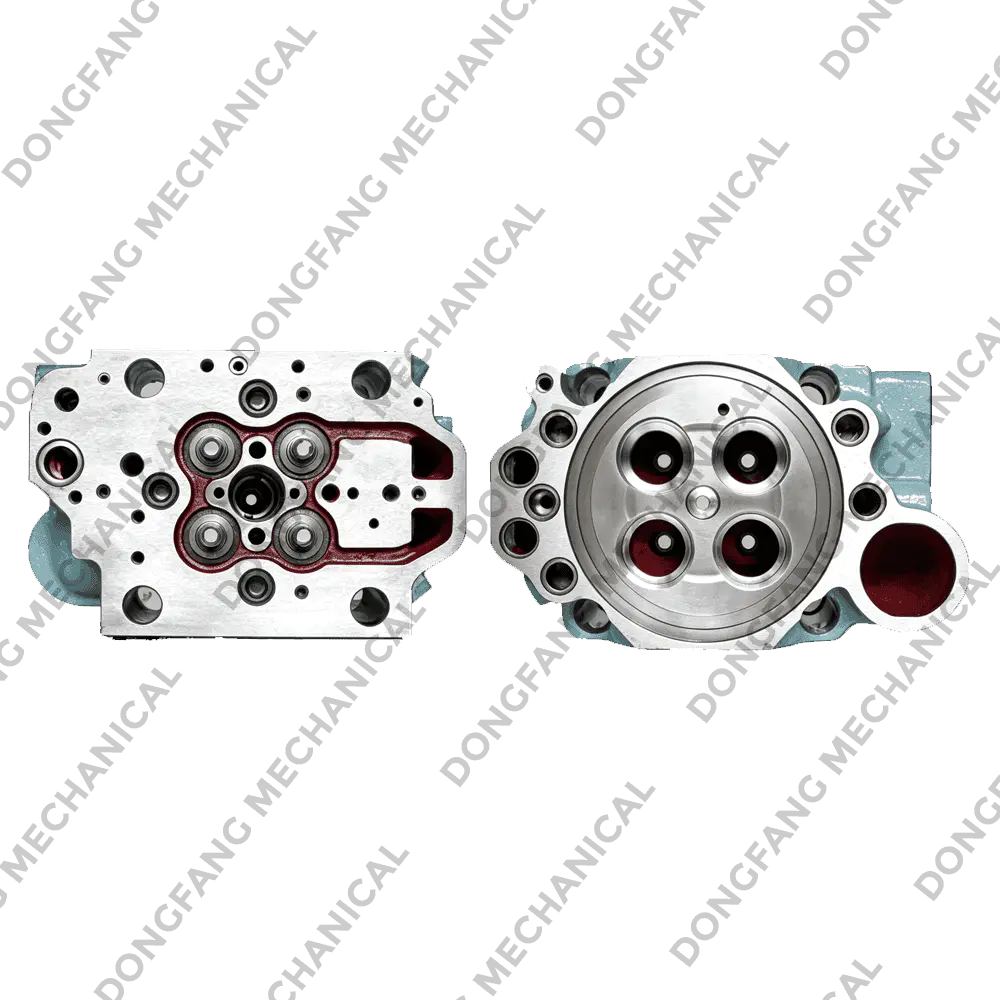
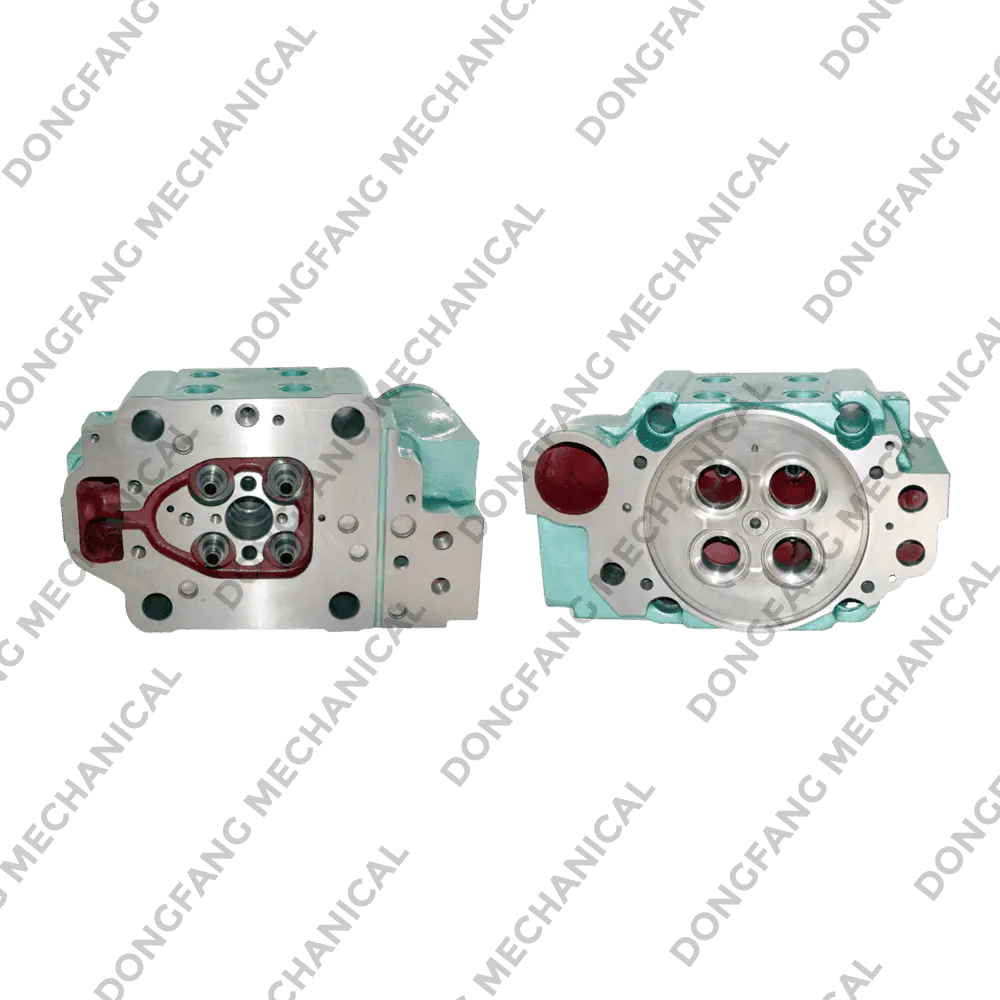
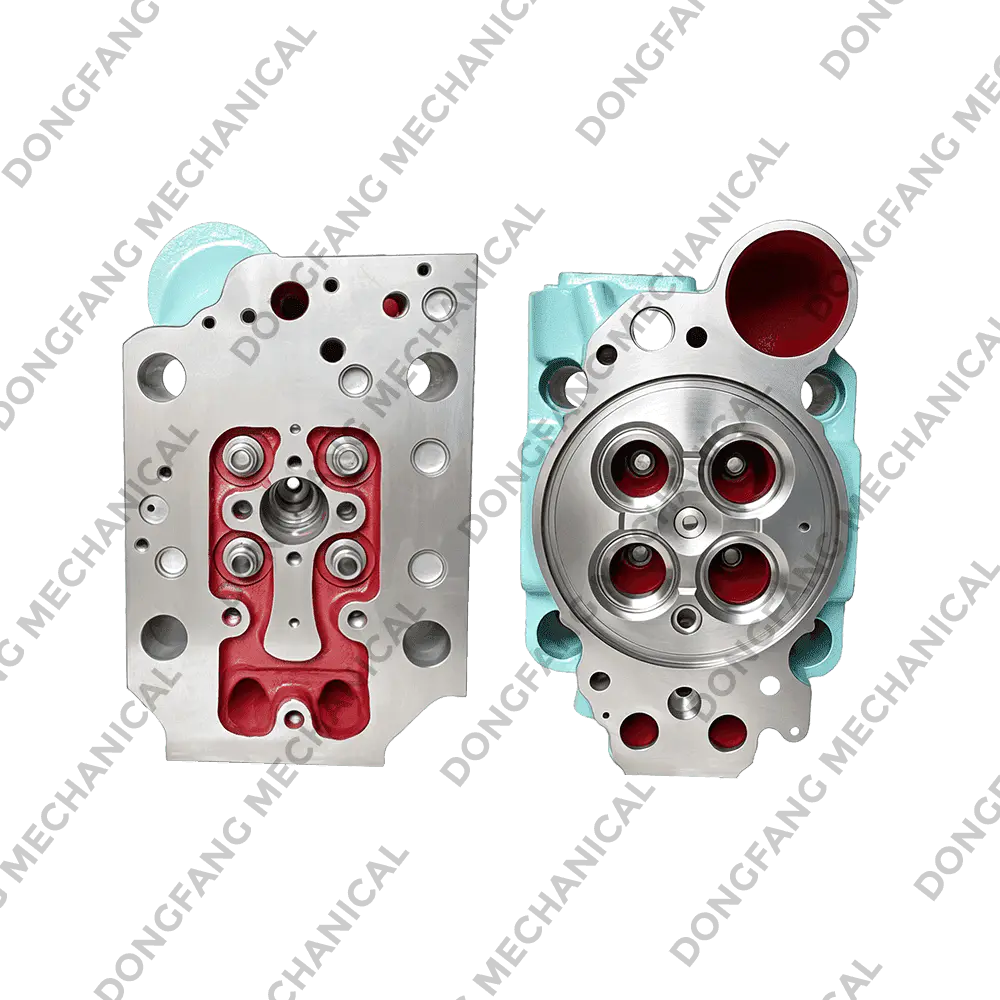
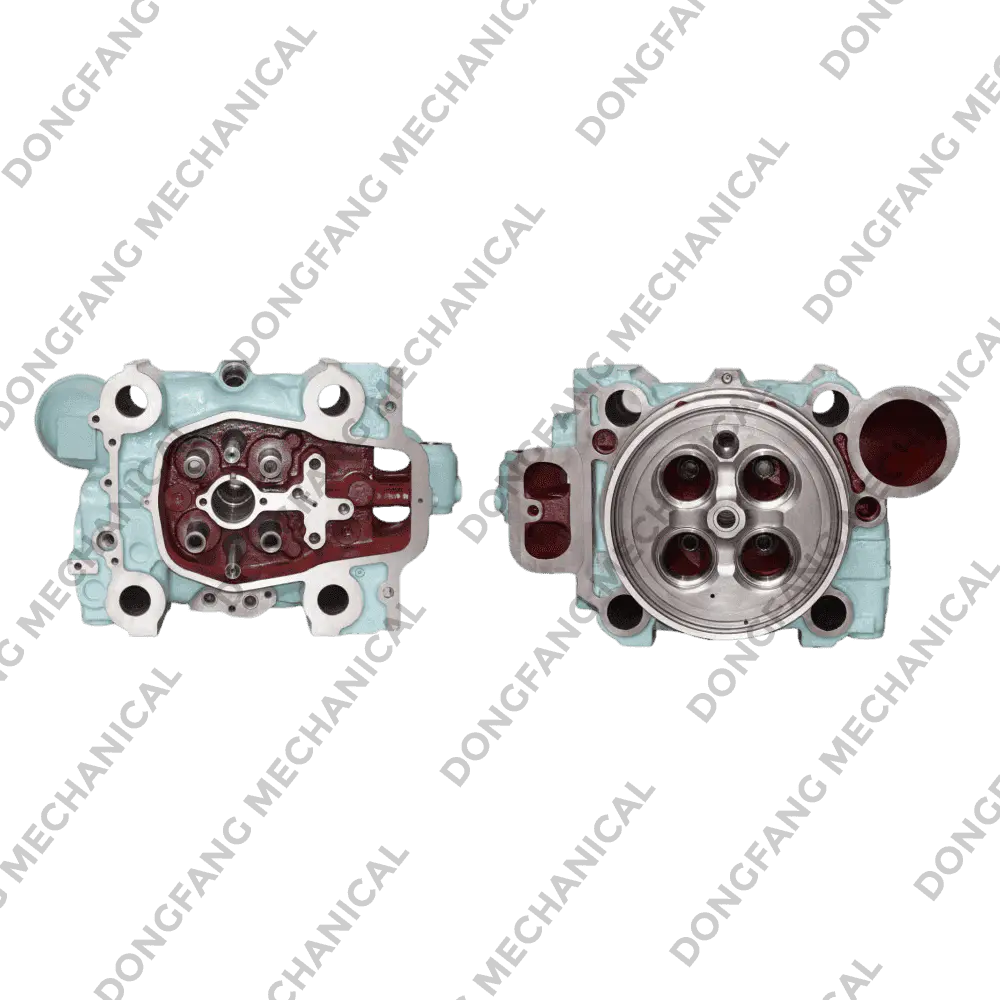
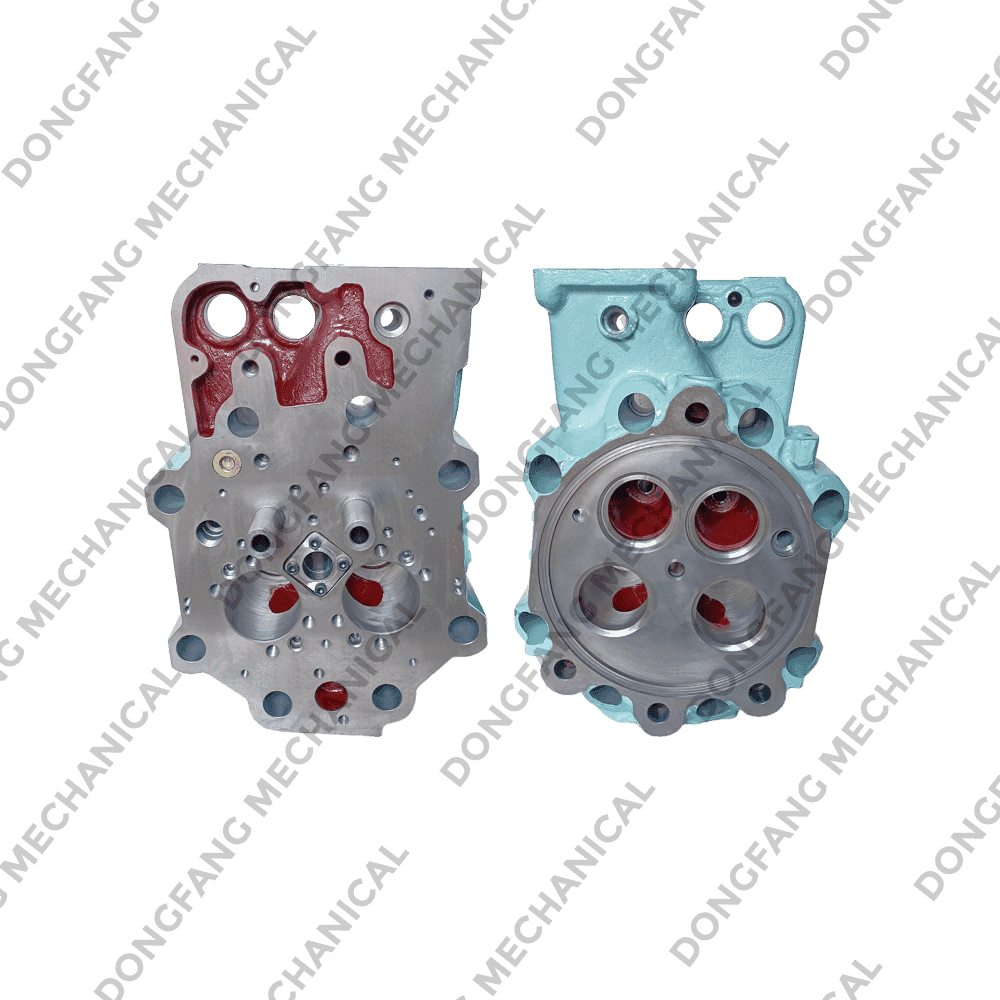
The DL-32 cylinder head is an aftermarket replacement component developed for applications associated with Daihatsu marine diesel engines, including the identification commonly associated with Daihatsu DL26-100 service requirements. It is designed for shipowners, marine repair companies, engine maintenance contractors, spare-parts distributors, and other professional users who require a dependable replacement instead of an unnecessarily expensive complete engine overhaul.
This product combines practical replacement compatibility, carefully controlled casting and machining, inspection-oriented production, and the support of an experienced marine engine component manufacturer. Its value is not limited to the metal casting itself. A properly produced cylinder head must maintain dimensional accuracy, withstand repeated thermal cycling, support reliable valve operation, and integrate correctly with the cylinder liner, piston, gasket, fuel injection, exhaust, and cooling systems.
For marine operators, the most important benefit is operational confidence. A replacement cylinder head should help restore engine performance while reducing the risk of premature failure. The DL-32 is therefore positioned as a high-quality aftermarket solution for maintenance programs in which serviceability, stable quality, reasonable cost, and delivery reliability are all important.
DL-32
Product Overview
The DL-32 is a replacement cylinder head intended for marine diesel engine service. Its listed application category is replacement spare parts compatible with Daihatsu marine diesel engines. The product is also identified by the alias “Daihatsu DL26-100,” which can assist maintenance departments and parts purchasers when comparing fleet records, equipment lists, and historical procurement data.
A cylinder head for a marine diesel engine must perform under demanding conditions. Unlike many land-based applications, marine engines may operate for long periods at relatively stable but substantial loads. The component is exposed to high combustion temperatures, pressure fluctuations, vibration, salt-laden surroundings, cooling-water circulation, and continuous mechanical movement from the valves and associated parts. Any weakness in material quality, casting integrity, machining accuracy, or assembly fit can become significant during extended operation.
The DL-32 is intended to support the replacement of a worn or damaged cylinder head without requiring the operator to replace an entire engine assembly. This approach can reduce repair scope, shorten overhaul time, and help preserve serviceable components such as the crankshaft, connecting rod, piston, fuel equipment, and cylinder block. Before installation, however, purchasers should confirm the exact engine model, serial number, cylinder-head configuration, gasket arrangement, valve equipment, and dimensional requirements.
Primary Product Functions
The cylinder head performs several functions simultaneously. It forms the upper boundary of the combustion chamber and helps maintain the pressure needed for efficient ignition and power generation. It provides locations for inlet and exhaust valves, valve guides, valve seats, fuel injection equipment, and other related components, depending on the engine design. It also directs cooling medium around areas that experience high temperatures, especially near the combustion chamber, exhaust passage, and valve bridges.
Because these functions are interconnected, a replacement cylinder head must be evaluated as a complete engineered component rather than as a simple cast-metal cover. The flatness of the gasket surface affects sealing. The position of valve seats affects valve contact. The geometry of guide bores affects valve stem alignment. Cooling passages must remain open and correctly formed. Threaded holes must accept the correct fasteners without damage or distortion. These details directly influence engine reliability after installation.
| Item | Information |
| Product | DL-32 cylinder head |
| Product type | Aftermarket replacement cylinder head |
| Primary application | Marine diesel engine service |
| Listed compatibility | Daihatsu marine diesel engine applications |
| Common identification | Daihatsu DL26-100 |
| Typical users | Shipowners, repair yards, distributors, fleet maintenance teams, and engine service specialists |
| Related component expertise | Cylinder liners, valves, valve seats, valve cages, valve guides, connecting rods, piston pins, and piston heads |
Why Cylinder Head Quality Matters in Marine Service
Marine diesel engines are often essential to propulsion, electrical generation, cargo handling, pumping, or onboard auxiliary systems. A cylinder-head problem can therefore affect more than one individual component. If combustion pressure escapes through a damaged gasket surface, the engine may suffer from reduced output and overheating. If cooling medium enters the combustion chamber, the result can include white exhaust smoke, corrosion, lubricating-oil contamination, and serious internal damage. If an exhaust valve does not seat correctly, hot gases can erode the valve seat and surrounding material.
Repeated thermal cycling is another major concern. During operation, the cylinder head is exposed to rapid temperature changes between starting, loading, unloading, and shutdown. These cycles create expansion and contraction throughout the component. Areas around valve seats, injector openings, cooling passages, and narrow bridges may experience concentrated thermal stress. A sound casting and properly controlled machining process are essential for managing these stresses.
Mechanical loading is equally important. Combustion pressure acts on the head and the gasket joint during every power stroke. Valve springs, rocker mechanisms, and other moving parts transfer repeated loads into the cylinder-head structure. Fastener holes and contact surfaces must retain their geometry over time. A component that appears acceptable visually may still be unsuitable if its critical dimensions are outside the required tolerance.
For these reasons, purchasing a low-cost cylinder head without considering manufacturing control can lead to higher total costs. The initial saving may be lost through repeated gasket replacement, valve leakage, corrective machining, additional labor, or an unexpected vessel delay. A higher-quality aftermarket component can provide better value when it reduces installation risk and contributes to longer service intervals.
Key Advantages of the DL-32 Replacement Cylinder Head
1. Application-Focused Replacement Design
The DL-32 is developed as an application-focused replacement component rather than a generic cylinder-head casting. Its listed compatibility with Daihatsu marine diesel engine service helps purchasers narrow the selection process and compare the part with known fleet requirements. The associated DL26-100 identification provides an additional reference for maintenance records and spare-parts planning.
Application focus is especially valuable in marine maintenance because similar-looking cylinder heads may differ in valve arrangement, cooling passage layout, injector position, mounting pattern, or gasket dimensions. A component made for the correct engine family is more likely to support efficient installation and reduce the amount of corrective work required at the repair site.
2. Suitable for Cost-Conscious Overhaul Programs
Replacing only the cylinder head can be more economical than replacing an entire power unit or purchasing a complete new engine. This is useful when the cylinder block, crankshaft, piston assemblies, and other major components remain within serviceable limits. The DL-32 can form part of a targeted repair strategy in which each component is inspected and replaced according to actual condition.
A targeted repair also improves resource efficiency. Shipowners can avoid discarding usable components, while repair yards can return engines to service without expanding the scope of work unnecessarily. The result is a practical balance between reliability and operating cost.
3. Support for Stable Combustion and Gas Sealing
A correctly manufactured cylinder head supports the essential sealing relationships between the combustion chamber, gasket, valves, and fuel-injection area. Good sealing helps preserve compression and reduces the risk of hot-gas leakage. Stable compression contributes to more consistent ignition, smoother engine operation, and effective use of injected fuel.
The cylinder head also influences the quality of inlet and exhaust gas flow. Correctly formed and machined passages help the engine breathe according to its intended design. The replacement component should therefore be evaluated not only for external appearance but also for the condition and geometry of internal passages and valve-related features.
4. Designed for Demanding Thermal Conditions
Marine engines require components capable of operating under sustained thermal exposure. The DL-32 benefits from a production approach that emphasizes suitable material selection, controlled casting, removal of casting defects, and accurate machining of critical surfaces. These processes help the cylinder head resist the stresses associated with combustion and cooling.
No replacement component can eliminate the effects of incorrect cooling-water chemistry, blocked passages, excessive engine loading, poor lubrication, or improper installation. Nevertheless, a soundly manufactured cylinder head provides a stronger foundation for reliable operation when the complete engine is maintained correctly.
5. Compatibility with Professional Maintenance Practices
The DL-32 is suitable for use in structured maintenance programs. A professional repair team can inspect the original head, identify the failure mode, verify the replacement dimensions, transfer or renew compatible components, and complete installation using the engine maker’s service procedures. This supports a controlled repair rather than an improvised replacement.
For distributors, clear product identification is also valuable. A defined product title, application category, and cross-reference alias make it easier to organize inventory and respond to technical inquiries. Better information reduces the chance of sending an unsuitable part to a vessel or repair yard.
Manufacturing Strengths Behind the Product
The performance of an aftermarket cylinder head depends heavily on the manufacturing system used to produce it. An experienced supplier must manage the full sequence from material preparation through final inspection. The manufacturing process should be organized around the actual failure risks found in marine diesel engines: cracking, porosity, dimensional distortion, poor sealing, valve-seat misalignment, cooling-passage blockage, and machining errors.
Material and Casting Control
The first stage is the preparation of a suitable material and casting process. Cylinder heads require a material system capable of handling temperature, pressure, vibration, and repeated thermal expansion. Consistent raw-material management is important because variations in composition or melt quality may affect strength, machinability, and resistance to thermal fatigue.
During casting, the mold, pouring conditions, solidification behavior, and feeding arrangement must be controlled. Poor control can produce internal porosity, shrinkage cavities, inclusions, cold shuts, or dimensional distortion. Some defects may remain hidden beneath the surface and become failure points after the component enters service. A mature manufacturing operation therefore treats casting quality as a central engineering issue rather than an incidental production step.
After casting, the component may undergo cleaning, removal of excess material, surface preparation, and preliminary inspection. This stage allows operators to identify visible defects before further value is added through extensive machining. Early detection improves production efficiency and helps prevent unsuitable castings from moving to later stages.
Stress Relief and Dimensional Stability
Large and complex castings can retain internal stresses after cooling. If these stresses are not adequately managed, the component may move during machining or later experience dimensional changes under operating conditions. Appropriate heat treatment or stress-relief procedures can improve dimensional stability and support consistent machining results.
The exact thermal procedure depends on the material, casting geometry, and technical requirements of the application. What matters from a purchaser’s perspective is that the supplier recognizes the relationship between casting stress, machining accuracy, and long-term sealing performance. A cylinder head that is machined accurately but later distorts in service cannot provide reliable value.
Precision Machining of Critical Surfaces
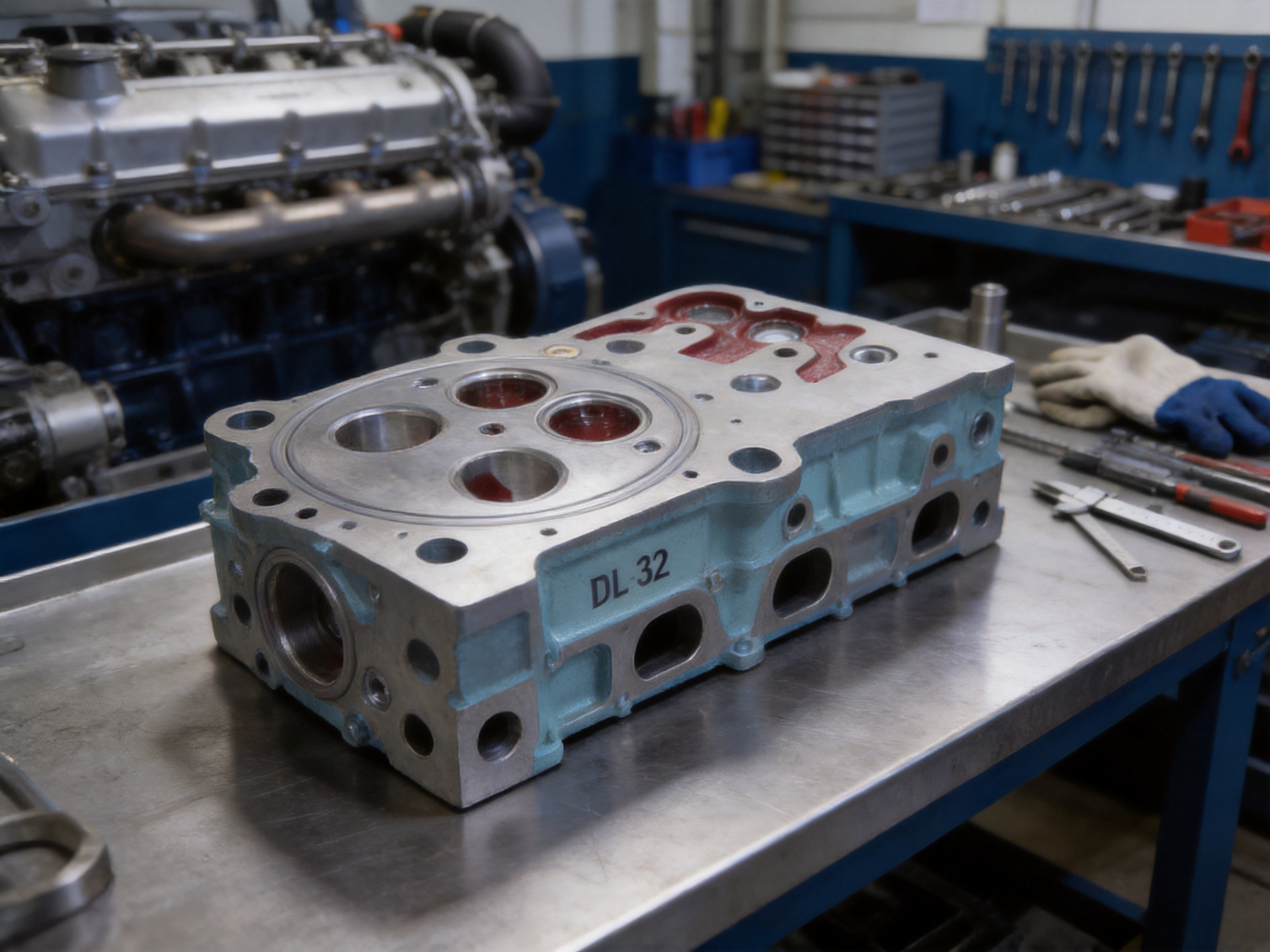
Machining transforms the casting into a functional replacement component. Critical areas may include the cylinder-head gasket face, valve-seat locations, valve-guide bores, injector or fuel-equipment openings, fastener holes, sealing recesses, and connection faces for intake or exhaust components.
The gasket surface must be sufficiently flat and correctly finished to support a reliable seal. Excessive roughness, tool marks, localized depressions, or distortion can cause leakage even when a new gasket is used. Valve-seat and guide locations require alignment because the valve must contact the seat evenly and transfer heat effectively. Incorrect alignment may lead to leakage, accelerated wear, overheating, or valve damage.
Precision machining also helps maintain interchangeability. A replacement part is valuable only when it can be assembled with the associated engine components without extensive and uncertain modification. Controlled machining reduces installation time and allows technicians to use established service procedures.
Inspection During Production
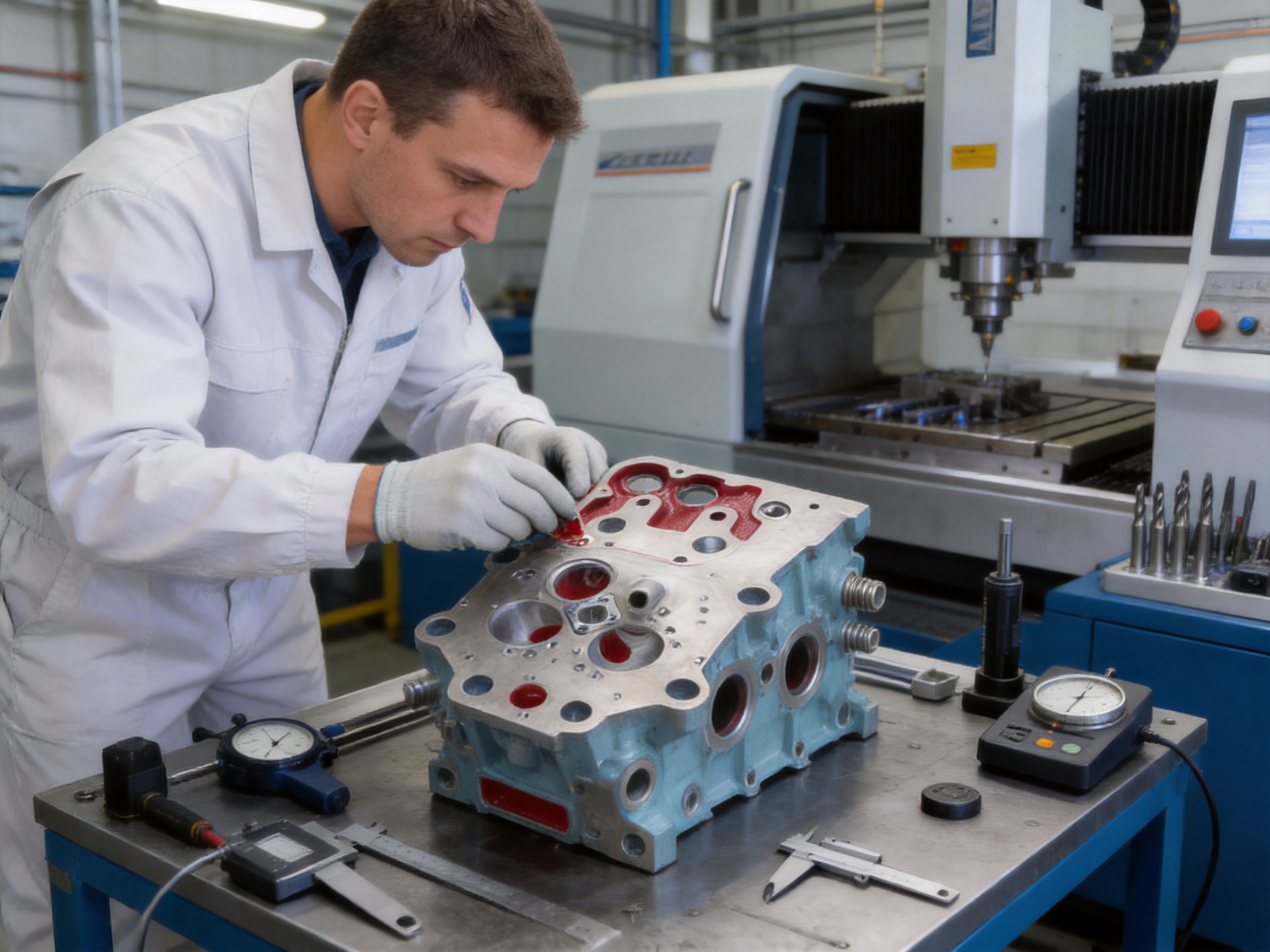
Inspection should take place throughout production, not only at the final packing stage. In-process checks can include visual examination, dimensional measurement, surface inspection, verification of critical bore positions, and confirmation that passages and threaded holes are correctly formed. Where appropriate, non-destructive inspection methods may be used to identify surface or internal defects.
Final inspection provides an additional opportunity to verify conformity with the supplier’s internal specifications and the intended application. The inspection system should focus on the features that most strongly influence operation: sealing faces, valve geometry, cooling passages, mounting points, and overall dimensional relationships.
Traceability is also beneficial. Production records, inspection notes, batch information, and product identification help the manufacturer investigate questions and improve future production. For fleet operators and distributors, traceability supports more organized inventory and maintenance documentation.
Company Experience and Production Capability
The manufacturer of the DL-32 is Zhoushan Putuo Dongfang Machinery Co., Ltd., located in the Shenjiamen Pingyang Industrial Zone of Zhoushan, Zhejiang Province, China. The company was founded in 1996 and has focused on imported and domestic marine diesel engine components for more than two decades.
Its location provides access to land, sea, and air transportation, an important practical advantage for marine spare-parts supply. Zhoushan is closely associated with maritime activity, ship repair, vessel operation, and marine engineering. A company operating in this environment can benefit from proximity to shipowners, repair yards, technical service providers, and regional distribution networks.
The company covers more than 8,000 square meters, including a workshop of more than 5,000 square meters. Its reported annual production exceeds 5,000 sets. This scale indicates an established production system rather than a small trading operation dependent entirely on outside sources. Production capacity is relevant to buyers who need repeat orders, fleet standardization, or support for multiple vessels.
The company’s product range includes cylinder heads, cylinder liners, valves, valve seats, valve cages and guides, connecting rods, piston pins, and piston heads. This broader component capability is valuable because cylinder-head replacement often involves related inspection or renewal work. A supplier familiar with connected engine components can provide more coordinated technical communication than a supplier offering only one isolated product.
The company obtained ISO 9001 certification in 2001 and has been rated as an AAA-level enterprise. ISO 9001 certification reflects the use of a quality-management framework covering areas such as documented processes, customer requirements, corrective action, and continual improvement. Certification alone does not replace product inspection, but it indicates that quality activities are organized within a formal management system.
Integrated Product Knowledge
A cylinder head cannot be separated completely from the other components around it. The head works with the cylinder liner to contain combustion, with the piston to form the combustion space, with valves and guides to control gas flow, and with the cooling system to control temperature. Experience across these product categories allows the manufacturer to understand how component interfaces affect actual engine service.
This integrated knowledge can improve communication with customers. When a buyer reports a cylinder-head failure, the supplier can consider possible relationships involving valve-seat wear, liner condition, piston protrusion, cooling-water circulation, gasket selection, or fastener loading. Such a broad view can help prevent the replacement of a failed part without correcting the underlying cause.
Comparison with Lower-Quality Alternatives
Aftermarket products are not all manufactured to the same standard. The main difference between a carefully controlled replacement cylinder head and a lower-quality alternative is often hidden in the production process. External appearance may be similar, but internal integrity, dimensional accuracy, surface finish, and inspection discipline can vary significantly.
| Evaluation area | DL-32 quality-oriented approach | Risk with poorly controlled alternatives |
| Application identification | Defined marine engine application and cross-reference information | Unclear compatibility or reliance on visual similarity |
| Casting quality | Attention to material preparation, casting control, and defect inspection | Porosity, inclusions, shrinkage, or hidden structural weaknesses |
| Machining | Focus on gasket faces, valve-related features, bores, and mounting points | Misalignment, poor surface finish, or excessive corrective work |
| Inspection | In-process and final checks supported by an organized quality system | Limited inspection performed only after production or shipment |
| Supply capability | Established production site and marine component experience | Uncertain sourcing, inconsistent batches, or limited technical support |
| Long-term value | Greater potential for reliable installation and predictable maintenance | Higher risk of repeat repairs, downtime, and additional labor costs |
The advantage of a quality-focused supplier is therefore cumulative. Consistent casting, controlled machining, appropriate inspection, product knowledge, and responsive service work together. No individual feature can guarantee performance, but the complete system reduces the likelihood of avoidable problems.
Installation and Maintenance Considerations
Correct installation is essential to obtain the full benefit of any replacement cylinder head. Before removing the original component, technicians should document the engine condition, identify the failure symptoms, and inspect related systems. A cracked head may have been caused or worsened by overheating, blocked cooling passages, incorrect injector operation, excessive cylinder pressure, poor gasket installation, or improper tightening of fasteners.
Pre-Installation Checks
The replacement part should be checked against the purchase order, engine model, serial number, and available technical drawings or service information. Technicians should compare mounting holes, passage locations, valve arrangement, injector openings, gasket dimensions, and external interfaces. Any transferred components should be examined for wear, damage, corrosion, and suitability for reuse.
The mating surface on the cylinder block should be cleaned carefully without creating scratches or removing material unnecessarily. Old gasket material, carbon, rust, and deposits must be removed. The block surface should then be checked for flatness and damage. Installing a new cylinder head on a distorted or contaminated mating surface can cause sealing failure.
Related Component Inspection
Valves, valve guides, valve seats, springs, rocker components, and fuel-injection equipment should be inspected according to the engine maintenance procedure. If the original head failed because of a valve problem, simply installing the replacement head without addressing that valve problem may lead to another failure.
The cylinder liner and piston should also be evaluated. Signs of abnormal combustion, scuffing, coolant entry, excessive blow-by, or uneven wear may indicate that the cylinder head is only one part of a wider condition. The cooling system should be checked for restrictions, deposits, leaks, and incorrect treatment of the cooling medium.
Gasket and Fastener Practice
The correct gasket must be used for the specific engine application. Gaskets should not be reused unless the engine manufacturer’s procedure explicitly permits reuse. Sealing compounds should be applied only where specified, because excess compound can enter passages or change the compression relationship.
Head fasteners must be clean and inspected. Damaged threads, stretched bolts, corrosion, or incorrect fastener length can affect clamping force. Tightening should follow the correct sequence and torque or angle procedure. Uniform loading is necessary to maintain gasket sealing and reduce localized stress in the cylinder head.
Commissioning After Installation
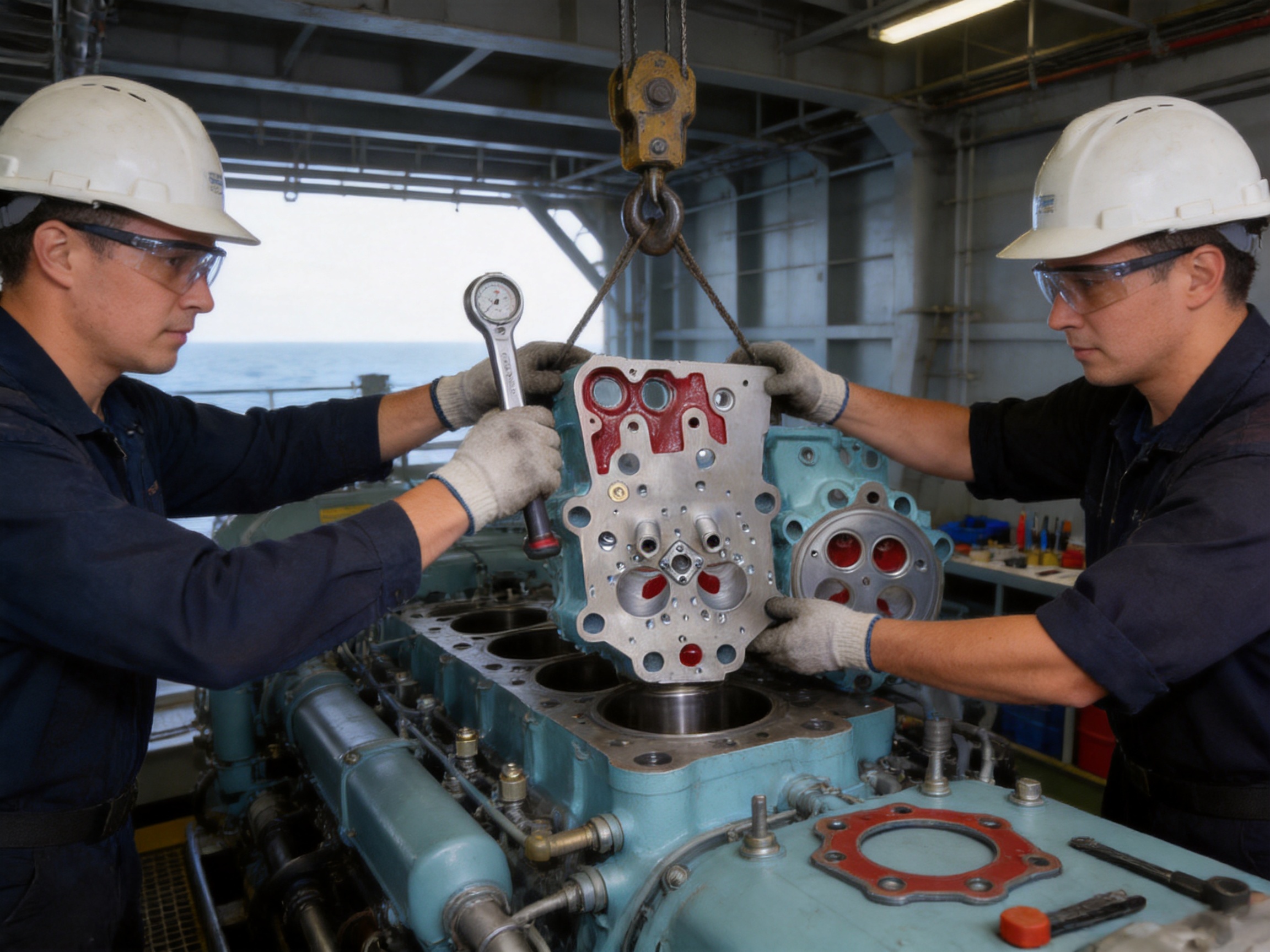
After assembly, the engine should be inspected for external leaks, correct valve clearance, proper fuel-system connections, and unobstructed cooling circulation. The first start should be controlled, allowing technicians to monitor oil pressure, cooling temperature, exhaust condition, abnormal noise, and signs of gas or coolant leakage.
Following initial operation, the maintenance team should review the engine data and inspect accessible areas again. Depending on the engine manufacturer’s procedure, fastener checks, valve-clearance verification, or retightening may be required after a specified running period. Detailed records should include the part identification, installation date, engine hours, observed failure mode, and commissioning results.
Applications in Marine Maintenance
The DL-32 can be considered for several maintenance scenarios. It may be used during a planned overhaul when inspection shows that the original cylinder head has reached the end of its service life. It may also be selected for corrective repair after cracking, serious valve-seat damage, gasket failure, or distortion has made the original head unsuitable for continued service.
For vessels with multiple similar engines, maintaining a planned stock of replacement cylinder heads can improve readiness. The correct product should be stored in a clean, dry environment with protective packaging around machined and sealing surfaces. Inventory records should retain the application information and any applicable cross-reference details so that the part can be identified quickly during an urgent repair.
Repair yards may also use the DL-32 as part of a complete component-renewal package. A cylinder head may be supplied together with valves, guides, seats, cages, liners, or piston-related parts, subject to the exact engine requirements. Coordinated sourcing can simplify purchasing and improve consistency across the overhaul.
Purchasing Guidance for Professional Buyers
Before placing an order, buyers should provide as much technical information as possible. Useful information includes the engine maker, model, serial number, cylinder number, existing part number, dimensions, photographs, and details of the intended repair. The application should be verified rather than assumed from a general resemblance.
Buyers should also request confirmation of the product’s condition and supply scope. Some cylinder heads may be supplied as bare castings, while others may include valve seats, guides, valves, cages, or related hardware. Knowing what is included prevents misunderstandings and allows the repair team to plan the work accurately.
Questions about material, machining, inspection, packaging, and documentation should be addressed before shipment. For repeat orders, purchasers can establish an agreed specification and request consistent product identification. This is particularly helpful for ship-management companies that maintain several vessels or operate engines from the same family.
Packaging deserves attention because machined surfaces can be damaged during transportation. The cylinder head should be protected against impact, moisture, contamination, and corrosion. Heavy components should be secured so they cannot move inside the package. Proper handling preserves the quality achieved during manufacturing.
Environmental and Economic Benefits of Component Replacement
Replacing a cylinder head instead of discarding an entire engine assembly can reduce material consumption and preserve serviceable components. This approach supports a more efficient maintenance model in which the actual condition of each part determines whether it is repaired, reused, or replaced.
The economic benefit extends beyond the purchase price. A reliable replacement can reduce labor associated with repeated disassembly, minimize vessel downtime, and lower the risk of secondary damage. A stable supply chain also helps operators plan maintenance during scheduled port calls instead of responding to avoidable emergency failures.
Reasonable pricing is particularly important for older marine engines that remain mechanically useful but require periodic renewal of high-wear components. An aftermarket cylinder head gives operators an option between expensive complete replacement and uncertain low-cost components. When supported by appropriate quality controls, it can extend the practical service life of an existing engine.
Quality, Service, and Long-Term Partnership
Marine spare-parts supply is not limited to manufacturing and shipment. Customers also require accurate communication, technical responsiveness, order coordination, and after-sales support. A supplier that understands these needs can help reduce the uncertainty associated with international procurement and vessel repair schedules.
The manufacturer’s stated business philosophy emphasizes integrity, pragmatism, continuous improvement, quality-first standards, reasonable prices, and dedicated service. These principles are relevant to cylinder-head supply because buyers generally evaluate more than the first quotation. They consider consistency between batches, response time, documentation, packaging, delivery performance, and the supplier’s willingness to address technical questions.
Long-term cooperation can produce additional benefits. A supplier becomes more familiar with a customer’s fleet, preferred specifications, packaging requirements, and purchasing cycles. The customer gains a more dependable source for cylinder heads and related components. Over time, this relationship can improve spare-parts planning and reduce the risk of selecting incompatible products.
Frequently Asked Questions
What is the DL-32 cylinder head used for?
The DL-32 is an aftermarket replacement cylinder head for marine diesel engine service. Its listed application is compatibility with Daihatsu marine diesel engines, and it is associated with the Daihatsu DL26-100 identification. The exact engine model and dimensions should always be confirmed before purchase.
Is the DL-32 a complete cylinder-head assembly?
The supply configuration should be confirmed with the supplier before ordering. Cylinder heads may be supplied as bare heads or with selected valves, seats, guides, cages, and other components. Buyers should request a detailed parts list and clarify which components are included.
Can the product be installed without machining?
A properly produced replacement cylinder head is intended to reduce the need for corrective machining, but installation requirements depend on the engine condition and the supplied configuration. Technicians should verify gasket surfaces, valve-related dimensions, interfaces, and associated components before assembly.
What should be checked before installation?
Confirm the engine model, serial number, part identification, mounting pattern, gasket arrangement, valve configuration, cooling passages, and fuel-equipment openings. Inspect the cylinder block, gasket, valves, guides, seats, fasteners, liner, piston, and cooling system as required by the service procedure.
How does the product compare with a low-cost cylinder head?
The main distinction is manufacturing control. A quality-oriented product benefits from controlled casting, dimensional machining, inspection, application identification, and established marine component experience. A low-cost alternative may have uncertain material quality, hidden casting defects, inconsistent dimensions, or limited technical support.
Why is cylinder-head flatness important?
Flatness affects the cylinder-head gasket seal. Distortion or damage can permit combustion gas, coolant, or lubricating oil to pass between surfaces. This may lead to overheating, compression loss, contamination, and repeated gasket failure.
Can the DL-32 be used for engines from other manufacturers?
The listed application is Daihatsu marine diesel engine service. It should not be assumed to fit another engine manufacturer’s design simply because the component looks similar. Cross-application use requires technical confirmation of dimensions, materials, passages, valve arrangement, and operating requirements.
What company manufactures the product?
The product is manufactured by Zhoushan Putuo Dongfang Machinery Co., Ltd., a Chinese marine diesel engine component manufacturer founded in 1996. The company produces cylinder heads and a range of related components, including cylinder liners, valves, valve seats, valve cages and guides, connecting rods, piston pins, and piston heads.
What quality credentials support the manufacturer?
The company obtained ISO 9001 certification in 2001 and has been rated as an AAA-level enterprise. It operates a production site covering more than 8,000 square meters, including a workshop of over 5,000 square meters, and reports annual production exceeding 5,000 sets.
How should the replacement be maintained after installation?
Maintain correct cooling-water quality and circulation, use suitable lubricants and fuel, monitor operating temperature and exhaust condition, verify valve clearance, and follow the engine manufacturer’s inspection intervals. Investigate abnormal smoke, coolant loss, compression changes, or unusual noise promptly.
Conclusion
The DL-32 cylinder head is a practical aftermarket replacement solution for selected Daihatsu marine diesel engine applications, including the identification associated with Daihatsu DL26-100 service requirements. Its value comes from the combination of application-focused design, marine operating suitability, cost-conscious replacement potential, and support from an experienced component manufacturer.
A dependable cylinder head must do more than match the outline of the original part. It must provide sound casting integrity, stable dimensions, accurate sealing surfaces, correctly positioned valve-related features, and reliable interfaces with the engine’s cooling, fuel, and gas-exchange systems. The manufacturer’s experience in marine diesel components, formal quality-management background, production capacity, and related product range provide a strong foundation for these requirements.
For shipowners, repair yards, and distributors, the DL-32 can support planned overhaul work, corrective repairs, fleet spare-parts programs, and the continued operation of proven marine engines. Correct model verification, professional installation, proper gasket and fastener practice, and thorough inspection of related components remain essential. When these conditions are met, a high-quality replacement cylinder head can help restore engine performance, control maintenance costs, and reduce the operational risks associated with unplanned marine downtime.
References
1. Product information for the DL-32 aftermarket cylinder head and its listed marine engine application.
2. Manufacturer information for Zhoushan Putuo Dongfang Machinery Co., Ltd., including company history, product range, production facilities, and quality credentials.
3. ISO 9001 quality-management principles for manufacturing and supplier process control.
4. General marine diesel engine maintenance practices covering cylinder heads, valves, valve seats, cylinder liners, cooling systems, gaskets, and fasteners.
5. General engineering principles concerning casting integrity, thermal cycling, dimensional stability, sealing surfaces, and precision machining of engine components.